
Vandaag of morgen in huis

Kwaliteit gegarandeerd

Welkomstaanbiedingen ontgrendelen: GRATIS bezorging | Tot 80% korting | Gratis 30 dagen JoyPlus-proefperiode
Download de app
White LED car bulbs might seem like a straightforward upgrade for your car. Yet a bulb that sounds powerful and universal on paper can, in practice, not fit, trigger error messages, or produce a poor beam pattern. That’s especially frustrating when you’ve already paid for a set you can’t use.
The three most common pitfalls are:
First, check which fitment your car uses and what the bulb is intended for. Common variants include:
Don’t just look at the fitment name. Also check your car’s manual, the existing bulb, and the available space behind the headlight.
A colour temperature around 6000K white LED lighting gives a cool white appearance. That can match modern factory lighting, but colour temperature is no guarantee of better illumination. A good bulb must also sit correctly in the reflector.
A 1:1 design means the manufacturer tries to replicate the position of the original filament or light source. According to the product descriptions of various Bullvision and ENdureLite models, this is intended to keep the beam pattern focused. Always check after installation that there are no dark spots or troublesome stray light beams.
LEDs convert less energy into heat than halogen bulbs, but the heat remains concentrated around the chip. So pay attention to:
CANbus-ready doesn’t mean every car will work without issue. Sensitive systems can still produce an error message or flickering. In the product information for Bullvision, for example, it is noted that certain Volkswagen, Mercedes-Benz and BMW vehicles may require an additional CANbus decoder.
Also check whether the bulb is legally suitable for the function and the vehicle. A product description or brand claim does not replace checking the applicable vehicle and lighting regulations. According to OSRAM’s own information, the NIGHT BREAKER LED W5W is intended as a road-legal replacement for specific 12V functions, such as parking lights, sidelights, number plate lights and interior lighting. Only use a bulb for purposes permitted by the manufacturer and regulations.
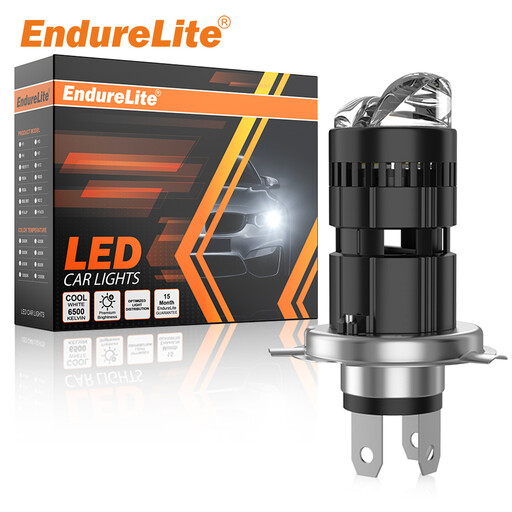
Why this suits the profile: This set is aimed at motorists looking for an H4 bulb with a direct replacement for main beam and dipped beam.
The product description mentions a 1:1 size and plug-and-play installation. Do check beforehand whether your car uses H4.
6000K cool white light, aluminium housing, IP68 water resistance and a stated lifespan of 50,000 hours according to the product information.
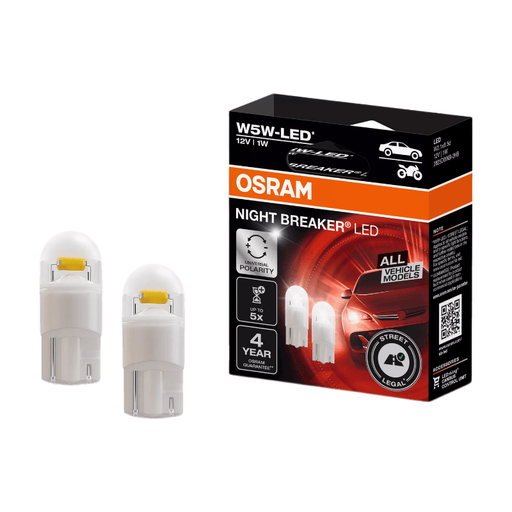
Why this suits the profile: A practical choice for anyone looking for a branded product for W5W functions and who values clear application information.
The product information limits use to suitable W5W applications and warns that sensitive CANbus systems may sometimes require a decoder.
5700K, 50 lumens, 12V, two bulbs per set and, according to OSRAM’s own information, up to 80% lower energy consumption than traditional bulbs.
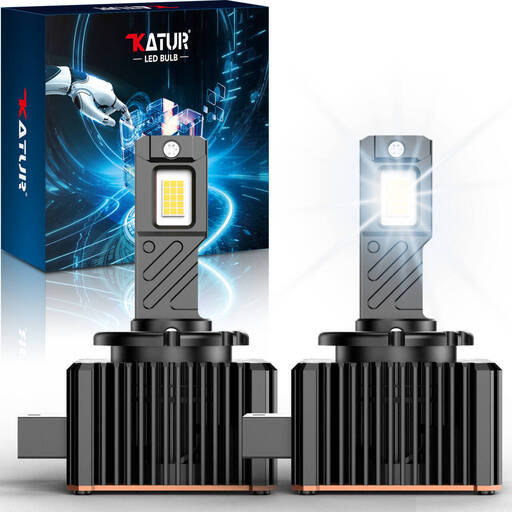
Why this suits the profile: Intended for vehicles with an existing D3S or D3R HID headlight, not for a halogen housing.
The product information explicitly states that this bulb is only intended as a replacement for HID. This helps you avoid incorrect application.
D3S/D3R designation, 6500K according to the product description, built-in cooling and a 1:1 plug-and-play design.
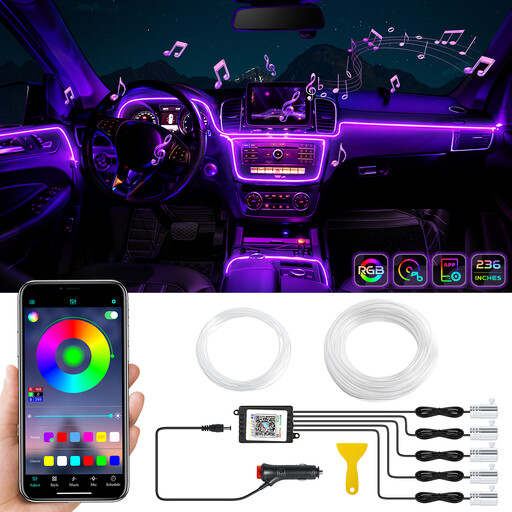
Why this suits the profile: For drivers who want to add interior lighting with colours, app control and music-reactive modes.
The set works on 10–16V and includes installation accessories. Test the lighting before fitting and route cables neatly.
Bluetooth app control, RGB colours, sound-reactive modes, 6 metres of optical fibre and a 12V connection.
Let the headlight cool down completely and switch off the lighting before you start. When working on fixed lighting components, it’s wise to disconnect the battery following the car manufacturer’s instructions. Do not touch the LED chips and check that the seal is correctly refitted after installation.
Then test:
For LED rear car lights, a complete lamp unit is sometimes more suitable than just a loose light source. Always check the vehicle match, connector and seal. A rear light that doesn’t close properly can cause moisture and electrical faults.
We’ve put together a full, up-to-date list of products that fully meet these strict selection criteria and comply with current European safety regulations.
According to product information, some LED bulbs use less power than halogen bulbs. The actual consumption depends on the bulb, the vehicle voltage and usage. Look at the stated wattage, not just marketing claims about brightness.
Manufacturers often quote tens of thousands of hours of operation. According to the own statements of the brands mentioned, this is around 50,000 to 60,000 hours for some models. That is a product specification, not a guarantee for every car. Heat, vibration, moisture and voltage spikes all affect the service life.
Not always. Some CANbus LED car bulbs have a built-in driver, but sensitive vehicles can still produce an error message or flickering. Check the vehicle-specific information and allow for a separate decoder or resistor when the manufacturer mentions this.
