
Vandaag of morgen in huis

Kwaliteit gegarandeerd

Welkomstaanbiedingen ontgrendelen: GRATIS bezorging | Tot 80% korting | Gratis 30 dagen JoyPlus-proefperiode
Download de app
Want to replace halogen or xenon lighting with LED car bulbs? A set offering a high lumen count, 6000K light and plug-and-play installation may seem appealing. However, brightness alone does not determine whether a bulb is suitable. The fitting, the available space inside the headlamp and the regulations governing road use are just as important.
In this buying guide from the Joybuy Product Recommendation Officer, you’ll learn what to look for when choosing LED headlight bulbs for cars, fog lights and replacement bulbs for cars, SUVs, trucks and motorcycles.
H1, H4, H7, H8, H9, H11, 9005/HB3, 9006/HB4 and D1S/D1R are not interchangeable codes. They refer to different connections and applications. An H7 LED bulb will not automatically fit an H4 housing.
Always check the following first:
Brands sometimes advertise claims such as “300% brighter”, “500% brighter” or an exceptionally high lumen count. According to the brands’ own product information, these figures compare the bulbs with standard halogen lighting. The final beam pattern also depends on the reflector, lens, headlamp alignment and condition.
An ill-fitting LED bulb can create scattered light or glare, even when it produces a high amount of light on paper. Check whether the LED chip is positioned in the same place as the filament in the original bulb.
An integrated CANbus driver can help reduce error messages, flickering or radio interference. It does not mean that the bulb will work flawlessly in every vehicle. According to product information, certain Volkswagen, BMW, Mercedes-Benz and similar models may require an additional CANbus decoder.
Keep the original bulbs and test the lighting after installation. Does a dashboard warning appear, does the bulb flicker or can the dust cap no longer be fitted? The set may not be suitable for your vehicle.
The fitting is the first thing to verify. Common options include:
A “universal fitting” mentioned in the product description does not mean that the bulb literally fits every car. The original fitting remains the deciding factor.
6000K LED car bulbs generally produce a cool white light. 6500K is even whiter and may have a slightly bluer appearance. Do not focus solely on colour temperature; the beam pattern matters too. For everyday driving, an even beam is more important than choosing the highest possible Kelvin rating.
Also check whether the product is legally approved. Not every LED retrofit is permitted for road use in every headlamp configuration. Review the vehicle documentation, any E-marking and the latest inspection and road-use requirements. Have the headlamps checked and aligned after installation.
LED bulbs generate heat at the rear of the chip. That is why many models use an aluminium housing, cooling fins or an integrated fan. LED bulbs with a cooling fan can dissipate heat effectively, but make sure there is sufficient space behind the bulb. A fan may also produce audible noise.
An IP67 or IP68 rating refers, according to the product information, to protection against dust and water under specific test conditions. It does not guarantee that a bulb will remain condensation-free in every headlamp housing. Check that the seal and dust cap can be refitted correctly.
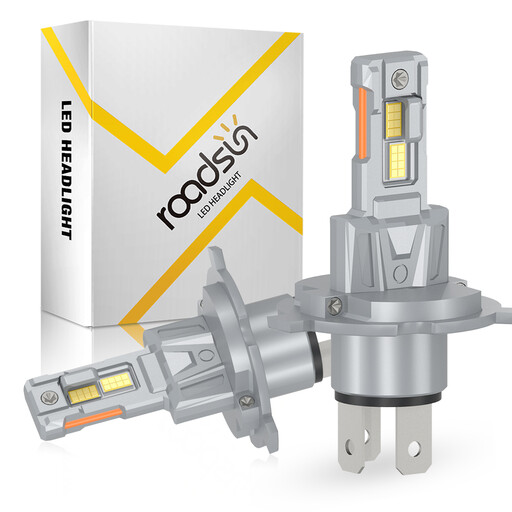
Why it’s a good fit: A practical choice for DIY car owners with an H4 fitting and combined low- and high-beam function.
The manufacturer specifies a compact 1:1 design and plug-and-play connection. Still, check the H4 code and the available space behind the fitting beforehand.
6000K light, fanless aluminium housing, IP67 rating and a stated service life of more than 70,000 hours.
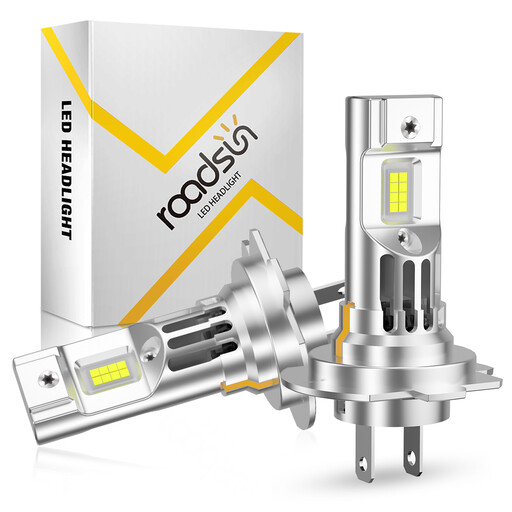
Why it’s a good fit: Designed for drivers of cars, SUVs and trucks with an H7 connection who prefer to install the bulbs themselves.
The manufacturer states that no additional adapter is required. According to the product information, some European vehicles may nevertheless require an external CANbus decoder.
6500K light, integrated cooling fan, IP68 rating and a stated service life of up to 50,000 hours.

Why it’s a good fit: For motorists specifically looking for a D1S or D1R replacement who have already checked the original fitting.
The 1:1 dimensions are intended as a direct replacement, according to the product description. Still, check the projector, connection, CANbus compatibility and legal approval.
6000K light, water-resistant housing according to the product information, cooling fan and a stated service life of 50,000 hours.
With plug-and-play LED lighting, no wiring modifications are usually required, but always consult the instructions first. Switch off the lights, allow old bulbs to cool and do not touch hot components directly. Position the LED chips in the indicated orientation, connect the bulb and check the following:
Compact plug-and-play models are also available for 9005/HB3 and 9006/HB4 fittings. When dealing with a specific fitting, always choose the correct product variant rather than searching by vehicle model alone.
Browse a current selection of LED fog lights with different fittings, light colours and cooling systems. Always check the original bulb code and vehicle compatibility before purchasing.
No. It depends on the combination of bulb, headlamp housing and vehicle. Check the E-marking, vehicle documentation and the latest inspection and traffic regulations. A bulb that fits physically is not automatically approved for road use.
Product pages often state 50,000 hours or more. These are manufacturer-specified figures and are not a guarantee for every real-world situation. Temperature, moisture, operating time, voltage fluctuations and cooling quality all affect service life.
LEDs can consume less electricity than halogen bulbs for comparable lighting functions. Actual consumption varies by model. Check the stated wattage and bear in mind that CANbus systems may sometimes interpret low power consumption as a fault.
