
Vandaag of morgen in huis

Kwaliteit gegarandeerd

Welkomstaanbiedingen ontgrendelen: GRATIS bezorging | Tot 80% korting | Gratis 30 dagen JoyPlus-proefperiode
Download de app
Would you like to replace halogen or HID lighting with LED car bulbs? A higher light output may seem like the most important factor. In practice, the fitting, beam pattern, cooling and vehicle compatibility are what determine whether the upgrade performs well.
Choosing the wrong bulb can result in one that does not fit, dashboard error messages or glare for oncoming traffic. So do not rely solely on marketing claims such as “300% brighter”. Always check the technical specifications and the regulations that apply to your car.
H4, H7, H11, H1, H15, HB3 and D2S are not variations of the same bulb. They are different fittings and applications. An H4 LED bulb usually combines dipped beam and main beam in one bulb. An H7 LED bulb is often used for a single lighting function, while H8, H9 and H11 are regularly used for fog lights or headlamps.
Check the fitting in the owner’s manual, on the old bulb or through a reliable vehicle database. Also check whether your car uses halogen or HID lighting. For example, a D3S LED bulb is designed to replace an HID system, not a conventional halogen housing.
Manufacturers sometimes quote extremely high lumen values. According to brands’ own claims, some LED car bulbs can produce 30,000 lumens per pair, for example. However, that figure does not automatically mean that the light is distributed effectively on the road.
The shape and position of the LED chip are at least as important. A 1:1 design compared with the original halogen bulb can help replicate the existing reflector or projector pattern more accurately. Always check the beam pattern after installation and have the headlamps adjusted if necessary. This helps minimise dark spots and glare for oncoming traffic.
Plug-and-play car lighting generally means that you can fit the bulb into the original fitting without major modifications. Even so, a car may display an error message or experience flickering or radio interference. This is particularly common in vehicles with a sensitive CANbus system.
A product with CANbus LED bulbs can reduce this risk, but a claim such as “99% compatible” is not a guarantee for your specific model. According to the product information, some Volkswagen, Mercedes-Benz, BMW and similar models may still require an additional CANbus decoder.
First determine whether you need LED dipped beam, LED main beam, fog lights or a combination. For dual-function lighting, make sure you choose the correct fitting:
Also check whether you need a set of one or two bulbs. Some products are sold individually, while others come as a pair.
6000K LED car bulbs produce a cool white appearance. 6500K is even cooler. Colour temperature describes the tint of the light, not the amount of light reaching the road. A higher Kelvin value therefore does not automatically mean better visibility.
Cool white light can create a modern look, but check that the chosen bulb is suitable for your headlamp unit and road use. For an optimum beam pattern, the combination of chip position, reflector and adjustment remains more important than colour temperature alone.
LED chips generate heat at the rear. Products may use an aluminium housing, copper heat conduction, cooling fins or a fan to manage this. An integrated fan can actively remove heat, but check that there is enough room for it and that the noise level will be acceptable to you.
Also pay attention to the dust cover. A larger fan or external driver can cause problems in a tight headlamp housing. Brands use IP67 or IP68 ratings to indicate protection against dust and water; always check exactly what is stated in the product documentation.
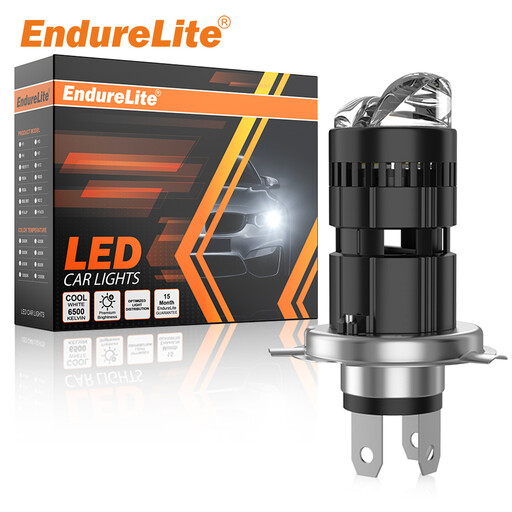
Why it suits this profile: A practical choice for anyone looking for a single H4 bulb for dipped beam and main beam and wanting to install it themselves. According to the product information, this bulb has a 6000K colour temperature, an integrated fan and CANbus support.
The H4 fitting and dual lighting function are clearly stated. However, check beforehand that your vehicle actually uses H4.
6000K cool white light, IP68 rating, aluminium housing and plug-and-play installation according to the product description.
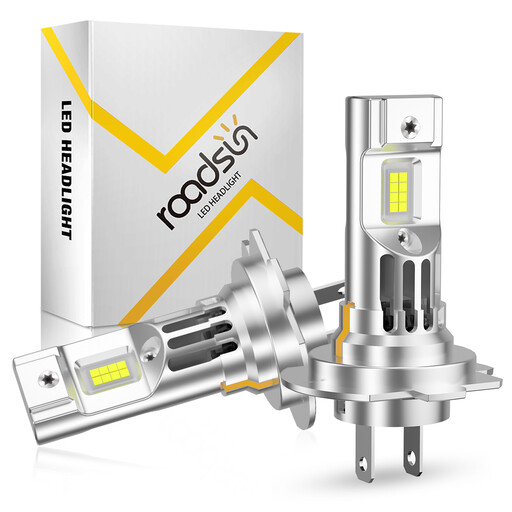
Why it suits this profile: Suitable for motorists looking for an H7 bulb without an external adapter. The product description states a 6500K colour temperature, integrated fan and IP68 protection.
The specified fitting, installation method and need for horizontal chip positioning help with a more precise installation. Some European models may still require a decoder.
H7 fitting, built-in high-speed fan, aluminium housing and installation without an additional adapter according to the manufacturer.
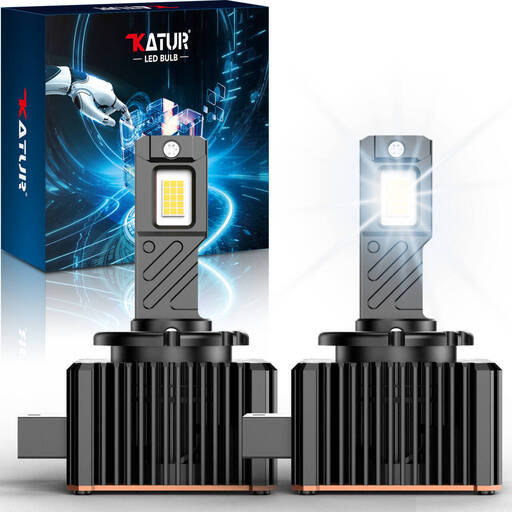
Why it suits this profile: For anyone wanting to replace HID lighting with D3S or D3R LED bulbs and willing to check the headlamp unit beforehand. According to the description, this product is intended exclusively for suitable HID assemblies.
The restriction to HID headlamp units is explicitly stated. This reduces the risk of fitting this D3S LED bulb into an unsuitable halogen housing.
D3S/D3R designation, 6500K light, built-in cooling fan and 1:1 installation according to the product information.
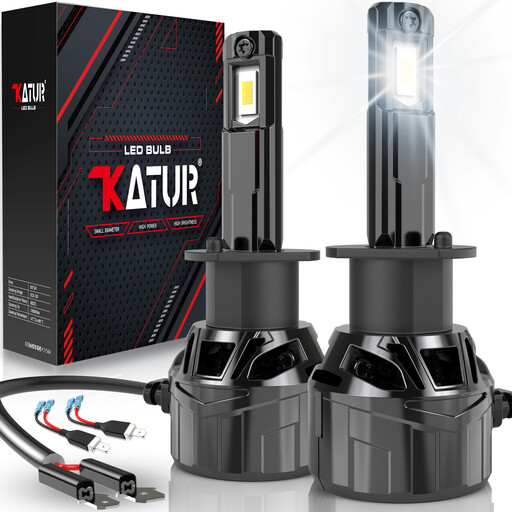
Why it suits this profile: The 1:1 mini design is intended for headlamp housings with limited space. The specified H1 fitting, 6000K colour temperature and integrated cooling make the specifications easy to understand.
According to the product description, the design does not require an external driver. However, check for error codes after installation and readjust the headlamp beam.
H1 fitting, 1:1 mini format, 9-32V range and built-in CANbus driver according to the product data.
We have compiled a complete, up-to-date list of products that fully meet these strict selection criteria and the applicable European safety regulations.
Switch off the lighting and allow the bulbs to cool before you begin. Ideally, wear gloves and do not touch the LED chips. Check the polarity, fit the sealing ring correctly and make sure the fan is not obstructed.
After installation, check the following:
Not every retrofit bulb is automatically permitted on every public road or in every headlamp unit. Therefore, check the vehicle documentation, any relevant approvals and the latest information from RDW or an inspection station.
LED technology can use less electrical power for a comparable lighting function, but actual consumption depends on the wattage, driver and vehicle. Check the stated power in watts and compare it with the original bulb.
Product pages sometimes quote 50,000 or 60,000 hours. According to the brands’ own claims, this refers to a theoretical service life under certain conditions. Heat, vibration, moisture and usage all affect real-world performance. Good cooling and a suitable housing are therefore important.
No. It depends on your car’s electronics. A standard plug-and-play bulb may work with a simple system. A sensitive onboard computer may require a CANbus decoder to reduce error messages or flickering. Check this before buying, using the make, model, year of manufacture and original fitting.
