
Vandaag of morgen in huis

Kwaliteit gegarandeerd

Welkomstaanbiedingen ontgrendelen: GRATIS bezorging | Tot 80% korting | Gratis 30 dagen JoyPlus-proefperiode
Download de app
As a Joybuy Product Recommendation Officer, I see people struggle daily with the switch to LED car lighting. The promises are significant: better visibility, a modern look, and a longer lifespan. But in practice, it's often more challenging. Many drivers fall into the same traps, resulting in flickering lights, dashboard error messages, or a beam pattern that blinds oncoming drivers.
Before you invest in an upgrade, it's helpful to know the most common missteps. This will help you avoid a bad purchase and ensure a safe, durable solution.
The 3 pitfalls of buying LED car bulbs:
To bypass these pitfalls, you should focus on a few concrete specifications. These determine whether a set of LED headlights is a good upgrade for your car.
The fitment is the connection of the bulb in the headlight unit. This must match your current bulbs exactly. The most common types are H7 LED (often for low beams) and H4 LED (usually a combination of low and high beam in one bulb). Check your car's owner's manual or the old bulb itself to determine the correct fitment. The wrong fitment simply won't fit.
A correct beam pattern is crucial for safety and vehicle inspections. Good plug-and-play car bulbs have a 1:1 design, meaning the LED chips are positioned in the exact same spot as the filament in a halogen bulb. This creates a sharp beam that illuminates the road where it's needed, without stray light that blinds oncoming drivers. So, don't just look at lumens, but especially for claims of a "perfect beam pattern" or "1:1 halogen design".
For cars built after circa 2005, proper CANbus integration is essential. This system prevents error messages on your dashboard. A "CANbus ready" bulb is a good start, but be aware: for some brands (like VAG, BMW, Mercedes), an external decoder may still be necessary. Regarding colour, a 6000K LED bulb produces a crisp, cool white light comparable to daylight. Many drivers find this more pleasant and it gives the car a modern look.
Not everyone has the same needs. Below are a few popular choices, tailored to a specific type of user.
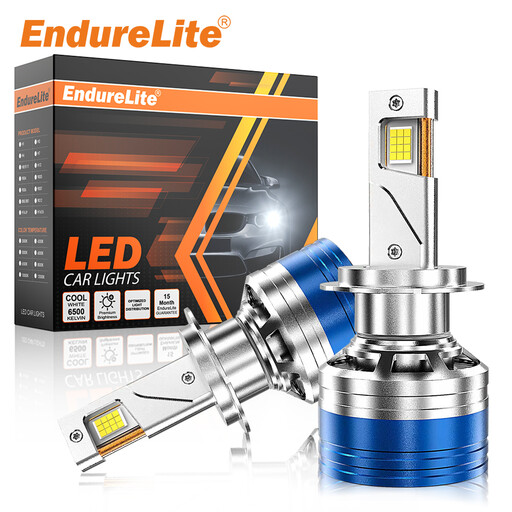
Why it's a match: This driver wants to replace their car's lighting without any hassle. The 1:1 design makes installation as simple as changing a standard halogen bulb. No modifications, no extra cables.
The "plug & play" and 1:1 design directly address installation and beam pattern issues. The built-in CANbus driver is designed to prevent error messages on most vehicles.
Simple installation and a design that mimics the original halogen beam pattern, minimising the risk of glare.
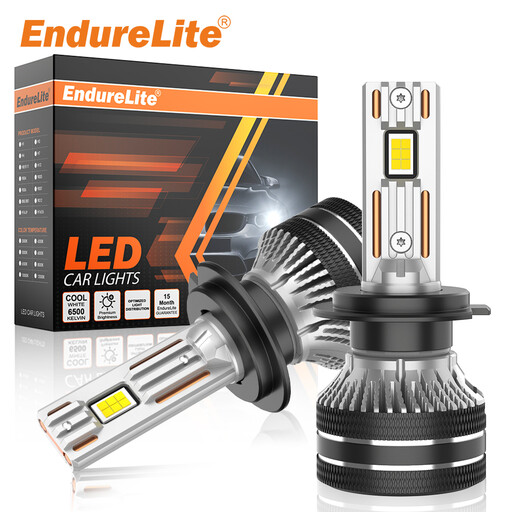
Why it's a match: For those who often drive on dark, rural roads, maximum visibility is a priority. This set, often used as LED fog lights or headlights, offers high light output for a wider and farther view.
It bypasses the "lumen myth" by combining high light output with a focus on a "perfect beam pattern." This ensures the bright light is effectively directed onto the road, without dark spots.
According to the manufacturer, ENdureLite, these bulbs offer up to 300% more brightness than halogen, which can significantly improve night-time visibility.
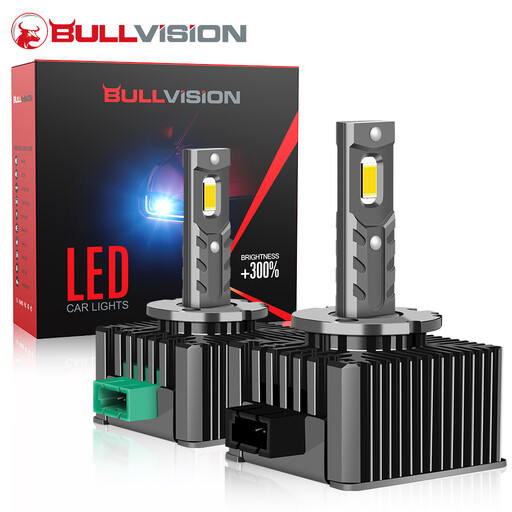
Why it's a match: These bulbs are specifically designed as a direct replacement for the original Xenon (HID) headlights found in many modern European and Asian cars. The owner wants an upgrade without disrupting the car's complex electronics.
It tackles the CANbus pitfall with a design that, according to the manufacturer Bullvision, is compatible with most modern systems, reducing the chance of error codes. It is a direct replacement for the HID ballast.
Provides an upgrade path for cars with factory-installed Xenon, offering the benefits of LED (instant-on, longer lifespan) with a focus on flawless electronic integration.
We've compiled a complete, up-to-date list of products that meet these selection criteria. Find the right match for your car and budget.
The regulations surrounding retrofitting LED lighting are complex. Officially, a bulb must have an E-mark that corresponds to the headlight unit. Many aftermarket sets do not have this and are strictly for off-road or track use only. In practice, however, passing an inspection largely depends on the beam pattern. A set of plug-and-play car bulbs that perfectly mimics the original beam pattern and causes no glare has a much higher chance of being approved. Always have the headlights professionally aligned after installation.
Modern cars use a CANbus system to check if all components, including lighting, are functioning correctly. An LED bulb consumes much less power than a halogen bulb. This can make the onboard computer think the bulb is burnt out, displaying a warning on the dashboard. A CANbus LED bulb has a built-in circuit that compensates for this power difference, making the car "think" a standard bulb is installed and preventing an error message from appearing.
Manufacturers often claim a lifespan of 30,000 to 50,000 hours. The actual lifespan is highly dependent on thermal management. LED chips produce a lot of heat, and if it's not dissipated effectively, their quality degrades quickly. Models with a robust aluminium housing and an active cooling fan typically last significantly longer than cheaper, passively cooled alternatives. Overheating is the primary reason why LED bulbs fail prematurely.
