
Vandaag of morgen in huis

Kwaliteit gegarandeerd

Welkomstaanbiedingen ontgrendelen: GRATIS bezorging | Tot 80% korting | Gratis 30 dagen JoyPlus-proefperiode
Download de app
Driving at night or in poor weather with dim halogen bulbs can be unsafe and tiring. You know the feeling: squinting to see the road better, while the modern, bright white lights from other cars make your own yellow headlights seem painfully inadequate. Upgrading to LED car bulbs is the clear choice for better visibility, a sleeker look, and a longer lifespan.
But the market is vast, and the technical specifications can be confusing. Which socket type do you need? How do you avoid error messages on your dashboard? As a Joybuy Product Recommendation Officer, I'm here to help you find the right information so you can make a choice that fits your car and your needs.
Before making a purchase, there are a few key points to consider. This will help you find the right bulbs straight away and avoid installation issues.
Not every bulb fits every car. The socket is the base of the bulb that twists or clicks into your car's housing. Common types include H1 LED for fog lights, H15 LED for high beams and daytime running lights, and W16W LED for reverse lights. The easiest way to find the correct socket type is to consult your car's owner's manual or inspect the current bulb. The code is usually printed on the bulb itself.
Modern cars use a Canbus (Controller Area Network) system to monitor the status of various components, including the lights. Because LED bulbs consume much less power than halogen bulbs, the system might think a bulb is burnt out. This results in an error message on your dashboard.
To prevent this, choose Canbus error free LED bulbs. These have a built-in resistor that simulates the power consumption of a halogen bulb, so the Canbus system won't detect an error. This is especially important for European car brands.
A bulb's brightness is expressed in lumens (lm). The higher the lumen count, the more light the bulb produces. The colour temperature, measured in Kelvin (K), determines the colour of the light. Standard halogen bulbs have a yellowish hue of around 3200K. A popular choice for LEDs is 6500K xenon white. This colour provides a bright, daylight-like white light that better illuminates the road and traffic signs, giving your car a modern look.
Based on product specifications and ease of installation, we've highlighted some popular choices for you.
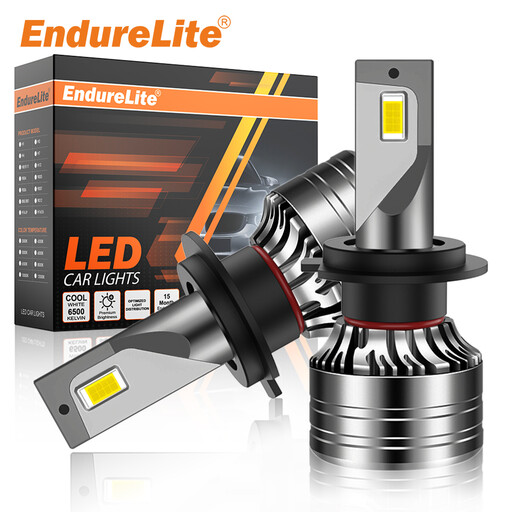
Why It Stands Out These ENdureLite H1 bulbs are designed as a direct upgrade for your fog lights. According to the manufacturer, they offer a light output up to 300% brighter than standard bulbs, ensuring significantly better visibility in fog or heavy rain. The design is focused on a simple plug and play installation.
Advantages
Who It's For For drivers looking for a powerful and reliable LED fog light with a straightforward installation process.
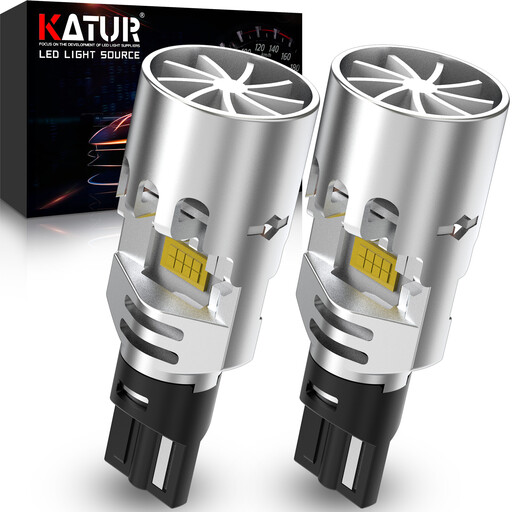
Why It Stands Out The KATUR W16W LED bulb is specifically designed as a high-performance upgrade for your reverse lights. The manufacturer claims a brightness up to 700% higher than halogen, making parking and maneuvering in the dark significantly easier. The crisp 6500K xenon white colour effectively illuminates the area behind your car.
Advantages
Who It's For Ideal for anyone who wants to increase safety with an extremely bright LED reverse light and desires a flawless, quick installation.

Why It Stands Out These OUSHI H15 LED bulbs serve as a dual upgrade: for both your high beams and your daytime running lights. With a claimed brightness of 600% over halogen and a light output of 30,000 lumens per pair, these bulbs offer an impressive illumination range. This makes them a popular choice for those who often drive on unlit roads.
Advantages
Who It's For For car owners seeking a significant upgrade for their high beams and daytime running lights, with a focus on maximum brightness and compatibility with European cars.
The right LED lighting depends heavily on your car model and specific needs. If the recommendations above don't have the correct socket type, or if you're looking for other types of lighting like city lights or interior lights, there's more to explore.
Check out our full range of LED driving lights for more options.
In many regions, including the EU, strict rules apply to retrofit LED headlights (replacing halogen with LED in an existing headlight assembly). The bulb must have an E-mark certification that is specifically valid for your car model and headlight unit. Without this certification, the car is often not officially approved for use on public roads. Always check your local laws and the product's specifications. Bulbs without a specific certification are generally permitted for off-road or track use only.
The most reliable method is to choose bulbs explicitly marketed as Canbus error free LED. These are designed to be compatible with the onboard computer of most modern cars. If you still get an error message with a particularly sensitive car model, a separate Canbus decoder (resistor) can provide a solution.
For most plug and play car bulbs, the installation is surprisingly simple. You can often twist out the old bulb and click the new LED bulb in without any special tools. However, it's always a good idea to consult your car's owner's manual for the exact procedure, as the accessibility of the bulbs can vary between car models.
