
Vandaag of morgen in huis

Kwaliteit gegarandeerd

Welkomstaanbiedingen ontgrendelen: GRATIS bezorging | Tot 80% korting | Gratis 30 dagen JoyPlus-proefperiode
Download de app
Thinking of replacing your halogen or HID lights with LED car bulbs? A high lumen rating can seem like the deciding factor, but brightness isn’t the only thing that determines whether a bulb is right for your car. The fitting, reflector, cooling system and vehicle electronics are just as important.
Choosing the wrong bulb can mean it won’t fit in the housing, a warning appears on your dashboard, or the beam dazzles other road users. This buying guide helps you compare LED car headlight bulbs, LED fog lights and other LED car bulbs based on practical features.
H1, H4, H7, H11, HIR2 and HB3 fittings may look similar, but they aren’t interchangeable. An H7 LED bulb, for example, won’t automatically fit an H11 socket. So first check your vehicle’s handbook, the original bulb or the parts list for your vehicle.
Look out for variants such as:
A plug-and-play LED bulb may be easy to fit mechanically, but that doesn’t mean it will work smoothly in every vehicle without an extra part. Some cars monitor the power draw of the lights, which can cause flickering or warning messages.
CANbus LED bulbs have a built-in decoder or driver for this purpose, but product information notes that some sensitive vehicles may still need an additional CANbus decoder. This is mentioned for certain Volkswagen, Mercedes-Benz and BMW models, among others.
Brands sometimes quote figures such as 30,000 lumens or “600% brighter”. According to the brands’ own claims, these are maximum or comparative figures; actual light output also depends on the headlight unit, voltage, heat dissipation and adjustment.
In practice, a bulb with a well-shaped beam is often more useful than one with a high marketing figure alone. Always check the beam height after fitting, and have the headlights adjusted if necessary.
Start by checking the exact fitting. Common options for replacing halogen bulbs include an H1 LED bulb, H4 LED bulb, H7 LED bulb, H11 LED bulb, HIR2 and HB3. An H4 bulb usually combines dipped beam and main beam in one fitting. With H15, main beam can be combined with daytime running lights.
Take extra care with HID lighting. A D1S D3S LED bulb is designed for a specific HID headlight unit, not a halogen housing. So first check whether your car actually uses a D1S, D1R, D3S or D3R system.
Many LED car bulbs offer 6000K or 6500K white light. This gives a cool white look that some drivers compare with white xenon headlights. However, a higher Kelvin rating doesn’t automatically mean more light. In rain, fog or on dirty roads, very cool white light may look different from warmer light.
For LED fog lights, a correctly shaped beam is especially important. Only use a colour and bulb that are suitable for the vehicle’s lighting unit and for use on public roads.
LEDs produce less heat at the light source than traditional halogen bulbs, but the LED chip and electronics still need to dissipate heat. Products in this selection use features such as aluminium housings, copper heat conductors and built-in fans. According to the product descriptions, stated lifespans range from 50,000 to 70,000 hours. Treat these as product specifications under certain conditions, not as a guaranteed lifespan in every car.
Also check that the bulb will fit behind the dust cover. An external driver, large fan or extra cable can make installation tricky in a narrow headlight unit.

Why it suits this profile: A compact H4 option for anyone looking to switch from halogen to LED themselves, with straightforward installation.
The product description specifies a 1:1 size, 6000K light colour and CANbus support. Still check compatibility with your vehicle.
H4 for dipped and main beam, aluminium housing, built-in fan and IP68 rating, according to the product information.
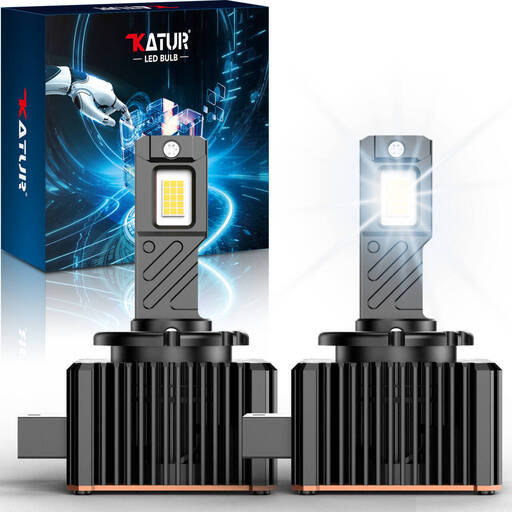
Why it suits this profile: Designed for drivers who want to replace their existing HID headlight unit without switching to a halogen fitting.
The product information explicitly states that this bulb is only designed for HID units. This helps you avoid pairing it with a halogen headlight.
D3S/D3R designation, 6500K colour temperature, 1:1 design and built-in 16.000 RPM fan, according to the product specifications.
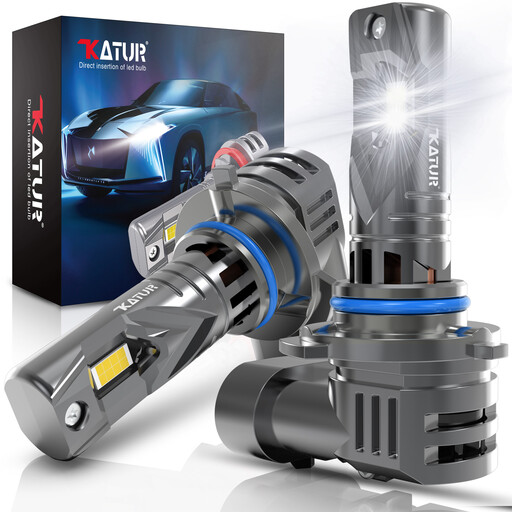
Why it suits this profile: For cars with a HIR2 or 9012 fitting, where size, cooling and direct installation matter.
According to the description, the 1:1 mini size is designed to fit without modifying the socket. The 98% CANbus claim may vary by vehicle.
HIR2/9012 fitting, 6000K white light, aluminium housing, IP65 rating and external adapter, according to the product specifications.
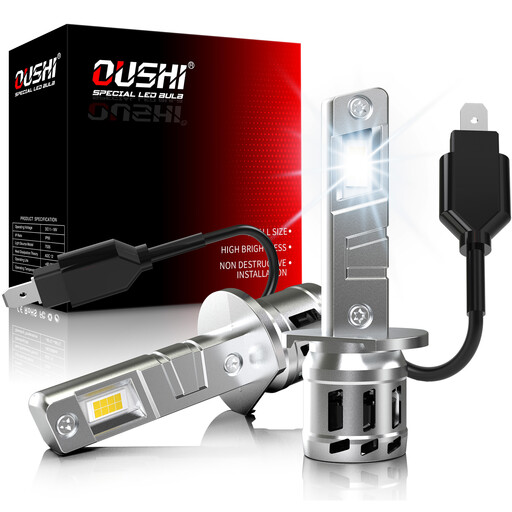
Why it suits this profile: An H1 set with a compact design for drivers who want to fit the bulbs themselves.
The manufacturer specifies a 1:1 mini size, no external driver and CANbus functionality. If warning messages appear, additional support may be needed.
H1 fitting, 6500K colour temperature, aluminium housing and built-in fan, according to the product description.
Only use LED car bulbs if they’re suitable for your vehicle and the relevant lighting function. If you’re unsure, check your vehicle documentation and the Dutch road traffic regulations in force.
We’ve put together a full, up-to-date list of products that meet these strict selection criteria and the applicable European safety requirements.
According to product specifications, LEDs may use less power than some halogen bulbs. Actual consumption depends on the bulb, the vehicle and how long the lights are used. So compare the stated wattage per pair or per bulb, rather than looking only at the lumen claim.
Product descriptions often state a lifespan of 50,000 to 70,000 hours. These figures are based on specific conditions. Heat, moisture, vibration, voltage fluctuations and limited ventilation space can all affect how long the bulbs last.
No. Some models have a built-in CANbus driver and work without an extra component. However, certain vehicles may still show warning messages or experience flickering. Check the vehicle compatibility list and keep the original bulbs until you’ve fully tested the installation.
