
Vandaag of morgen in huis

Kwaliteit gegarandeerd

Welkomstaanbiedingen ontgrendelen: GRATIS bezorging | Tot 80% korting | Gratis 30 dagen JoyPlus-proefperiode
Download de app
Switching to LED car bulbs can be appealing: LED lighting often uses less energy, gives a modern colour of light and is available for headlights, fog lights, parking lights and interiors. However, not every LED bulb will fit every car. The wrong fitting, a warning message or a poorly aligned beam pattern can make your upgrade unusable.
As a Joybuy Product Recommendation Officer, I filter the key product information down to practical points. This helps you see which features matter and which marketing claims are worth checking before you order.
H1, H4, H7, H11, H15, HB3 and HIR2 are different fitting types. So an H7 LED bulb won’t automatically fit an H4 or H11 socket. Check the original bulb number on the old bulb or in your car’s manual.
For smaller lights, names such as W5W LED bulbs, T10 LED bulbs, 194, 168 and 501 are common. These designations can refer to similar base types, but always check the size and connection.
Plug-and-play LED lighting usually means a direct connection without a separate driver or complicated wiring. However, your vehicle may show an error message if the electrical load differs from that of the halogen bulb.
Sensitive CANbus systems may need additional resistors or decoders. A product may be designed as a CANbus LED bulb according to the manufacturer, but that doesn’t guarantee compatibility with every car. Some models from Volkswagen, BMW, Mercedes-Benz, Volvo and other European brands may need additional compatibility checks.
Claims such as ‘300% brighter’ or ‘600% brighter’ come from manufacturers’ product descriptions. According to information provided by the brands or sellers concerned, these are stated values, not a universal guarantee of real-world performance.
The position of the LED chip, the cooling system and the shape of the reflector matter more than lumens alone. A poor beam pattern can create dark spots or dazzle oncoming drivers. After fitting, check your headlights and have them adjusted if necessary.
Start by checking the original bulb type:
Also check how much space there is behind the bulb. A built-in fan may need extra depth.
A rating of 6000K for LED car bulbs means cool white light. 6500K looks even whiter and bluer. For headlights, colour isn’t the only thing to consider: beam distribution and legal approval are just as important.
W5W or T10 bulbs are popular for parking, interior and number plate lights. OSRAM gives the NIGHT BREAKER LED W5W a colour temperature of 5700K and a light output of up to 50 lumens. According to the product information, this bulb is intended for 12V parking lights, position lights, number plate lights and interior lighting.
Coloured T10 bulbs, such as blue or amber ones, are mainly suited to decorative or specific vehicle applications. Check that the colour is appropriate for the function and complies with local traffic regulations.
LEDs produce less heat at the front than halogen bulbs, but the electronics and LED chip still need to dissipate heat. Look for an aluminium housing, heat sink or fan. An IP rating such as IP67 or IP68 describes protection against dust and water according to the product information; also check that the plug and wiring are properly sealed.
Regulations are particularly important for auxiliary lighting. According to the product information, the OSRAM LED light bars VX250-SP and VX500-SP carry ECE R112 and ECE R10 certification. The description also states that they must be installed as a pair to meet the stated ECE requirements for use on public roads. A light bar also doesn’t automatically replace your existing headlights.
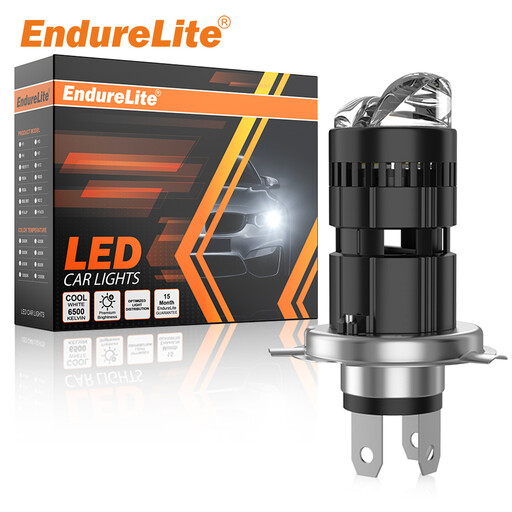
Why it suits this profile: This H4 bulb is designed for drivers looking for a direct replacement who have checked that their car uses H4 bulbs.
The description specifies a 1:1 design, direct installation, IP68 protection and built-in CANbus technology. Still, check your vehicle’s specifications and the beam pattern.
H4 for dipped and main beam, 6000K according to the product information, aluminium housing and fan.
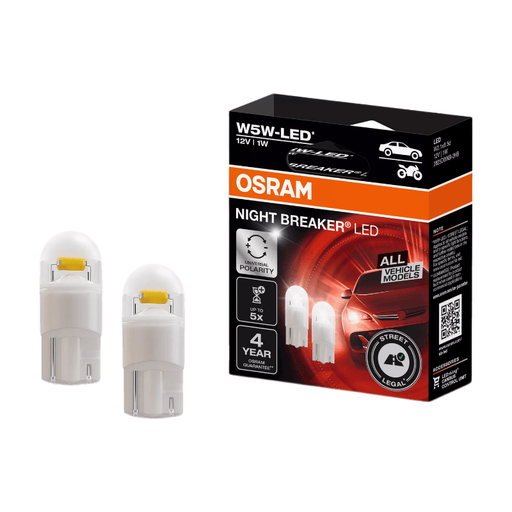
Why it suits this profile: A good choice if you’re looking for a branded product for W5W/T10 applications such as parking lights, number plate lights or interior lighting.
The product information states that it is approved for road use for the specified 12V functions and has universal polarity. Don’t use the bulb behind red or yellow glass.
5700K, up to 50 lumens, 1 watt and, according to OSRAM, up to 80% lower energy consumption than traditional bulbs.
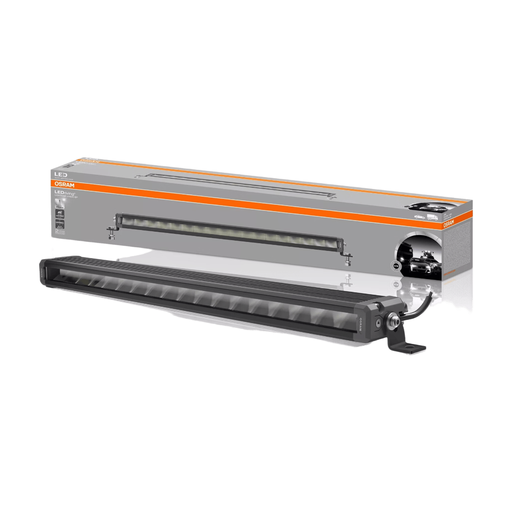
Why it suits this profile: An option for ATV, UTV, campervan, commercial vehicle and off-road users looking for extra main beam alongside their existing lights.
The product details specify IP67, 12/24V support and ECE R112/R10. For road use, it must be installed in accordance with the stated conditions, including fitting as a pair.
According to the product specifications: 2800 lumens, 6000K, a spot beam reaching up to 415 metres and 63 watts per unit.
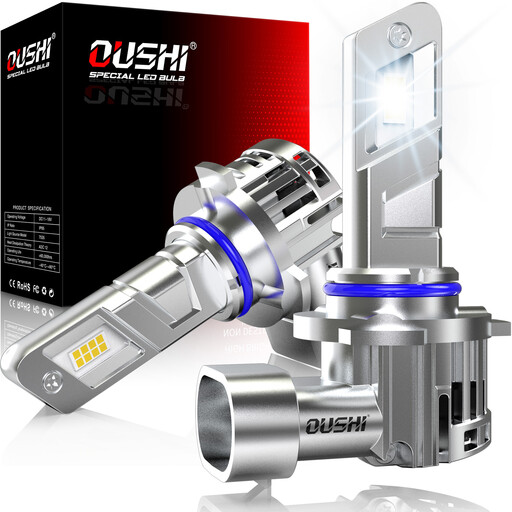
Why it suits this profile: Designed for vehicles with a 9012/HIR2 fitting, where a compact 1:1 replacement is preferred.
The product information specifies a mini size, plug-and-play connection and built-in CANbus. Some models may still need a decoder if an error message appears.
HIR2/9012 fitting, 6500K according to the product description, aluminium housing and fan for heat dissipation.
We’ve put together a complete, up-to-date list of products that meet these strict selection criteria and the applicable European safety regulations.
For a complete rear light unit, such as an LED set for a specific generation of VW Golf, sealing, connectors and alignment are especially important. If in doubt, have a garage carry out the installation.
No. Approval depends on the bulb, its function, the vehicle and the relevant certification. Check the product documentation and don’t assume that an LED bulb can be used in every headlight housing. Additional fitting and usage conditions apply to extra main beam lighting, such as a light bar.
Manufacturers sometimes quote 50,000 or 60,000 hours. These are stated values from the product information, not a guarantee for every situation. Heat, vibration, moisture, voltage and vehicle design all affect the actual lifespan.
Often, yes, especially for parking, interior and number plate lights. According to its own product information, OSRAM states that the W5W uses up to 80% less energy than traditional bulbs. For headlights, also check the total wattage and whether your CANbus system accepts the lower load.
