
Vandaag of morgen in huis

Kwaliteit gegarandeerd

Welkomstaanbiedingen ontgrendelen: GRATIS bezorging | Tot 80% korting | Gratis 30 dagen JoyPlus-proefperiode
Download de app
Switching to LED car lighting sounds simple: take out the old bulb and put in an LED one. In practice, problems often arise because of the wrong fitting, not enough space behind the headlight or faults in the vehicle’s electrical system. Claims such as ‘300% brighter’ and ‘99% compatible’ only mean something if the bulb actually suits your vehicle and light unit.
In this buying guide, you’ll find out what to look for in LED car headlights, interior lights and rear lights. That way, you can avoid buying a bulb that flickers, triggers warning messages or produces an incorrect beam pattern.
H4, H7, H11, H15, HB3, HIR2 and D3S aren’t marketing names: they refer to different fitting and application types. An H4 bulb for main and dipped beam won’t automatically fit an H7 housing. So check the following first:
Checking your vehicle’s handbook or the existing bulb can help you avoid a lot of returns.
Manufacturers sometimes quote very high lumen figures. These indicate the theoretical light output of the light source, but don’t tell you exactly how the light will fall on the road. The position of the LED chip, the reflector and the headlight alignment all help determine the final beam pattern.
A 1:1 design compared with a halogen bulb can help approximate the original light distribution, but always check that the beam is correctly aligned after fitting. Misaligned LED car headlights can dazzle oncoming drivers.
Modern cars monitor the power consumption of their lights. LED bulbs often use less power than halogen bulbs, which can trigger a warning message, cause flickering or make the lights switch off. According to the product description, a built-in CANbus driver reduces the likelihood of problems, but sensitive vehicle systems may still need a decoder or resistor.
Also check whether you’ll need extra wiring, an adapter or a separate CANbus module. This can make the difference between genuine plug-and-play car lighting and an installation that needs additional parts.
Start by checking the exact fitting. Common types include:
D3S LED bulbs aren’t intended for halogen headlights. For every fitting, the light unit must be suitable for the light source, and you should check local regulations and any approval requirements.
LEDs don’t convert all electrical energy into light, so heat needs to be dissipated. Look for an aluminium housing, cooling fins or a fan. A fan can cool the bulb efficiently, but it must fit without touching the cover.
An IP rating indicates protection against dust and water. IP65 and IP68 are often mentioned in product descriptions, but this doesn’t automatically make a bulb suitable for every headlight housing. Check that the original seal remains intact.
A colour temperature of around 6000K to 6500K gives a cool white appearance. That doesn’t automatically make it more practical than a warmer colour. Also consider the intended use: decorative blue or coloured W5W bulbs aren’t suitable for use as main lights.
Lifespan claims such as 30,000, 50,000 or 60,000 hours come from product information and depend on temperature, use and electrical load. For example, according to the product description, ENdureLite gives the H4 bulb a lifespan of up to 50,000 hours. Treat this as a guide, not a guaranteed lifespan.
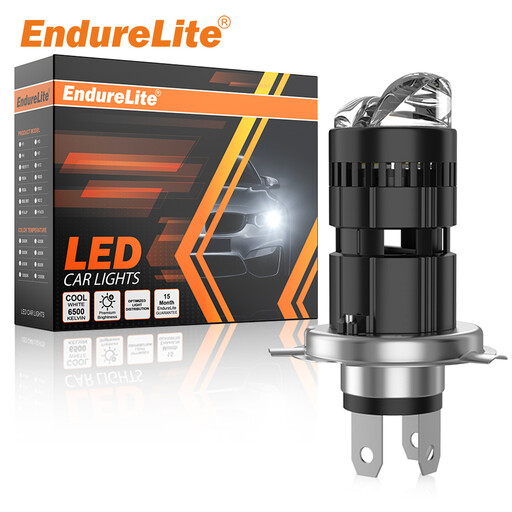
Why it suits this profile: For anyone looking to replace an H4 bulb without an external driver. The product description specifies a 1:1 size, a CANbus-ready design and IP68 water resistance.
The 1:1 design is intended to approximate the original light position. Check first that your car uses an H4 fitting.
Main and dipped beam in one bulb, a built-in fan and a stated colour temperature of 6000K.
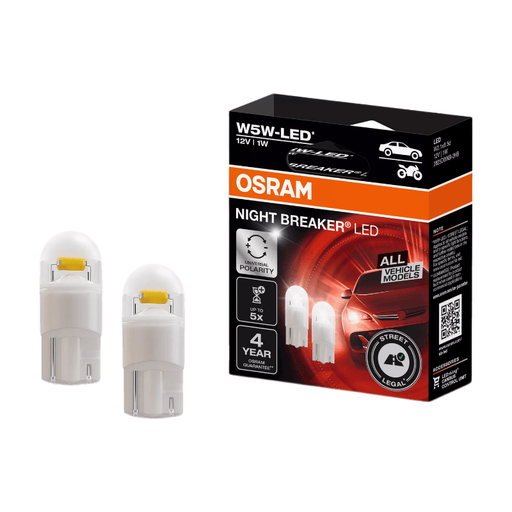
Why it suits this profile: This set is designed for sidelights, position lights, number plate lights and interior lighting in 12V vehicles. According to the product information, the bulb is road-approved for the stated applications.
Its intended use is clearly defined. Don’t use this W5W behind red or yellow glass, or as a replacement for a main or headlight bulb.
50 lumens, 5700K, universal polarity and, according to the product description, up to 80% lower energy consumption than traditional bulbs.
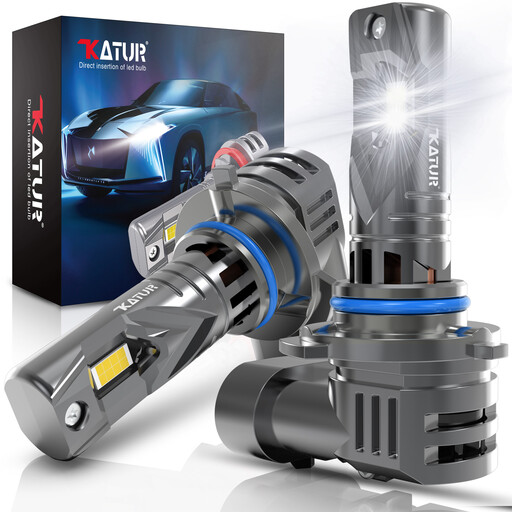
Why it suits this profile: A targeted choice for cars with a HIR2 or 9012 fitting. According to the product description, the bulb has a 1:1 design and comes with an external driver and cooling fan.
The fitting and intended use are clearly specified. This helps you avoid buying a universal bulb that won’t fit your headlight unit.
6000K white light, an IP65 rating and a stated 1:1 size with a CANbus-ready driver.
We’ve put together a complete, up-to-date list of products that meet these strict selection criteria and current European safety regulations.
Switch off the lights and let any used bulb cool completely. Fit the LED bulb without touching the light-emitting parts. Then check:
For a complete rear light unit, such as an LED set for a specific Volkswagen Golf, professional fitting is recommended. The seals, connectors and alignment must all be fitted correctly to prevent moisture or electrical faults.
LED bulbs often use less electrical energy for a similar application. The exact consumption varies by fitting and product, so check the stated wattage and bear in mind the power used by any fan or driver.
Expected lifespan varies by model and conditions of use. Manufacturers sometimes quote tens of thousands of hours, but heat, vibration, moisture and the quality of the vehicle’s electrical system all have an impact. Treat a lifespan claim as a product specification under certain conditions, not as a guaranteed period of use.
No. Some CANbus LED car bulbs have a built-in driver that helps prevent warning messages. However, sensitive systems may still need extra support. Check vehicle compatibility and only choose a decoder or resistor that’s suitable for your car.
