
Vandaag of morgen in huis

Kwaliteit gegarandeerd

Welkomstaanbiedingen ontgrendelen: GRATIS bezorging | Tot 80% korting | Gratis 30 dagen JoyPlus-proefperiode
Download de app
Choosing the right LED lighting can lead to significant savings on your energy bill and can make or break the atmosphere in your home. But the market is filled with technical jargon and marketing promises. Many people fall into the same traps: they buy a bulb that is too bright or too dim, or one that emits a light colour that turns a living room into a sterile waiting room. Before you go out to buy new bulbs, it's wise to know what to look for.
These are the most common mistakes:
To avoid a bad purchase, there are a few specifications you should always check. These determine whether a bulb will fit at all and produce the desired effect.
Before you even look at Lumens or colour, you need to know which fitting you need. A bulb with the wrong fitting simply won't work. The most common fittings in UK households are:
Forget wattage as a measure of brightness. Look at the number of Lumens. The higher the number, the more light the bulb emits. As a guideline, you can use the following comparison with old incandescent bulbs:
Choose the light output based on the room's function. You'll need more Lumens for reading light than for soft indoor ambient lighting.
The colour of the light has a major impact on the atmosphere. The scale is expressed in Kelvin (K).
Based on these criteria, we have selected a number of products that suit different needs and situations.
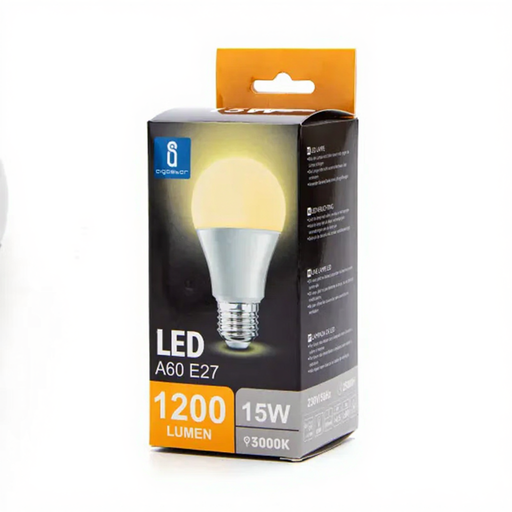
Why This Fits Their Persona: Looking for an affordable and powerful replacement for an old 100W incandescent bulb? This bulb offers a lot of light for a low price. Ideal for spaces where you need bright, functional light, such as a utility room, hallway, or home office.
The specifications are clear: 1500 Lumens and 3000K. You know exactly what brightness and warm white colour you're getting, which helps you avoid the wattage and Kelvin confusion.
High light output (comparable to a 99W incandescent bulb) with a low consumption of 15W. A direct, energy-efficient solution.
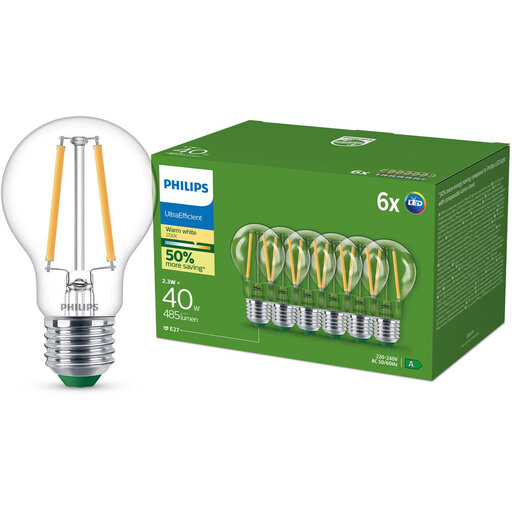
Why This Fits Their Persona: For those who invest in sustainability and want to save in the long run. These bulbs are designed for maximum energy efficiency and a very long lifespan, meaning you'll replace them less often and achieve structural savings on your energy bill.
This bulb tackles the lifespan trap. According to Philips, the bulb has a lifespan of up to 50,000 hours. The Energy Label A confirms its extreme efficiency, which is an objective measure of performance.
Extremely energy-efficient (2.3W consumption) with a pleasant, warm white colour of 2700K. An investment that pays for itself.
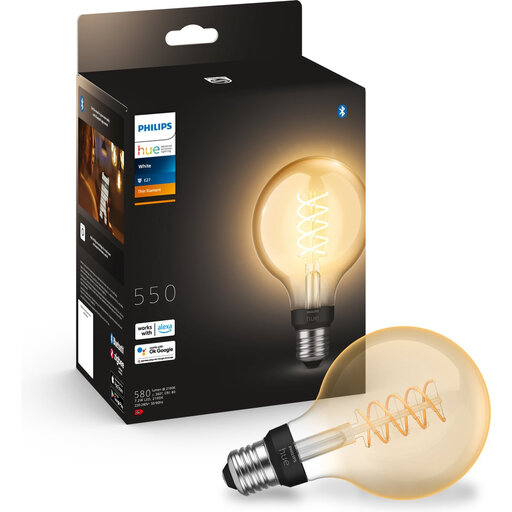
Why This Fits Their Persona: Perfect for those who want to combine atmosphere with technology. This decorative globe bulb with a visible filament has a vintage look but is a fully-featured smart bulb. Controllable via an app, dimmable, and ideal for creating the perfect ambiance.
This bulb solves the problem of the 'wrong' light colour or intensity. Because it is fully dimmable via the Philips Hue app, you can effortlessly adjust the brightness for any moment of the day.
Combines a stylish vintage design with modern smart features. Can be controlled directly via Bluetooth or integrated into a more extensive Hue system.
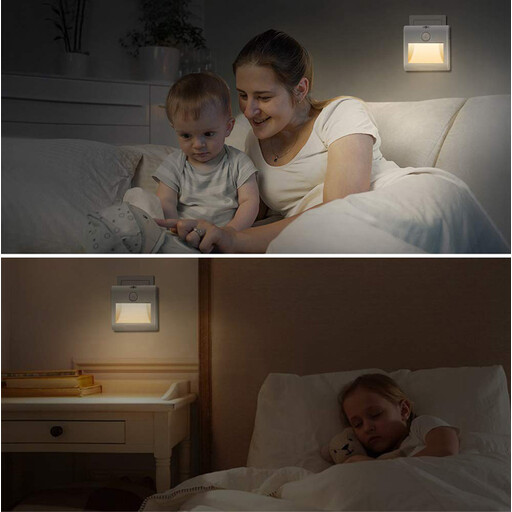
Why This Fits Their Persona: Ideal for anyone who wants to walk safely through the house at night without turning on bright lights. This night light with a sensor automatically turns on when it detects motion in the dark. Perfect for the hallway, toilet, or a child's room.
This product is specifically designed for a particular task. It prevents you from using a standard bulb that is too bright and disrupts your sleep. The brightness is dimmable, and the sensor ensures it only lights up when needed.
Automatic lighting, adjustable brightness, and very low energy consumption (1W). A simple plug-and-play solution for a common problem.
We have compiled a complete, up-to-date list of products that fully meet these strict selection criteria and UK safety regulations.
An LED bulb consumes, on average, 80-90% less energy than a comparable incandescent bulb. Replacing a 60W incandescent bulb with a 7W LED bulb can easily save you more than ?15 per year on your energy bill with average use. Because LED bulbs also last much longer (often 15,000 hours or more, compared to 1,000 hours for an incandescent bulb), you also save on the cost of buying new bulbs.
No, not all LED bulbs are dimmable. This must be explicitly stated on the packaging or in the product description. If you connect a non-dimmable LED bulb to a dimmer switch, it may flicker, buzz, or even break. So, always check if the bulb is labelled as 'dimmable'.
These are the two most common screw-in fittings. The number refers to the diameter of the screw thread in millimetres. An E27 fitting has a diameter of 27 mm and is also known as a 'Large Edison Screw'. An E14 fitting, at 14 mm, is much narrower and is known as a 'Small Edison Screw'. Always check the fitting of your current bulb or fixture before buying a new one.
