
Vandaag of morgen in huis

Kwaliteit gegarandeerd

Welkomstaanbiedingen ontgrendelen: GRATIS bezorging | Tot 80% korting | Gratis 30 dagen JoyPlus-proefperiode
Download de app
Good outdoor lighting needs to suit the location, how you plan to use it and the available power supply. A light that’s suitable for a sheltered balcony may not be able to withstand heavy rain on an exposed driveway. Bright lights aren’t always the best choice either: a garden path usually needs subtle lighting to help you find your way, while a garage or workspace calls for broader, more powerful illumination.
Here are some common pitfalls to avoid when buying outdoor lights:
An IP code has two digits. The first indicates protection against solid objects and dust; the second indicates protection against water.
So, a waterproof outdoor light isn’t automatically suitable for every type of weather. Check the cables, plugs, switches and junction boxes too. With some string lights, only the lights themselves are suitable for outdoor use, while the controller or plug must be kept dry.
For atmospheric garden lighting, warm white light around 2700 to 3000 K is usually more relaxing. Neutral or cool white light is more practical for a garage, driveway or work area. A wide beam, such as 120 degrees, illuminates a larger area, but can cause glare if the light is aimed directly at windows or a path.
Use these suggestions as a practical guide:
Solar outdoor lighting works without fixed wiring, but its performance depends on its position and the weather. Check the stated charging time, run time, battery capacity and the position of the solar panel. An automatic dusk sensor is useful because it switches the light on and off for you.
For mains-powered lighting, cable length, plug type and installation all matter. A light with a short cable may not reach the spot you want without an extension lead. For a fixed wall light, you should also check that the voltage, bulb fitting and maximum wattage are compatible with your existing installation.
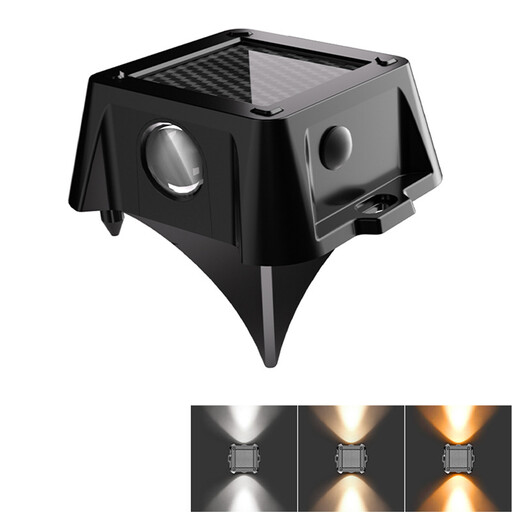
Why it suits this type of buyer: This cordless solar light can be used along garden paths, on a patio or balcony, or by a driveway. According to the product description, it has a 600 mAh battery, a dusk sensor and three selectable light colours.
It doesn’t need a fixed power connection. The stated IP67 rating and automatic switch-on make it easier to use outdoors, provided the solar panel gets enough direct light.
Solar-powered, with two installation options and three light colours. According to the specifications, it provides up to 10 hours of light after a full charge.
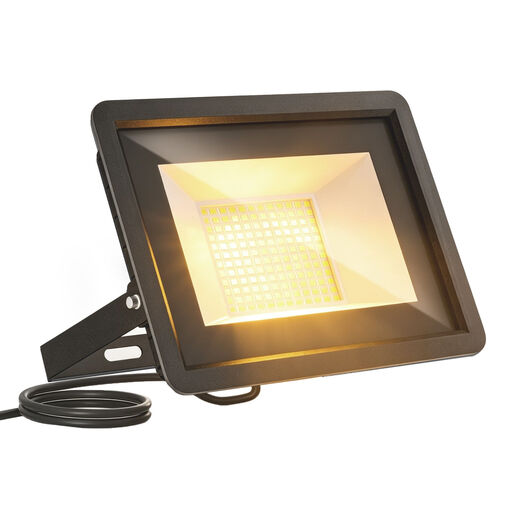
Why it suits this type of buyer: This set is designed for anyone who wants to light several areas, such as a large garden, driveway, garage or business premises. The product details state that the 100 W version produces 7000 lumens, with a choice of warm or cool white light and an adjustable bracket.
The light output, colour temperatures, wide beam and IP66 rating are all clearly specified. This makes it easier to choose the right light for your space than when a product is described simply as “extra bright”.
Set of 10, choice of light colours, 120° beam angle and a mounting bracket that adjusts through 180°.
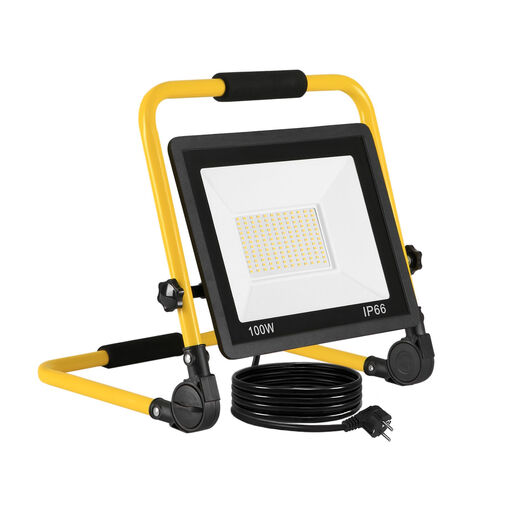
Why it suits this type of buyer: This LED work light is designed for jobs in the garden, garage or workspace. According to the product description, it has a 3-metre cable, a folding stand, a handle and a colour temperature of 6400 K.
The light isn’t limited to wall mounting; its stand means you can move it around too. It’s rated IP66 for indoor and outdoor use, but always check the cable and connection requirements.
100 W LED lighting, 120° beam angle, 3-metre cable and a portable stand for temporary lighting.
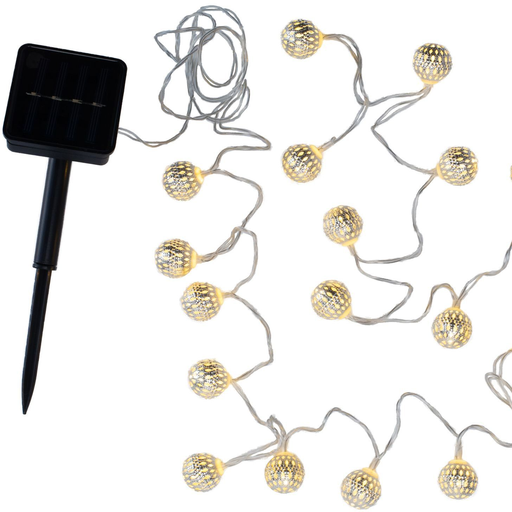
Why it suits this type of buyer: This outdoor string light uses a solar panel and has 20 lights along its 5-metre length. It’s ideal for decorative lighting along a fence, patio or balcony, without needing a socket at every point.
The length and number of lights are clear from the outset. Keep the solar panel out of the shade and use the string lights to create atmosphere, rather than as a replacement for functional path lighting.
5-metre length, 20 warm white LED lights, automatic switch-on and four lighting modes, according to the product details.
We’ve put together a full, up-to-date list of products that meet these strict selection criteria and the applicable European safety regulations.
It depends on the wattage, the number of lights and how long they’re on. A 10 W LED light left on for five hours a day uses around 1.5 kWh per month. Solar outdoor lights don’t use electricity from a socket while they’re on, but the battery and light output depend on sunlight and temperature.
Standalone solar lights and many simple path lights can usually be installed without an electrical connection. A fixed 230 V outdoor wall light should be installed by a qualified electrician and, in some cases, this is required by local regulations. Switch off the power before carrying out any maintenance or installation.
Lifespan varies by model, operating conditions and power source. Some product descriptions quote around 30,000 to 50,000 hours for the LED components. That doesn’t automatically mean every part will last as long. Batteries in solar lights can wear out sooner, particularly after frequent charging and discharging. Clean the solar panels regularly and check seals, cables and fixings at the start of every outdoor season.
