
Vandaag of morgen in huis

Kwaliteit gegarandeerd

Welkomstaanbiedingen ontgrendelen: GRATIS bezorging | Tot 80% korting | Gratis 30 dagen JoyPlus-proefperiode
Download de app
A dark driveway, poor visibility on a garden path or a patio that loses its atmosphere after sunset: good garden lighting can solve several practical problems. But an attractive product photo is no guarantee that a lamp is right for you. This is particularly true of solar garden lights, LED garden lights and decorative outdoor lights, where some features may be presented more generously than they perform in practice.
As a Joybuy Product Recommendation Officer, I focus on specifications you can verify. That way, you can avoid buying a light that is too dim, cannot cope with damp conditions or turns out to be awkward to install.
A solar garden light that lasts for up to eight hours will generally only achieve this with plenty of direct sunlight. In winter, on cloudy days or when a solar panel is under a tree, the running time may be shorter. So always check:
A light with an automatic dusk sensor is convenient, but it will only work well if the panel receives enough light during the day.
The IP rating indicates how well a product is protected against dust and water. In practice, IP44 means protection against splashing water, but not immersion or a powerful jet of water. That may be enough for a sheltered veranda. For a low-lying spot where rainwater tends to collect, a higher protection rating such as IP65 makes more sense.
Check the cable, plug and connection too. An outdoor light described as weather-resistant is not automatically suitable for every outdoor installation.
Wattage indicates energy consumption, not the amount of light produced. To check light output, look at lumens. A small solar light producing a few lumens is suitable for ambient garden lighting or marking a pathway. You’ll generally need more light for a driveway, exterior wall or work area.
A 100 or 200-watt LED floodlight may be suitable for temporary task lighting, but first check its light output, mounting, cable and IP rating. Product details for these models can vary by version.
Solar garden lighting doesn’t need a fixed power connection, making it handy for garden paths, borders and patios. However, its performance depends on the season and available sunlight. A battery-powered model, such as a portable outdoor light, is more flexible for a party or dinner, but you’ll need to charge it.
A mains-powered light offers more consistent performance. A garden ground spotlight or fixed garden spotlight with a plug is suitable for lighting up trees, exterior walls and shrubs. Have any fixed outdoor connections installed safely, and use a suitable outdoor socket.
An RGB outdoor light isn’t always the right choice if you mainly need bright, functional lighting. Also check whether it’s operated by remote control, app or manual switch.
Before buying, check whether the light:
A tall floor lamp can add atmosphere, but needs a stable base. A small ground spotlight is less conspicuous and suitable for a border or garden path.
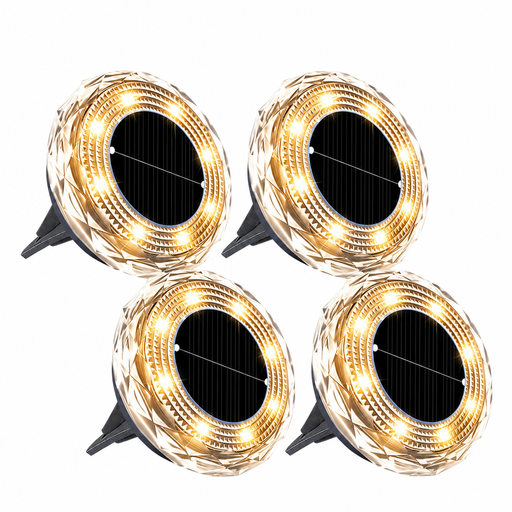
Why it suits this profile: Four wireless ground lights offer an easy way to mark a path, patio edge or border without laying cables.
The specifications state 4 lumens per light, so the limited light output is clear from the outset. The IP65 rating and wireless installation make these lights suitable for decorative outdoor use.
Set of four, integrated solar panel, automatic switch-on and a stated running time of 8–10 hours when sufficiently charged.
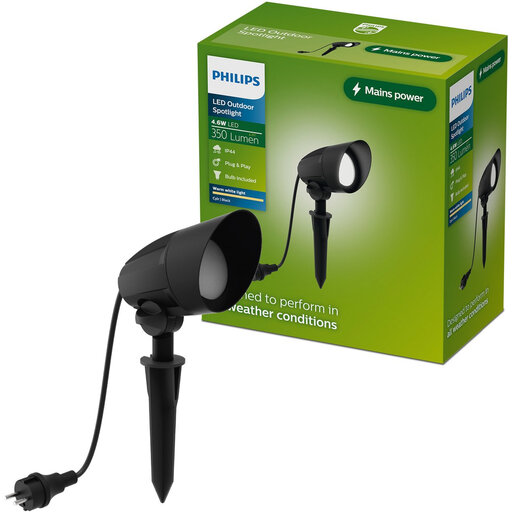
Why it suits this profile: This adjustable garden spotlight is designed for anyone looking for a fixed mains connection and focused warm light for a tree, shrub, driveway or entrance.
The light output of 350 lumens, colour temperature of 2700 K and IP44 rating are clearly stated. IP44 means protection against splashing water, so don’t place the light where it will be exposed to a powerful jet of water.
Includes a GU10 LED bulb, adjustable spotlight, 4.6 W power and a 150 cm cable.
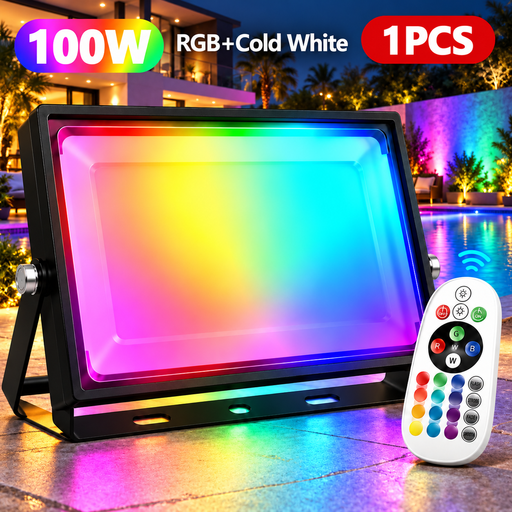
Why it suits this profile: This fixed floodlight is suited to highlighting exterior walls, events, stages and large gardens, as well as locations where colour effects matter more than wireless installation.
This version operates at 175–265 V and requires a fixed connection. That makes it clear from the outset that it isn’t a solar light or a plug-and-play solution.
Integrated RGB LED, remote control, aluminium housing and a choice of several wattages in the same product range.
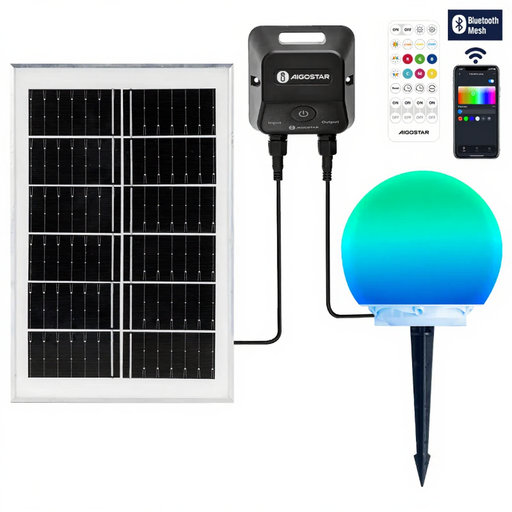
Why it suits this profile: A handy option for anyone who wants to combine colour, warm white light and control of multiple lights in a garden setup.
The IP65 rating, 4000 mAh battery capacity and cable lengths of 1 and 3 metres are stated. Position the solar panel out of the shade.
RGB plus warm and white light, Bluetooth Mesh for multiple devices and a stated lifespan of up to 30,000 hours.
We’ve put together a complete, up-to-date list of products that meet these strict selection criteria and the applicable European safety regulations.
Place the solar panel somewhere it will receive several hours of direct daylight. Avoid shade from trees, fences and exterior walls. Also check that the light is stable and won’t sit in a puddle or dip in the ground. A ground spotlight needs a stable surface to help prevent it from sinking and reduce the risk of tripping.
Lifespan varies by product and conditions of use. Check the stated lifespan in hours, but also see whether the light source can be replaced. With integrated LED lighting, you usually can’t just replace a separate bulb. A product with a GU10 fitting offers more flexibility if the light source needs replacing.
For mains-powered lights, energy consumption depends on the wattage, number of lights and hours they’re on. Solar garden lighting doesn’t use mains electricity while it’s operating, but its running time varies with sunlight and the season. For a practical comparison, look at wattage, lumens, number of hours in use and power source. This will help you choose outdoor lighting that suits your garden, patio, driveway or workspace, without relying on advertising claims alone.
