What should you look for when choosing?
Start by checking how long you’re allowed to keep recordings and how much space they take up. Then decide whether archive capacity or portability matters more, and check that your devices support the drive and its file format.
| What to consider |
What should you check? |
Who is this important for? |
| A backup without the cloud |
Store permitted recordings on separate media and check that you can open a file from the backup. |
If I don’t want to rely on a single drive, I prioritise keeping a separate copy; around 37% of consumers in this group share that priority. |
| Space for your archive |
Add up the files you’re allowed to keep and compare their total size with the capacity of the drive and backup. |
If you’re prioritising room for a growing archive, match the capacity to the recordings you’re allowed to keep; around 27% of consumers in this group share that priority. |
| Taking it with you and transferring files |
Check your device’s connection and cable, and the conditions that apply to any stated transfer speed. |
If I often take my drive with me and transfer large files, portability and connectivity matter; around 18% of consumers in this group share that priority. |
| Devices and access |
Check the file format your devices need and back up your files before formatting. |
If you want to open recordings on different computers or restrict access, consider the file format and access protection; around 18% of consumers in this group share that priority. |
Products for local archiving
This selection includes portable HDDs and SSDs for storing lecture recordings locally. Choose the capacity and form factor that suit your archive.
 Image unavailable
SanDisk Portable SSD 1TB
A portable SSD for storing recordings locally and taking the drive with you.
1 TB storage.
An external drive on its own isn’t a separate backup. Keep important recordings you’re allowed to retain on a second storage device too.
View at Joybuy
 Image unavailable
My Passport USB-C 2TB, black
This portable HDD is a good fit for a local archive if you’re looking for 2 TB of capacity.
USB-C connection; 2 TB storage.
An external drive on its own isn’t a separate backup. Keep important recordings you’re allowed to retain on a second storage device too.
View at Joybuy
 Image unavailable
My Passport USB-C 5TB, black
This portable HDD is an option if you need plenty of space for a local archive.
USB-C connection; 5 TB storage.
An external drive on its own isn’t a separate backup. Keep important recordings you’re allowed to retain on a second storage device too.
View at Joybuy
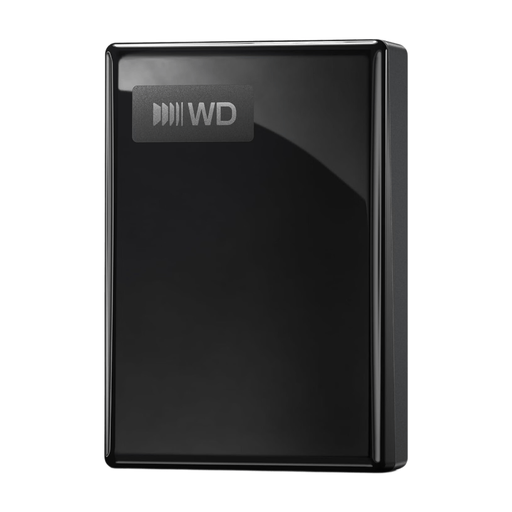 Image unavailable
My Passport USB-C 1TB, black
This portable HDD is a good fit for a local archive if you’re looking for 1 TB of capacity.
USB-C connection; 1 TB storage.
An external drive on its own isn’t a separate backup. Keep important recordings you’re allowed to retain on a second storage device too.
View at Joybuy
 Image unavailable
Western Digital My Passport USB-C 4TB, black
This portable HDD is an option if you want to keep several permitted recordings locally.
USB-C connection; 4 TB storage.
An external drive on its own isn’t a separate backup. Keep important recordings you’re allowed to retain on a second storage device too.
View at Joybuy
Frequently asked questions
Can I record a lecture myself and keep it indefinitely?
Don’t assume that you can: check your own educational institution’s rules before recording or archiving a lecture. Radboud University’s guidance permits student recordings only under certain conditions and within the scope it describes, and requires them to be deleted when the course ends or you withdraw from it. This institutional rule doesn’t automatically apply elsewhere.
Can I share a saved recording with other students?
Don’t share a recording without checking the applicable terms. Radboud University’s guidance prohibits distribution within its scope. The University of Amsterdam explains that a private copy of copyrighted work is not intended to be shared among students. Check where your recording came from and your institution’s rules too.
How can I use one drive with both a Mac and a Windows computer?
First, check the drive’s file format and your devices’ requirements. Apple Support recommends exFAT when formatting a drive larger than 32 GB for use with both systems, and warns that formatting erases the files already on the drive. So make a backup first.
Is one external drive enough if I don’t want to use the cloud?
Not if you need an independent backup: if that one drive is lost or damaged, your archive could disappear too. Seagate describes a backup approach involving three copies, including the original and at least two backups. You can keep an additional copy locally if that’s allowed under the rules for the recording.
Where can I dispose of an old external drive in the Netherlands?
The Dutch government lists options for individuals including returning the old device when buying a similar new one, or taking it to your local council recycling centre. Secure any permitted files and personal data before handing in your old drive.


