
Listener with their own audio stream
You’re following a Dutch-language talk on a phone or laptop and want to hear every word clearly without disturbing others through speakers.


First, check whether you’re listening to a recording or livestream on your own device, or whether the venue offers a suitable audio broadcast. Headphones won’t pick up an unamplified speaker’s voice by themselves. Only then decide between options such as a snug fit, an open design or transparency mode. The latter options let you stay more aware of your surroundings, but may also let in more background noise. Bluetooth SIG describes Auracast as a way to broadcast audio from a transmitter to compatible receivers.
You’re following a Dutch-language talk on a phone or laptop and want to hear every word clearly without disturbing others through speakers.
You’re at a talk in a venue without speakers and want to find out in advance whether the organiser provides a suitable audio signal.
You want to follow the talk while still hearing people and announcements around you. That’s why you’re comparing an open design with transparency mode.
Choose this option: if a phone or laptop is actually playing the recording or livestream.
Bear in mind: a microphone or Bluetooth connection won’t send an unamplified speaker’s voice to your headphones by itself.
Choose this option: if the organiser confirms which system is broadcasting the talk and which receivers can connect to it. Bluetooth SIG describes Auracast as a way to broadcast audio to compatible receivers.
Bear in mind: Bluetooth or LE Audio alone doesn’t confirm that a particular model can receive the broadcast at your venue.
| Concern | What to look for | Who is this option relevant to? |
|---|---|---|
| Working audio source | Check that your own device is playing the audio, or ask the organiser about the broadcast system and the receiver you’ll need. | If I want to be sure I can actually hear the talk, I first check where the sound is coming from. Around 36% of consumers put this connection first. |
| Following speech | Compare fit and sound settings; noise cancellation doesn’t guarantee that other voices will disappear. | If spoken explanations matter more to me than maximum isolation, I want to be able to assess the fit and sound quality. Around 29% of consumers give speech clarity top priority. |
| Comfort over long periods | Assess the fit and compare the stated battery life for the mode you’ll use, such as with noise cancellation on or off. | If I’m listening for a long time, I want a comfortable fit and a battery that suits how I listen. Around 21% of consumers mainly choose based on comfort and uninterrupted listening time. |
| Staying aware of your surroundings | Compare open-ear designs with transparency mode. Both can let in ambient sound, but an open design offers less isolation. | If I want to hear questions or announcements in the room, staying aware of my surroundings matters more to me than maximum isolation. Around 14% of consumers put this first. |
Without a source that records or broadcasts speech, there’s no wireless audio stream to listen to.
Ask in advance where the audio is coming from and how your device or receiver will connect.
A broadcast at a venue requires a compatible transmitter and receiver; connecting to two of your own devices is a different feature.
Ask the organiser which broadcast system they use and check that your chosen model’s receiver can connect to it.
A close-fitting design can work against your wish to stay in touch with people in the room.
Compare an open design with transparency mode, and check at the same time that you can still hear the lecture audio clearly.
For the Sony WH-CH720N, the stated maximum playback times differ depending on whether noise cancellation is on or off.
Compare battery life on a like-for-like basis and charge your headphones before the lecture.
The WH-CH720N is an over-ear model worth comparing for audio from your own device and listening with noise cancellation.
According to JBL, the Tune 770NC is a foldable over-ear pair of headphones with noise cancellation and the ability to connect to two Bluetooth devices.
According to Sennheiser, the ACCENTUM Wireless has an over-ear design, a five-band equaliser and transparency mode.
The OpenFit 2 is an open-ear option for anyone who wants to stay aware of their surroundings while listening to audio from their own device.
The TAH6509BK/00 is an over-ear model worth comparing if you’re looking for noise cancellation and an awareness mode.
These models are designed for listening to audio from a paired personal device. For a live lecture, check separately whether the venue offers a broadcast and whether the headphones can receive it.
 No image available
An in-ear option for audio from a paired device, with ANC and an adjustable equaliser.
The product information lists a 9-band equaliser and up to 6 hours of playback per charge with ANC on; the charging case extends the stated total playback time.
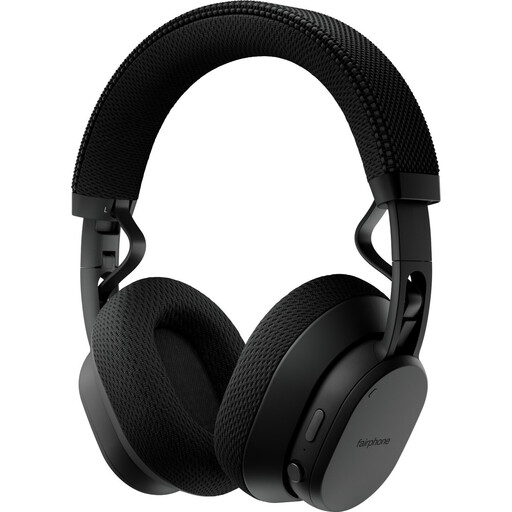 No image available
An over-ear option for listening to your own audio source, with ANC and an Ambient Sound mode.
The product information states up to 26 hours of battery life with ANC on, mesh ear cushions and replaceable parts, including the battery.
 No image available
A wireless over-ear option for a recording or livestream on your own device, with ANC and an Ambient Sound mode.
Sony specifies up to 35 hours of playback with ANC on and up to 50 hours with ANC off. Stated battery life therefore depends on the mode selected.
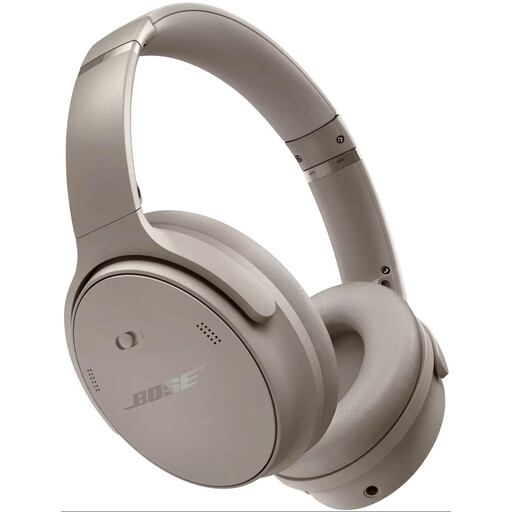 No image available
An over-ear option for audio from a paired device, with ANC and a transparency mode that lets you hear ambient sounds.
The product information states up to 24 hours of playback.
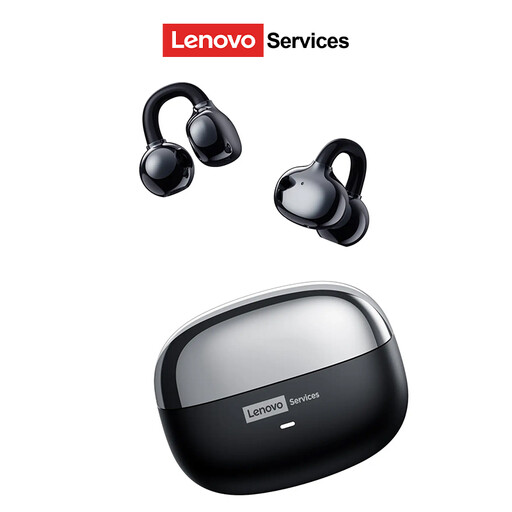 No image available
An open-ear option for audio from your own device when you want to stay aware of your surroundings. In noisy environments, this can make quiet speech harder to hear.
The product information lists Bluetooth 6.0 and up to 25 hours of battery life. Compatibility is listed for Android, iOS and Windows devices.
Not without a source that records or broadcasts the speech. Ask whether there’s a livestream you can play on your device or an audio broadcast at the venue, and check before buying how your headphones can receive it.
Pair them in advance with the device that will actually play the audio, charge them and test a spoken clip. If the venue is broadcasting the audio, you’ll also need to confirm that the receiver can connect to that specific system.
No, noise cancellation doesn’t guarantee that other voices will disappear. The Consumers’ Association explains that noise cancelling can mainly reduce certain background sounds, such as low engine rumble. Also consider the fit and the audio source.
Keep the volume as low as is practical, and take your total listening time into account too. The World Health Organization gives 80 dB for up to 40 hours per week as an example of safe listening; this doesn’t correspond to one fixed volume setting on every pair of headphones.
Ask the organiser what hearing support they offer. Hoorwijzer lists additional hearing aids for challenging situations, such as poor acoustics or noisy environments. Which option will work depends on your situation and the audio source available.