
Director reviewing dialogue
Needs to assess differences between voices and how clearly words can be heard, so microphone placement and clothing rustle come first.


Start by deciding how many voices you want to record separately at the same time, and what recording equipment you already have. A standalone lavalier suits a compatible existing recording setup; a complete wireless set can give performers more freedom to move, but also means considering transmitters, channels and power. With either option, microphone placement and clothing rustle are key to getting a usable recording.
Needs to assess differences between voices and how clearly words can be heard, so microphone placement and clothing rustle come first.
Need freedom to move without the microphone or cable shifting during a scene.
Should check before buying how many transmitters and separate recording channels the chosen set actually supports.
First compare the number of voices you need to record at once and how the system connects to your existing equipment. Then consider how the microphone works with costumes and movement.
| What to consider | What to look for when buying | Who is this important for? |
|---|---|---|
| Clear speech without clothing rustle | Check the attachment and cable routing. Make a test recording with the costume and movements used in the scene. | When reviewing dialogue, I want to assess the words and differences between voices without distracting rustling against the capsule or cable. Around 33% of consumers prioritise clear speech without clothing rustle. |
| Freedom to move | Check how the microphone or transmitter is worn, and test the connection during a full scene with movement. | When performers move around the rehearsal room, I want to make sure a cable doesn't get in the way of their performance or pull on the attachment. Around 25% of consumers give freedom to move the highest priority. |
| Recording several voices | Count the performers speaking at the same time, the transmitters and microphones included, and the separate recording channels available. | For dialogue involving several performers, I want to know in advance whether their voices can be recorded separately. Around 25% of consumers focus mainly on separate dialogue tracks. |
| Connecting to existing equipment | Compare the plug, power requirements and input with the exact model of your recorder or transmitter. | If I want to keep using my current recorder or transmitter, I need to make sure the microphone will connect to it. Around 17% of consumers prioritise compatibility with their existing equipment. |
A standalone capsule won't record by itself. The Shure WL183, for example, has a TA4F connector for use with a compatible bodypack, while the RØDE Wireless PRO is a set with transmitters, a receiver and two Lavalier II microphones.
Compare everything included in the package, the connectors and the power requirements with your existing recording setup. You may also need a compatible transmitter or receiver.
The DJI Mic 2 has a microphone built into the transmitter. This is not the same as a separate capsule that you can place under a costume.
Check whether standalone lavalier microphones are actually included in the specific package variant.
For the setup in question, DJI states a maximum CE range measured outdoors, with no obstructions or interference. This doesn't guarantee the same range indoors.
Test the connection where the scene will be recorded, and during the movements the performers will make there.
Shure says that clothing rubbing against the capsule or cable can cause contact noise.
Test the attachment and cable route with the actual costume before recording. That way, you can adjust the placement if needed before having to record a scene again.
Offers both standalone lavaliers and complete wireless sets, including the Wireless PRO with two Lavalier II microphones.
The WL183 is an omnidirectional lavalier for use with a compatible wireless bodypack.
The specific MKE 2 (Black EW) variant, part number 009831, is an omnidirectional lavalier that Sennheiser offers for theatre productions, among other uses.
The Mic 2 is a compact wireless recording system with a microphone built into the transmitter; package variants may differ.
These products range from standalone wired lavaliers to wireless sets. Pay particular attention to the connection, the number of transmitters and whether the microphone is built in or separate.
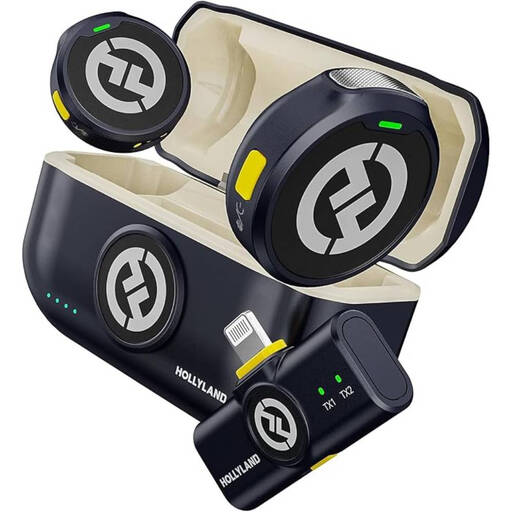 No image available
A wireless lavalier option for recording voices while performers are moving.
The title states that the microphone/transmitter weighs 9 g and records audio at 48 kHz/24-bit.
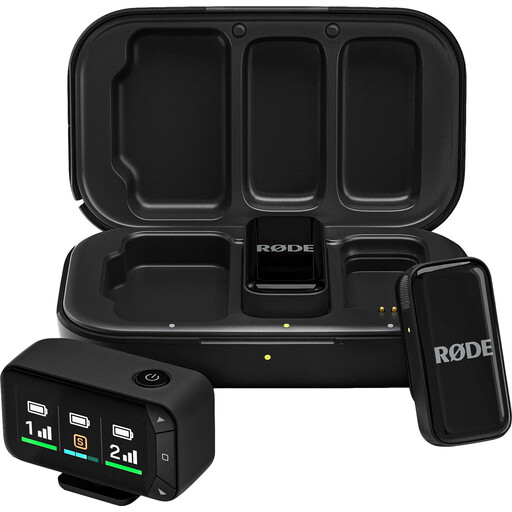 No image available
The two transmitters with built-in microphones are worth considering if you're looking for a compact wireless set. Check that the connections are compatible with your recording device.
The product name mentions a camera receiver, smartphone receiver and charging case.
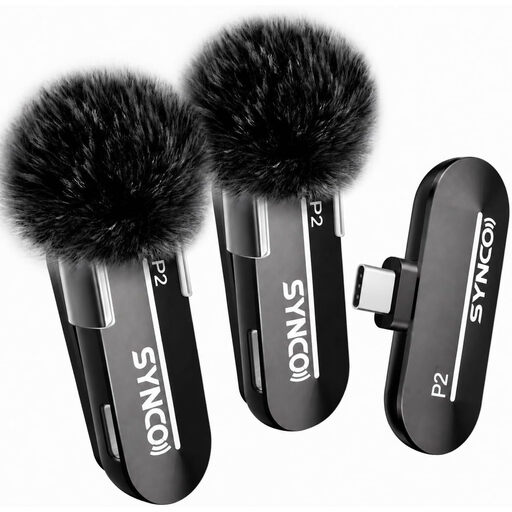 No image available
This option is designed for recording voices with a compatible USB-C device. Check compatibility before buying.
The product description mentions noise reduction and real-time audio monitoring.
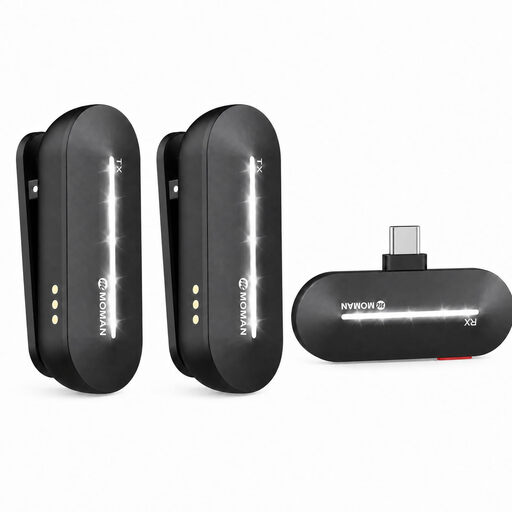 No image available
The two transmitters make this set worth considering if you want to record two speakers. Check that your recording equipment supports USB-C.
The description mentions omnidirectional microphones, noise reduction and a connection for real-time monitoring. The title states a range of 150 m; check the conditions that apply in your space.
 No image available
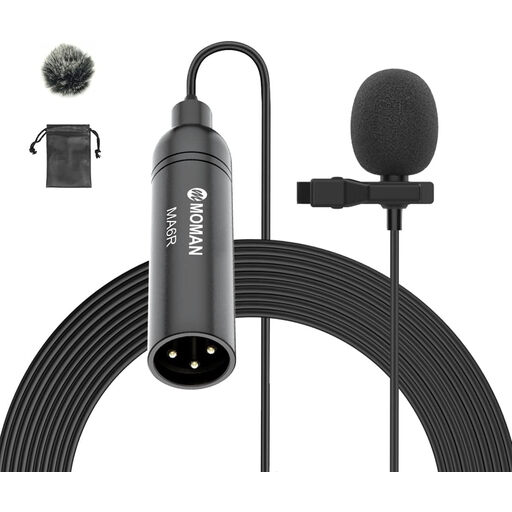
A wired option for recording voices if the cable and connection suit your setup. Bear in mind how much room the performer needs to move.
The title states that it has a 6 m cable, a 3.5 mm connection and an omnidirectional clip-on microphone compatible with smartphones.
Start by making a test recording with the actual costume. For theatre, Shure recommends placing the microphone high on the chest or near the hair or ear, among other options. Make sure fabric doesn't rub against the capsule or cable, and provide strain relief for the cable. This manufacturer guidance doesn't guarantee a noise-free recording.
That depends on your device's connection and power requirements. The RØDE Lavalier II has a locking 3.5 mm TRS connection, while the Shure WL183 has a TA4F connection for a compatible bodypack. Check the input and power requirements of the specific model.
Not always. The Dutch Authority for Digital Infrastructure (RDI) publishes licence-exempt frequencies and also lists bands that require a licence. For frequencies that may vary by location, consult the RDI Microphone Bands tool. Check the frequency and power of the specific system.
According to the Dutch Data Protection Authority, identifiable audio recordings may count as personal data. If the GDPR applies to your processing, you need a lawful basis; consent is one possible lawful basis. Decide in advance why you're recording, who will have access and whether you'll share the recordings.
For a consumer purchase in the Netherlands, the seller must put a faulty product right under the statutory guarantee. The Dutch government states that there is no fixed statutory guarantee period in the Netherlands. Normal wear and tear or damage caused by your own actions isn't automatically covered by free repairs.