
Solo speaker at a shared table
You’re telling your travel story while other people work nearby. Positioning the microphone close to your mouth and making a test recording will help you judge how your voice sounds against the background noise.


If you only record at a fixed table and the connection is compatible with your device, a wired lavalier microphone can be a simple option. Choose wireless if you want to move around while recording, and if there are two speakers, check how many transmitters are included and which receiver(s) come with the set. A lavalier microphone won’t automatically make other people at the table inaudible: position it carefully and listen to a test recording at your intended recording spot.
You’re telling your travel story while other people work nearby. Positioning the microphone close to your mouth and making a test recording will help you judge how your voice sounds against the background noise.
You switch between a table and other recording spots. Above all, check that the receiver and connection are compatible with the device you want to record on.
You’re recording with a travel companion and want each of you to wear your own microphone. Check that the bundle you choose actually includes two transmitters.
First decide whether you’ll be recording alone or as a pair, then check the connection and battery life to make sure they suit your recordings.
| What to consider | What should you look for? | Who is this important for? |
|---|---|---|
| Recording your voice clearly | Test where you wear the microphone, listen to a short recording in the actual workspace and check for clothing rustle. RØDE recommends positioning it around 20–30 cm from your mouth. | If I’m speaking on my own at a table where other people are talking, I want to hear how clearly my voice comes through in that spot first. Around 36% of consumers say clear speech is their top buying priority. |
| Connecting to your device | Check the connection on your phone, camera or computer, and make sure the version you choose includes the right receiver or adapter. | If I want to use my existing phone or camera, the microphone needs to connect to it. For around 29% of consumers, device compatibility comes first. |
| Recording with two speakers | Check that the bundle includes two transmitters and that your chosen app or recorder supports the type of recording you want. | If my travel companion is speaking too, I want each of us to have our own microphone. Around 21% of consumers prefer a set for two speakers. |
| Making a long recording | Compare the stated battery life per transmitter with the length of your recording; a total figure that includes the charging case isn’t the same as the length of a single uninterrupted session. | If I want to record a long story in one go, I want to know when I’ll need to recharge. Around 14% of consumers name uninterrupted recording time as their top buying priority. |
A lavalier microphone can pick up sound from several directions. A noise-cancellation claim doesn’t mean that nearby voices will disappear completely.
Attach the microphone carefully and listen to a test recording at the spot where you plan to record your travel diary.
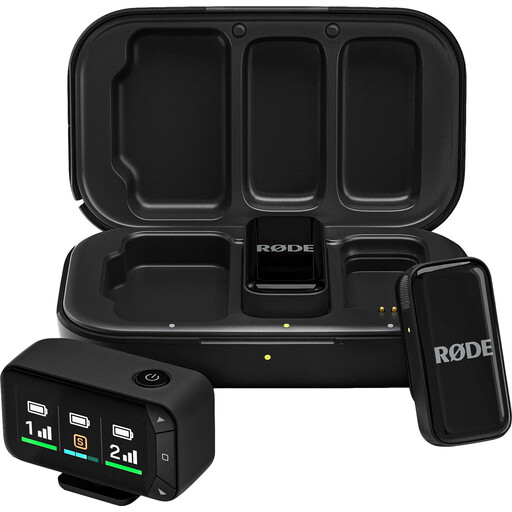
RØDE’s Wireless Micro and Wireless Micro Camera Kit are different bundles with different connections and included components.
Compare the full model and bundle name with the box contents and the device you’ll be recording on.
Total battery life including the case doesn’t tell you how long you can record in one go.
Check the stated battery life per transmitter and plan a long recording around it. DJI lists the test conditions for the stated battery life of the Mic Mini; actual battery life may vary depending on conditions.
RØDE offers both wired lavalier microphones and wireless sets for one or more speakers.
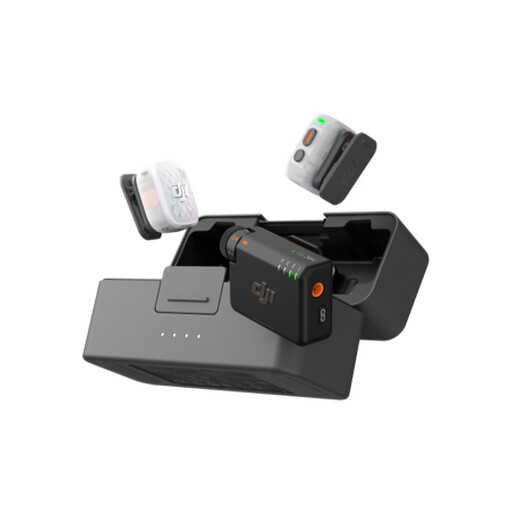
The Mic Mini is a wireless option if you want more freedom to move while recording.
The LARK M2S is worth comparing if you’re looking for a small wireless microphone and want to choose a bundle based on its connections.
The V.Lav is a wired option to consider if you need a longer cable when recording from a fixed spot.
This selection includes wireless lavalier microphones, including versions for one or two speakers and a USB-C version.
 No image available
The two transmitters are suitable for recording with two speakers; check that the receiver is compatible with your recording device.
The product name lists two transmitters, one receiver and a charging case.
 No image available
This kit is an option if you want to record with two microphones and need both a camera receiver and a smartphone receiver.
The product name lists two microphones, a camera receiver, a smartphone receiver, a charging case and USB-C.
 No image available
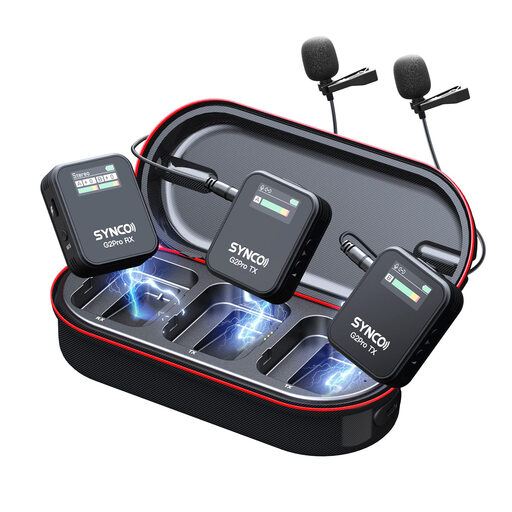
A wireless lavalier microphone to compare if you don’t want to be tied to a cable.
Before buying, check which connection and components are included with this version.
 No image available
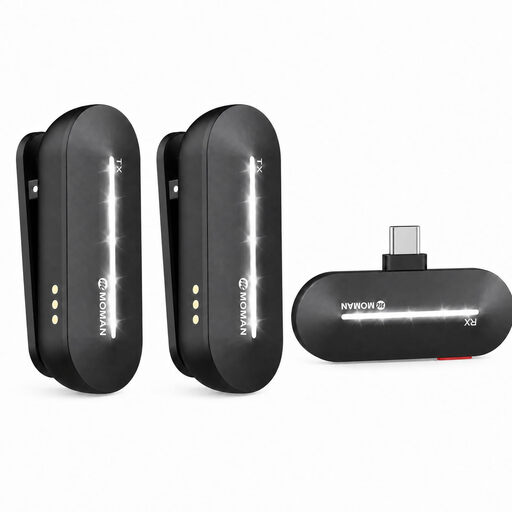
The product name lists two transmitters, so you can compare this version for recording with two speakers.
The product name lists USB-C, two transmitters and one receiver. Check that the USB-C connection is compatible with your recording device.
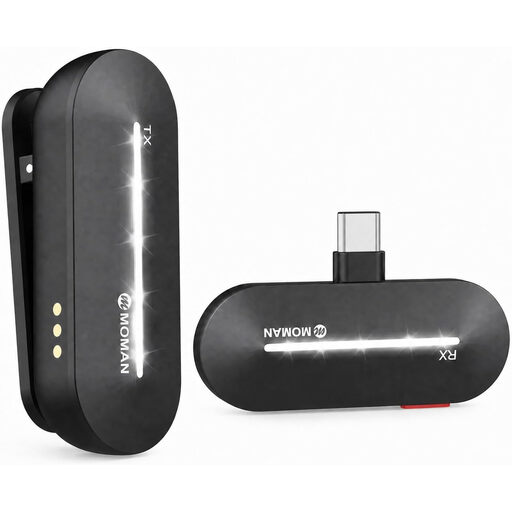 No image available
This version with one transmitter is worth comparing if you’re recording on your own and want to move around wirelessly.
The product name lists USB-C, one transmitter and one receiver. Check the connection on your recording device.
Position the microphone around 20–30 cm from your mouth, following RØDE’s guidance, and make a test recording. Also check whether your clothes brush against the microphone, and listen to how the background sounds at your recording spot.
That depends on the frequency band used. The Dutch Authority for Digital Infrastructure says a licence usually isn’t needed for wireless microphones if you use the correct frequency band, although some bands do require one. If you’re using a UHF set, check which band applies and what’s permitted locally.
This depends, among other things, on the recording, whether the people can be identified and how you share it. The Dutch Data Protection Authority describes an exception for use solely for personal or household purposes within a limited circle; public or professional publication isn’t automatically covered. So don’t assume that recording at a shared table automatically means you have permission to publish it.
In the Netherlands, the remedy depends on the fault and the circumstances. According to the Dutch government, if a product is faulty, you’re entitled to a free remedy from the seller; normal wear and tear or damage you’ve caused yourself isn’t automatically covered.