A suitable wired lavalier microphone works well for one speaker who stays mostly in place; if you’ll be moving around or recording two speakers at the same time, a wireless set is a better option. First, check that the connection and recording app work, then make a test recording in the room. Shure points out that a microphone cannot fix a room’s acoustics, so reducing echo also means choosing a quiet spot and positioning the microphone carefully.
Which microphone is right for you?
Tutor assessing pronunciation
You want to listen back to soft speech sounds, so prioritise microphone placement, a quiet spot and a test recording over promises of powerful noise cancellation. Shure points out that a microphone cannot fix a room’s acoustics.
Speaker moving around the room
You need freedom to move and should weigh up a wireless set against the need to manage its transmitter, receiver and battery. Shure describes freedom of movement as one of the differences between wired and wireless microphones.
Tutor leading a two-person conversation
You want to record two voices at once, so check that the set you choose actually includes two transmitters. DJI and RØDE describe sets with two transmitters for this kind of set-up.
What should you look for when choosing?
Start by considering how many people will be speaking and how freely they need to move. Then choose a connection that works with your recording device and app.
| What to consider |
What to look for |
Who is this important for? |
| Clear pronunciation |
Position the microphone close to the speaker and choose a quiet spot. If noise cancellation is available, compare recordings with it switched on and off. |
I want to listen back to soft sounds and assess pronunciation carefully. Around 36% of consumers put clear speech first. |
| Connection and app |
Check the device’s port and input, the microphone connection, and whether the recording app uses the external microphone. |
I want to know in advance whether the microphone will work with my device and recording app. Around 29% of consumers put compatibility first. |
| Freedom of movement |
Compare a wired microphone with a wireless set. For wireless models, check the connection and the operating time of the transmitter and receiver. |
I want to be able to walk around the room during the practice session without a cable running to the recording device. Around 21% of consumers put freedom of movement first. |
| Two voices at once |
Check how many transmitters are actually included in the set and whether the recording app captures both voices as you want it to. |
I want to record the tutor and participant at the same time, so I need a microphone for each of them. Around 14% of consumers prioritise recording two voices simultaneously. |
Common pitfalls
-
Assuming noise cancellation will fix echo
Shure says that a microphone cannot fix a room’s acoustics. Audio processing can also have audible effects on the voice.
First, choose a quiet position and place the microphone carefully. Then make a test recording to see whether the processing mode leaves the pronunciation sounding clear.
-
Assuming every 3.5 mm microphone works with every 3.5 mm input
A TRRS connection, such as the one on the RØDE smartLav+, will not necessarily work with a TRS input. Some combinations require a suitable adapter.
Check the connection type at both ends and find out exactly which adapter you need.
Some combinations require a separate adapter.
-
Confusing a receiver that can pair with two transmitters with a set that includes two transmitters
According to DJI, the DJI Mic Mini version with 1 TX and 1 RX includes one transmitter, even though the receiver can pair with two transmitters.
Check what’s included in the exact set before planning a two-person conversation.
You may need an additional compatible transmitter for a second speaker.
-
Confusing the charging case’s total operating time with continuous recording time
For wireless sets, a total figure that includes recharging between uses may mean something different from the operating time of an individual transmitter or receiver.
Compare the stated operating time for each component with the length of your session, and charge the set beforehand.
Brands compared
Sennheiser
The XS Lav USB-C is a wired clip-on microphone for a compatible mobile device or computer.
- According to Sennheiser, the XS Lav USB-C has a USB-C plug, a 2 m cable, a clip and a foam windshield.
- The cable length limits how far you can be from the device; check that the microphone works with your recording app.
RØDE
The wired smartLav+ and wireless Wireless Micro Camera Kit are different product lines for different set-ups.
- RØDE lists a TRRS connection and a 1.2 m cable for the smartLav+; the Wireless Micro Camera Kit has two transmitters.
- The smartLav+ needs an adapter for some TRS inputs. For the Wireless Micro Camera Kit, check which receiver is suitable for your recording device.
DJI
The Mic Mini is a line of wireless clip-on transmitters; the version with 1 TX and 1 RX is designed for one speaker.
- DJI lists two noise cancellation modes and automatic limiting; according to DJI, the receiver can pair with two transmitters.
- The set with 1 TX and 1 RX does not include a second transmitter. For pronunciation practice, test whether a processing mode keeps soft sounds clear.
Shure
The wired MVL with 3.5 mm TRRS and the wireless MoveMic Two are different set-ups.
- The Shure manual recommends positioning the MVL 15–25 cm from your mouth. According to Shure, MoveMic Two works directly with its own MOTIV apps.
- MoveMic Two needs a separate receiver for cameras, computers and certain other apps; this limitation applies to this model.
Joybuy products
This selection includes wireless lavalier microphones for recording, including sets with two microphones or transmitters. Check the connection, receiver and what’s included for each model.
 No image available
DJI Mic Mini 2S (2 TX + 1 RX + Charging Case)
The version with 2 TX is designed for a two-speaker set-up; it also lists 1 RX and a charging case.
Check that the receiver and recording app are compatible with the device you use.
View at Joybuy
 No image available
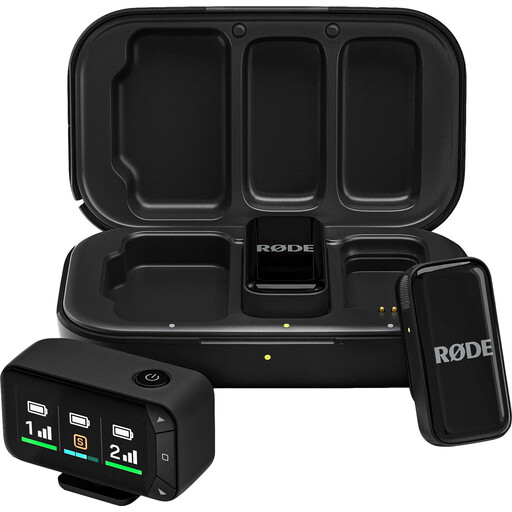
RØDE Wireless Micro Camera Kit (Two Microphones, Camera Receiver, Smartphone Receiver, Charging Case, USB-C, Black)
Two microphones are suitable for a practice session with two speakers; the kit lists a camera receiver, a smartphone receiver and a charging case.
RØDE describes this kit as having two clip-on transmitters and a USB-C receiver for smartphones. Check which receiver is suitable for your recording device.
View at Joybuy
 No image available
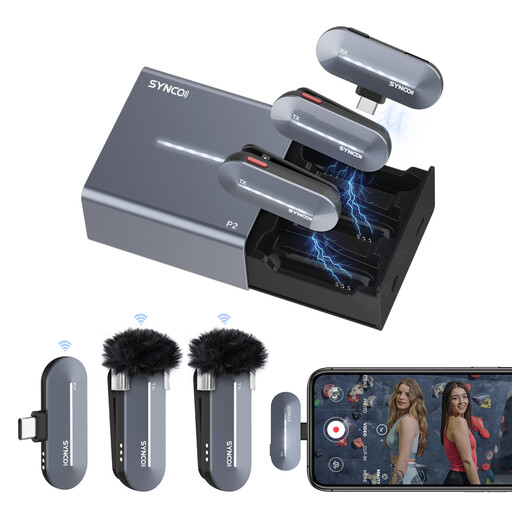
SYNCO P2ST Wireless Lavalier Microphone USB-C, Dual Mic, 2.4GHz, Charging Case
The product name lists two microphones and USB-C, making it worth comparing for a practice session with two speakers.
Before the session, check that the connection works with your device and recording app.
View at Joybuy
 No image available
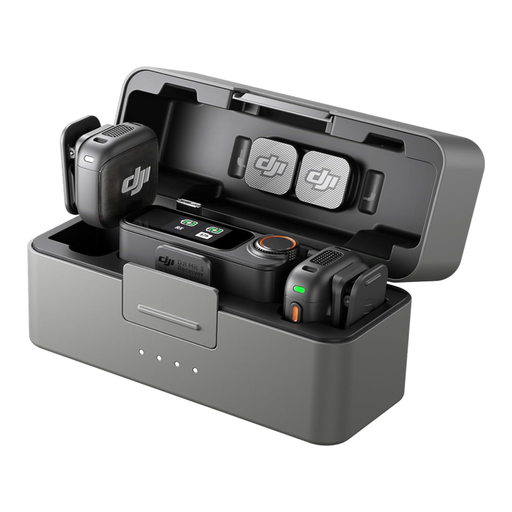
DJI Mic 3 (2 TX + 1 RX + Charging Case)
The listed version with 2 TX is worth considering if two speakers will be wearing microphones at the same time; the set also lists 1 RX and a charging case.
Check that the receiver works with your recording device and that the app captures both voices.
View at Joybuy
 No image available
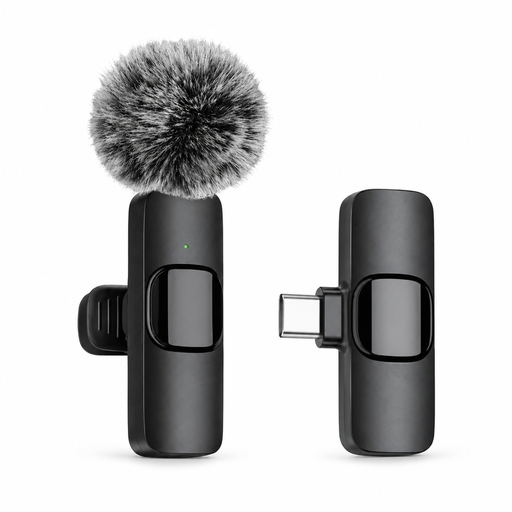
Verbex K9-Black Wireless Mini Lavalier Microphone, Type-C
This wireless lavalier microphone may be suitable for a recording that requires a Type-C interface.
Check that the recording app uses the external microphone, and make a test recording beforehand.
View at Joybuy
Frequently asked questions
How do I test the microphone for a pronunciation practice session?
Make a test recording in your usual position in the room, using soft and loud words and moving as you normally would in your clothes. The Shure manual recommends positioning the MVL 15–25 cm from your mouth; check the recommended position for other models. Listen for echo, too: recording from closer up or choosing a quieter spot is more useful than relying on noise cancellation without testing it.
Do I need to ask identifiable participants for permission to record their voices?
Consent is not the only possible legal basis in every situation, but an organisation processing an identifiable recording for a practice session must have an appropriate legal basis under the GDPR. According to the Dutch Data Protection Authority, consent is one possible legal basis; if you rely on it, it must be freely given, informed and specific, among other things. Explain the purpose and do not keep the recording for longer than necessary. An exemption may apply to purely personal or household use; this depends on who makes the recording and what happens to the file.
Does an identifiable recording have to be deleted after a set period under Dutch law?
The GDPR does not set a general, specific retention period. According to the Dutch Data Protection Authority, if the GDPR applies, you must choose a period that suits the purpose and must not keep the recording for longer than necessary.
What if the microphone breaks too soon during normal use?
For a consumer purchase in the Netherlands, you can contact the seller if the product does not meet what you could reasonably expect. ACM ConsuWijzer points out that statutory consumer rights apply alongside any manufacturer’s warranty; if a fault occurs after normal use, the seller must offer an appropriate free solution. A stated manufacturer’s warranty period does not automatically represent the full extent of your statutory rights.


