
Recording an intro with background noise
You record short intros at home and want your voice to remain clear despite room noise and echo. Good microphone placement and a test recording are important checks.


Start with a lavalier microphone that you can attach close to your mouth and that is confirmed to work with your recording device. A microphone or noise reduction feature will not automatically make room noise inaudible. A wired model suits a fixed recording position with a compatible connection, while a wireless one can be more convenient if you move around or record with two speakers. If you choose wireless, check the exact kit, receiver and compatibility with your recording app.
You record short intros at home and want your voice to remain clear despite room noise and echo. Good microphone placement and a test recording are important checks.
You usually record in one place and are looking for a wired microphone that works with your device’s port and recording app.
You want to move while speaking or record with two people, and are happy to manage transmitters, a receiver and batteries.
Best suited when: you record in a fixed position with a compatible USB-C device and do not want to use a separate transmitter.
Bear in mind: the cable limits how far you can move. Also check whether your recording app uses the external microphone.
Best suited when: your device supports the microphone’s connection and you want to record without a wireless link.
Bear in mind: TRS and TRRS are different connections; your phone may need a suitable adapter.
Best suited when: you want to move around during your intro or give each of two speakers a microphone.
Bear in mind: you will need to charge the transmitters and check the receiver, connector and recording app. A noise reduction feature does not prove how the sound will turn out in your room.
| Concern | What to look for when buying | Who is this important to? |
|---|---|---|
| Clear speech | Check the fastening clip and make a test recording with the usual sources of noise in the room. | If I mainly want to know whether my voice comes through over the room noise, I test the microphone in the position I plan to use. Around 36% of consumers say clear speech is their top priority when buying. |
| Connection | Compare your device’s port with USB-C, TRS or TRRS, and check the full adapter setup and recording app if needed. | If you mainly want to know whether the microphone works with your device, check the connection and app before recording. Around 29% of consumers give compatibility top priority. |
| Freedom of movement or two speakers | Check the number of transmitters, the type of receiver and how it connects to your recording device. | If I want to move around or give two speakers a clip-on microphone each, I check which transmitters are included in the kit I choose. Around 21% of consumers prioritise freedom of movement or recording two voices. |
| Recording without rustling or interruptions | Check the clip and windshield. Keep clothing away from the capsule and cable, and listen back to a short test recording. | If you want to record an intro without distracting clothing rustle or interruptions, test the microphone with the clothes you normally wear. Around 14% of consumers say recording reliability is their top priority. |
A microphone cannot fix the acoustics of a room. A feature described by the manufacturer as noise reduction does not, on its own, prove how well a specific sound source will be suppressed in your flat.
Test the microphone placement, background noise and any noise reduction mode in the same setup you plan to use for your intro.
Wired lavalier microphones can have different connections. RØDE specifies a TRS-to-TRRS adapter for using the Lavalier GO with a smartphone.
Before buying, check the microphone plug, the device input and any adapters needed to make the complete connection work.
The receiver and bundle can vary by version; a smartphone-focused kit is not necessarily the same as a camera kit.
Compare the full model name, the receiver included and the connector with your recording device.
Shure says that clothing touching the capsule or cable can cause handling noise.
Keep fabric away from the capsule, secure the cable without pulling it tight, and listen back to a test recording while wearing the clothes you plan to speak in.
The XS Lav USB-C is a wired option for a straightforward podcast or voice-over setup with a compatible USB-C device.
The MVL is a wired TRRS lavalier microphone for use with a compatible portable recording device.
The Lavalier GO is a wired TRS microphone for a compatible input or transmitter; the Wireless Micro is a wireless option designed for smartphones.
The Mic Mini is a wireless system that may suit recordings where freedom of movement or a second speaker matters.
The LARK M2 is a wireless clip-on alternative for which the right receiver configuration is important.
These products are wireless clip-on microphones. Check the receiver, connection and included transmitters for each model to make sure they suit your recording setup.
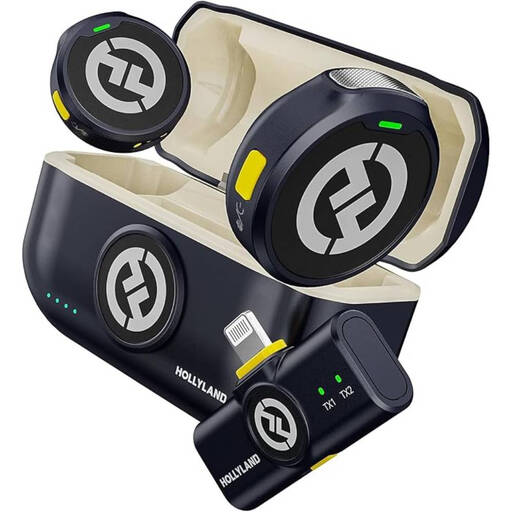 No image available
A wireless clip-on option if you are looking for a compatible receiver configuration; check which version suits your recording device.
The product name lists 48 kHz/24-bit audio and a transmitter weight of 9 g. The product description mentions Environmental Noise Cancellation; this is not a measurement of noise in a flat.
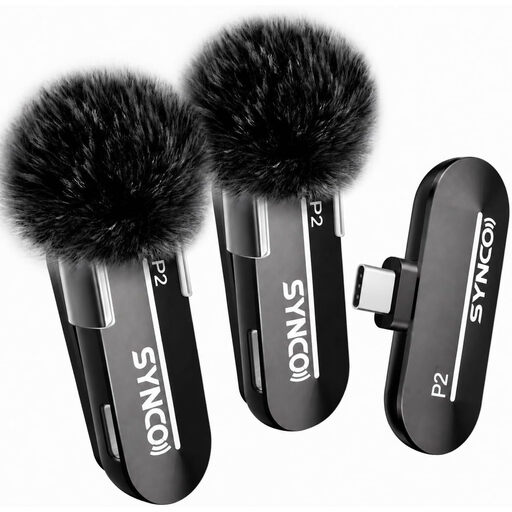 No image available
This version is designed for recording with a compatible USB-C device; also check whether your app uses the external microphone.
The product description lists a USB-C receiver, real-time monitoring, simultaneous charging and a noise reduction feature. This feature is not a measurement of the results in your room.
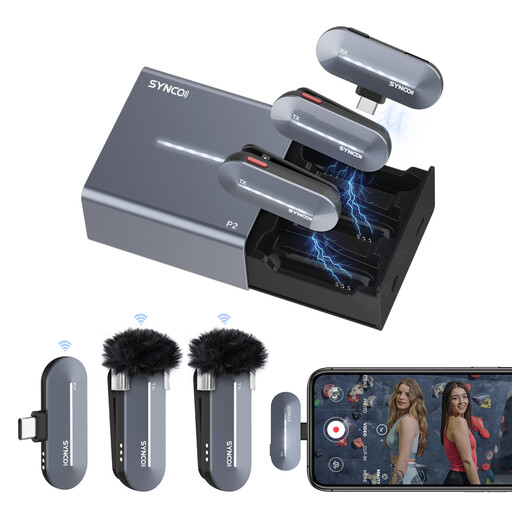 No image available
The product name lists two microphones, making this version worth considering for a recording with two speakers; check that your device has a USB-C connection.
The product name lists 2.4GHz and a charging case. The product description mentions one-touch noise reduction; this is not an independent measurement of noise in a flat.
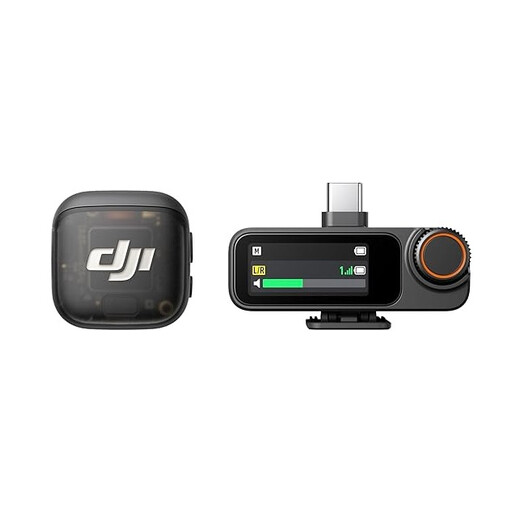 No image available
The kit with one transmitter is worth considering for a solo intro; check that the receiver suits your phone, camera or Android device.
The product description lists adaptive volume control and two noise reduction levels. These features do not prove how well background noise is suppressed in a specific flat.
 No image available
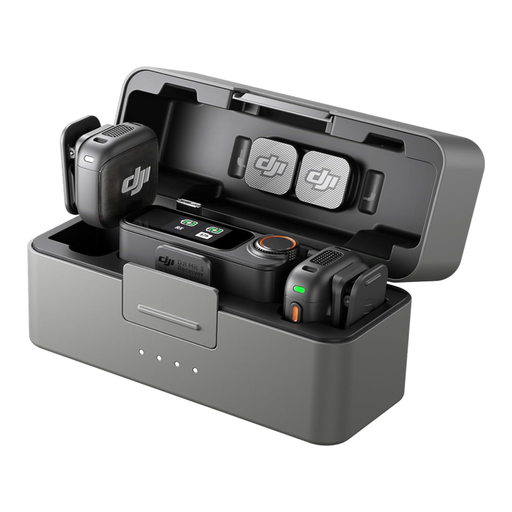
This version is worth considering for an intro with two speakers; check that the receiver connects to your recording device.
The product name lists two transmitters, one receiver and a charging case. The product description mentions two noise reduction levels, not independent performance measurements in a flat.
Attach the capsule so that clothing does not rub against it, then listen back to a short test recording. For the Shure MVL specifically, Shure recommends placing it 15–25 cm from your mouth; do not automatically use that distance for every other model.
No, the plugs and phone ports need to match. According to its manual, the Shure MVL has a TRRS connection, while the RØDE Lavalier GO has TRS; RØDE specifies a TRS-to-TRRS adapter for using the Lavalier GO with a smartphone. If your phone has no 3.5 mm port, also check which additional adapter you need and whether your recording app uses the external microphone.
According to ACM ConsuWijzer, statutory consumer rights apply in addition to any manufacturer’s warranty if a product used normally does not meet the standard you were entitled to expect; the seller must then provide an appropriate solution. For an eligible online consumer purchase, the Dutch government says you will often have a 14-day cooling-off period.
No, not always. The Dutch Authority for Digital Infrastructure says that you can usually use one without a licence if you follow the rules and conditions for the relevant frequency band; some frequency bands do require a licence. Check the rules for the frequency used by your chosen kit. This radio frequency issue does not apply to a wired microphone.
Do not assume that you can. The Dutch Data Protection Authority says that processing personal data requires a lawful basis under the GDPR, and that publishing information about others is generally only permitted with their consent. Whether a particular recording and publication falls under a lawful basis or exemption depends on the circumstances.