What should you look for when buying?
The percentages are an indicative breakdown of initial purchasing priorities for oral history interviews at a shared table; they do not represent Dutch market figures.
| What to consider |
What should you check? |
Who is this important for? |
| Both voices are clear |
Check the number of microphones or transmitters, and whether you can record both voices separately. |
If I want to hear both my questions and the story clearly when I listen back, I look for a set-up for two speakers. Around 33% of consumers here prioritise capturing both voices. |
| Sound at the shared table |
Check the clip, contact with clothing and cables, and how the microphone records in the same room. |
If other conversations at the table are distracting, I want to be able to position the microphone carefully and listen to the result beforehand. Around 27% of consumers here put background noise first. |
| Connection and controls |
Check the exact port, whether you need a TRS/TRRS or port adapter, the recording app and the power supply. |
If I want to record using my own phone or recorder without any hassle, I first check that the connection is compatible. Around 20% of consumers here prioritise being able to connect and start recording easily. |
| Recording a long conversation |
Check the power supply and storage for the specific model, and test that the recording starts and plays back afterwards. |
For a long conversation, I want to know in advance how power, storage and files will be handled. Around 20% of consumers here put uninterrupted recording first. |
Joybuy products for interviews at a table
This Joybuy selection includes Verbex lavalier microphones with one or two microphones. For each version, check that the listed interface is compatible with your phone or recorder.
 No image available
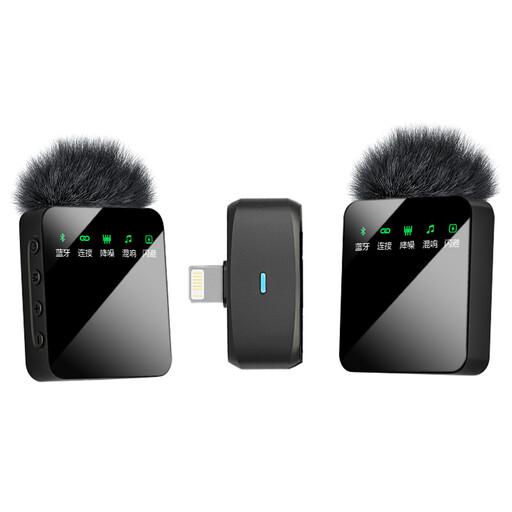
Verbex ST5 dual-mic wireless lavalier microphone
The product title lists two microphones, making it suitable for a set-up where both people wear a microphone.
Listed interface: iOS.
View at Joybuy
 No image available
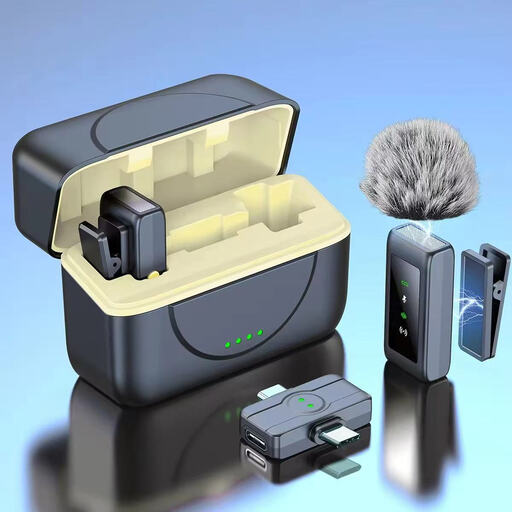
Verbex K80 dual-mic wireless lavalier microphone
The title lists two microphones. Check the interface carefully if both people need to wear a microphone.
Listed interface: universal.
View at Joybuy
 No image available
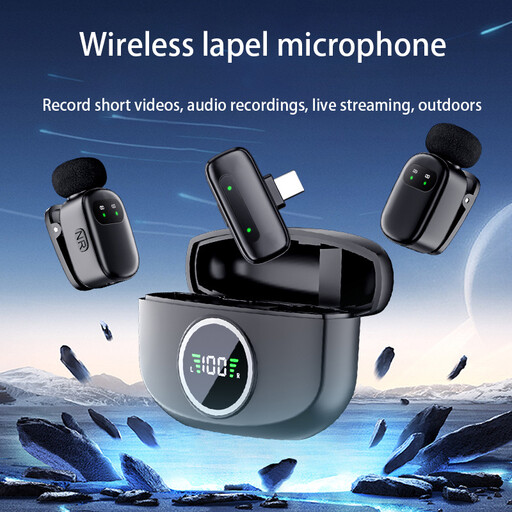
Verbex K21 dual-mic wireless lavalier microphone
The listing for two microphones suits a conversation where both people wear a microphone.
Listed interface: iOS.
View at Joybuy
 No image available
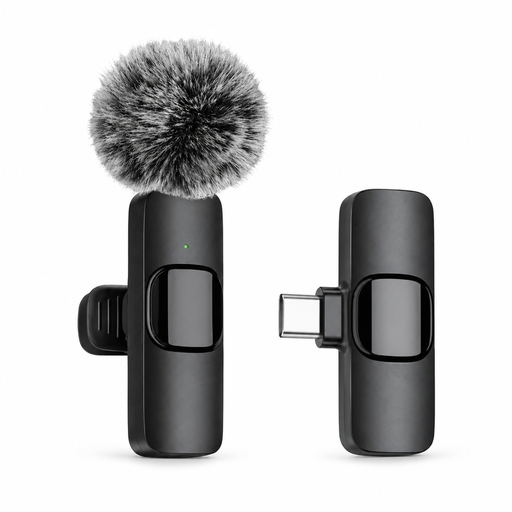
Verbex K9-Black wireless lavalier microphone
The title lists one clip-on microphone, an option to consider if the narrator is the main person wearing a microphone.
Listed connection: Type-C. Check compatibility with your recording device.
View at Joybuy
 No image available
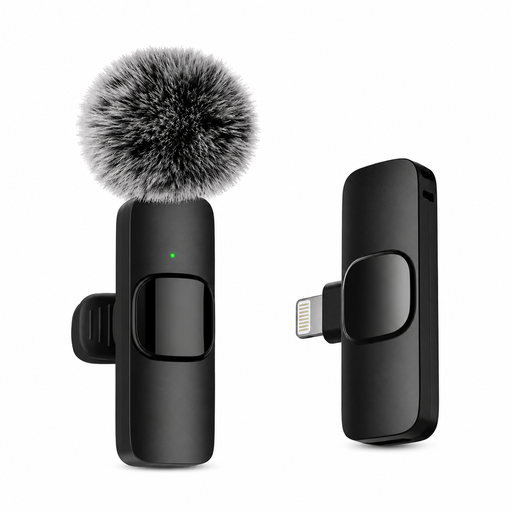
Verbex K9-Black single-mic wireless lavalier microphone
This single-mic version may suit you if the narrator is the main voice; a second microphone is needed for two people.
Listed interface: iOS.
View at Joybuy
Frequently asked questions
Is one lavalier microphone enough if we’re sitting opposite each other?
One microphone may be enough if the narrator’s story is the main focus, but your questions may sound quieter. If you want to capture both voices clearly, try a set-up with two microphones. The UCLA Library, Center for Oral History Research, recommends a second microphone when the interviewer also needs to be clearly audible.
Where should I clip a lavalier microphone when we’re at a shared table?
Clip the microphone to a stable part of your clothing and check that neither your clothes nor the cable rub against it. The International Association of Sound and Audiovisual Archives gives a guideline of around 15 cm from the mouth; also make a short test recording in the same room and listen back straight away.
Which components should I check before buying?
Check the connection, power supply and storage for the exact model. The BOYA BY-M1 uses an LR44 battery, the Zoom F2 uses two AAA batteries and microSD storage, and the RØDE Lavalier GO may need adapters for use with a phone.
Can I record an oral history interview in the Netherlands and publish it later?
An identifiable audio recording may contain personal data. If the GDPR applies to how the recording is processed, you must identify an appropriate legal basis before you begin. Consent is one possible legal basis, but it is not automatically the only one. The context matters, including whether the recording is for private use, organisational use or wider publication. So, discuss in advance with the narrator how the recording will be made, stored and, if applicable, made public.


