
Narrator in a reverberant hall
You want to record clear, intelligible speech. Attach the microphone to clothing close to the mouth and listen back to a test recording. RØDE suggests starting at around 20–30 cm.


For documentary narration in a community hall, a wired lavalier is a good choice if the narrator stays mostly in one place and the connection is compatible. Choose a wireless system if freedom of movement matters. Position the capsule close to the mouth without letting it rub against clothing, and make a test recording in the hall. If a take would be difficult to repeat, a system with onboard transmitter recording can provide an extra audio file. Check the recording separately, and confirm how many microphones and transmitters are included in the version you choose.
You want to record clear, intelligible speech. Attach the microphone to clothing close to the mouth and listen back to a test recording. RØDE suggests starting at around 20–30 cm.
Your choice depends on the input on your recording device: a TRS microphone, TRRS phone microphone and wireless receiver each need a compatible connection. RØDE and Shure describe different plug types and connection requirements.
You want room to move, need to record several voices or want to keep a separate transmitter recording in case there’s a problem with the camera audio. RØDE describes onboard recording on the Wireless PRO. Check which microphones and transmitters are included with each system.
Choose this when: the narrator stays mostly in one place and your recorder or phone has a compatible microphone input. The RØDE Lavalier GO has a 3.5 mm TRS plug; the Shure MVL is designed for a compatible 3.5 mm TRRS connection or a CTIA adapter.
Bear in mind: the cable limits movement, and TRS and TRRS plugs are not interchangeable.
Choose this when: the narrator moves around the hall or you don’t want a cable running to the camera. The DJI Mic 2 version with one transmitter and one receiver is designed for one speaker and offers onboard recording on the transmitter.
Bear in mind: charge the transmitter and receiver, and check the radio connection during a test recording. A clip-on transmitter is not automatically a separate lavalier capsule.
Choose this when: two speakers each need a microphone, or a separate transmitter recording is important. According to RØDE, the Wireless PRO includes two transmitters, two Lavalier II microphones and onboard transmitter recording.
Bear in mind: you’ll need to check the backup file, and may need to transfer it and synchronise it with the video after recording. The Wireless PRO’s 32-bit float feature applies to internal recordings, not automatically to the camera recording.
| What to consider | What should you check? | Who is this important to? |
|---|---|---|
| Clear speech without clothing rustle | Check where you’ll attach the microphone, then make a test recording with the narrator’s clothing and movements. RØDE suggests starting at around 20–30 cm from the mouth. | If I need clear, intelligible speech, I want to position the capsule close to the mouth without it rubbing against clothing. Around 31% of consumers prioritise speech clarity. |
| Connection to the recording device | Check the exact microphone input, whether it’s TRS or TRRS, whether you need a CTIA adapter and what’s included in the version you choose. | If I’m recording with my own recorder, camera or phone, I want to know in advance whether the plug or receiver is compatible. Around 25% of consumers prioritise device compatibility. |
| Freedom of movement and number of speakers | Check how many transmitters are included, what’s in the box, the battery status and wireless reception in the hall. | If I’m moving around the hall or want to record two voices, I look for cable-free operation and enough transmitters. Around 19% of consumers prioritise freedom of movement. |
| Backup for a take that’s difficult to repeat | Check whether the specific transmitter records internally, whether recording is enabled, and which recording mode and storage capacity are suitable for the session. | If I can’t easily record a take again, I want to be able to save and check a separate file. Around 25% of consumers prioritise recording security. |
A microphone may not work if its plug isn’t compatible with the input on your recorder, camera or phone. The RØDE Lavalier GO uses TRS; the Shure MVL is designed for a compatible TRRS phone connection or a suitable CTIA adapter.
Before buying, compare the exact input on your device with the plug on the microphone you’ve chosen.
Some combinations require a suitable adapter or a different microphone.
What’s included varies by version. RØDE lists two Lavalier II microphones with the Wireless PRO, while the DJI Mic 2 version with one transmitter and one receiver does not include a separate lavalier in the listed contents.
Check the contents of the exact version you plan to buy.
If you want to hide a capsule under clothing, you may need a separate lavalier.
With the RØDE Wireless PRO, 32-bit float applies to the internal transmitter files, not automatically to the camera’s audio track. You also need to set up transmitter recording correctly.
Before recording, check that the transmitter is recording and listen back to the signal received by the camera.
You may need extra time after recording to transfer the internal files and synchronise them with the video.
The Dutch Authority for Digital Infrastructure warns that shared licence-exempt frequencies can experience interference, so a wireless connection is not necessarily interference-free.
Before recording, walk the narrator’s route around the hall and check the received audio.
RØDE offers both wired lavaliers and wireless systems in these product ranges.
The DJI Mic 2 is a wireless option for solo narration. Check how many transmitters are included in the version you choose.
The Shure MVL is a wired lavalier for mobile devices with a compatible 3.5 mm TRRS connection.
The Hollyland LARK MAX 2 is a wireless range for creators considering multiple transmitters and onboard recording.
The Sennheiser MKE 2 (Black EW) is a compact wired lavalier for uses including live performance and production.
This selection mainly includes wireless systems for one or two speakers, plus a wired lavalier. Compare the connection, number of transmitters and stated recording features with your recording device and preferred setup.
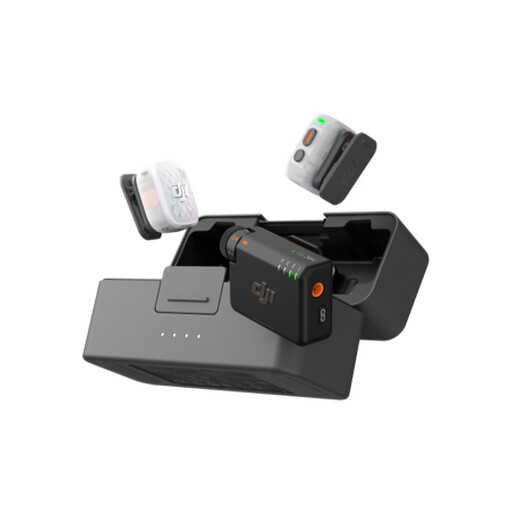 No image available
Suitable for recording two speakers or if you want to use onboard transmitter recording.
The product information lists two transmitters, one receiver and onboard 32-bit float recording.
The product information mentions use with cameras and smartphones. Check the connection for your device.
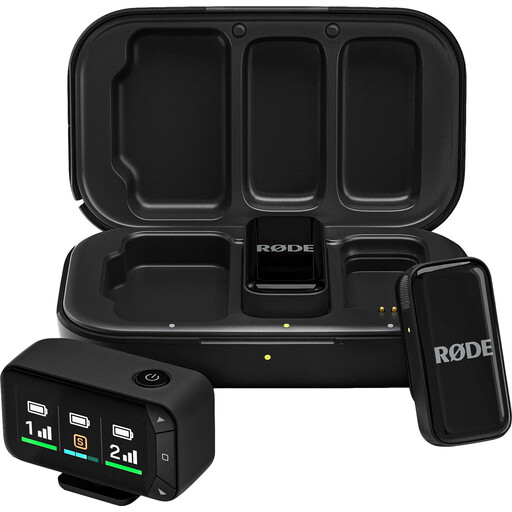 No image available
A wireless kit to consider if you want to record with a camera or USB-C smartphone.
The product information lists two transmitters, a camera receiver, a USB-C smartphone receiver and a charging case.
Check which receiver is compatible with the device you’ll be recording on.
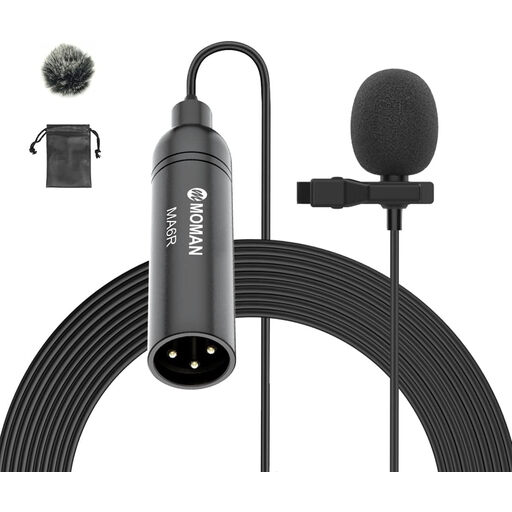 No image available
A wired lavalier to consider if the cable run suits the narrator’s position and your recording device.
The product name lists a 6 m cable, an omnidirectional microphone and a 3.5 mm connection.
The product information mentions compatibility with smartphones. Check your device’s connection.
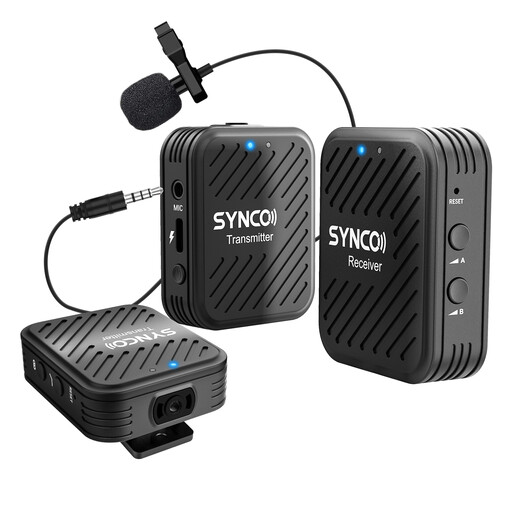 No image available
Could be worth considering if you want to record two speakers wirelessly and monitor the audio as you record.
The product information lists two transmitters and real-time audio monitoring via a 3.5 mm headphone socket on the receiver.
The product name mentions use with cameras, smartphones and tablets. Check the connection for your device.
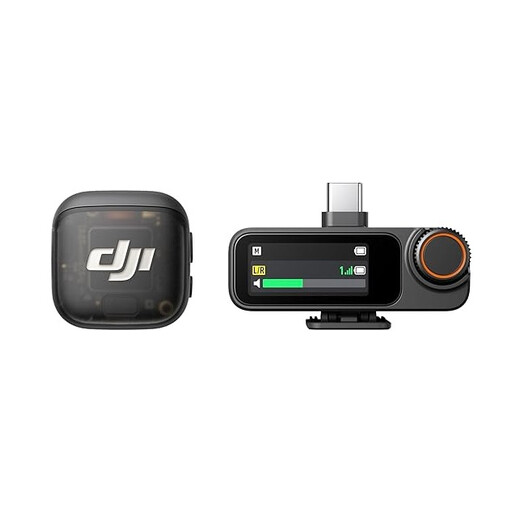 No image available
A wireless system for one narrator to consider if you want to save a separate transmitter recording.
The product information lists one transmitter, one receiver and onboard 32-bit float recording.
Compatibility with phones and cameras is mentioned. Check which connection or included adapter is compatible with your device.
RØDE suggests starting at the chest, around 20–30 cm from the mouth. Make sure clothing doesn’t rub against the capsule, and listen back to a test recording made in the hall.
No. According to RØDE, 32-bit float on the Wireless PRO applies to the internal transmitter files, not automatically to the audio file recorded by the camera.
No. The Dutch Authority for Digital Infrastructure states that some frequency bands require a licence and publishes information about licence-exempt frequencies. Check the frequency used by the system you choose. Licence-exempt does not mean interference-free.
A sound recording that identifies someone may be personal data. The Dutch Data Protection Authority says organisations filming and publishing identifiable visitors at an event need a lawful basis and must provide information. Assess the specific recording and publication separately. Consent is one possible lawful basis, but it is not automatically the answer for every documentary.
For a faulty consumer product, the seller must provide a solution according to the Dutch Government; there is no fixed statutory warranty period in the Netherlands. For online consumer purchases, you often have 14 days to change your mind, although exceptions apply. Check which rules apply to your purchase.