Start with a microphone you can position close to your mouth and that works with your phone, camera or recorder. A microphone won’t fix the acoustics of a noisy room. A wired mic can be practical for a fixed recording spot; choose wireless if you need freedom to move or a separate recording on the transmitter. Noise reduction and 32-bit float recording solve different problems, and neither guarantees a quiet recording.
Who is this buying guide for?
Voice-over recording in a noisy room
You’re recording documentary narration and can hear background noise or reflections. Mic placement close to your voice and a test recording matter more than a noise reduction feature claim alone. Shure explains how mic distance and room reflections affect a recording.
Recording with a phone or camera
You want to record with equipment you already own. Check that the plug, receiver and any adapters are compatible with the input on your phone, camera or recorder. IK Multimedia and RØDE describe different connections for their lavalier microphones.
Creators who can’t redo a take
If an interruption or incorrectly set recording level could ruin a take, monitoring or a separate recording on the transmitter may be worth considering. RØDE describes the internal recording capabilities of the Wireless PRO transmitters.
What should you look for?
A wired mic can be a practical choice for a fixed recording spot if the cable and input are compatible. Wireless is worth considering if you need freedom to move or a separate recording on the transmitter. The Dutch Authority for Digital Infrastructure warns that licence-exempt radio use does not guarantee interference-free operation.
| What to consider |
What should you check? |
Who is this important for? |
| Clear speech |
Check the placement and polar pattern, and whether you can listen to a test recording from the intended position. |
If I’m recording in a noisy room, I want to know whether my voice comes through clearly above the room noise. Around 36% of consumers prioritise speech clarity above all else. |
| Connection |
Compare your device’s input with the plug, and check which adapters or receivers you’ll need. |
I want to record with my phone, camera or recorder without finding I have the wrong connection. Around 29% of consumers put compatibility first. |
| Recording security |
Check whether the set records internally, how to start that recording and whether you can monitor the audio while recording. |
When a documentary take would be difficult to record again, I want to be able to monitor or capture it separately. For around 21% of consumers, recording security comes first. |
| Wired or wireless |
Check everything included in the set, the power requirements and any adapters, and whether the cable gives you enough room to speak. |
I want either a simple fixed set-up or room to move, without finding that a part is missing. Around 14% of consumers prioritise simplicity, freedom to move or a complete set. |
Common buying mistakes
-
Assuming 32-bit float automatically removes flat noise
On the RØDE Wireless PRO, 32-bit float applies to recordings made on the transmitters. It won’t improve the room acoustics, and it doesn’t automatically apply to the camera recording.
First, check the mic placement and listen to a test recording. Then make sure the transmitter recording mode you want is switched on.
-
Ordering a microphone on its own as if it were a complete recording set-up
The RØDE Lavalier GO has a TRS plug, the IK Multimedia iRig Mic Lav has a TRRS connection, and the Shure WL185m has a TA4F/TQG connection. They won’t necessarily work with every phone, camera or transmitter.
Before ordering, compare the exact model, plug, what’s included in the set and the input on your recording device.
You may need to buy a compatible adapter, transmitter or receiver separately. Check what’s included with the version you’ve chosen.
-
Assuming wireless is automatically more reliable than wired
According to the Dutch Authority for Digital Infrastructure, using licence-exempt frequencies does not guarantee an interference-free connection. A cable, on the other hand, limits your freedom to move.
Choose based on how you record. If you go wireless, test the connection and only rely on a transmitter recording if it’s actually switched on.
Brands to consider
IK Multimedia
The iRig Mic Lav is a wired option for a fixed recording spot, provided you have a compatible mobile TRRS input.
- IK Multimedia says the iRig Mic Lav doesn’t need a battery, has a 150 cm cable and includes a second port for headphone monitoring or a second microphone.
- Check that the CTIA/AHJ connection and any adapter are compatible with your device. Its omnidirectional pattern won’t automatically reduce room noise.
Shure
Shure offers the mobile-focused MVL as well as directional lavalier microphones such as the WL185m.
- Shure says the MVL uses a 3.5 mm TRRS connection. The WL185m has a cardioid capsule and is available with a TA4F connection.
- The WL185m needs a compatible transmitter or other signal chain. A directional pattern only helps in suitable conditions and with the right orientation and placement.
RØDE
RØDE offers the wired Lavalier GO and the Wireless PRO, a wireless system supplied with Lavalier II microphones.
- RØDE says the Wireless PRO transmitters can record independently. The stated 32-bit float recording applies to these internal files.
- The Lavalier GO has a TRS plug. You’ll need a compatible adapter for a suitable phone TRRS input; the transmitters’ internal recording isn’t automatically the camera recording.
DJI
The DJI Mic 2 is a wireless option for those considering multiple recording outputs and noise reduction features.
- DJI lists internal 32-bit float recording, omnidirectional recording and USB-C, Lightning and 3.5 mm TRS outputs.
- DJI’s feature claims aren’t an independent assessment of the results in a noisy flat. Check which version and connections are included in the set.
BOYA
The mini 2 is a compact wireless clip-on microphone for anyone looking for a small mobile set-up.
- BOYA lists AI noise cancellation and a safety track as features of the mini 2.
- These features don’t guarantee a particular recording result in your room. The receiver and connections depend on the version of the set you choose.
Joybuy product picks
This selection includes wireless lavalier microphones and a wired lavalier microphone. Check that the connections and included components for each version are compatible with your recording device.
 Image unavailable
DJI Mic Mini 2S (2 TX + 1 RX + Charging Case)
A wireless set to consider if you want more room to move while recording than a cable allows.
The product name lists two transmitters, one receiver and a charging case.
View at Joybuy
 Image unavailable
Lark M2 Wireless Lavalier Microphone System
A wireless lavalier microphone system to consider if you want to record without a cable. Check that the receiver is compatible with your recording device.
The product name lists 48 kHz/24-bit, a transmitter weight of 9 g and a range of 300 m.
View at Joybuy
 Image unavailable
Moman M1CXT Wireless Lavalier Microphone (USB-C, 2TX+1RX)
This wireless set is worth considering if your recording device has a compatible USB-C connection.
The product name lists USB-C, two transmitters, one receiver and a range of 150 m.
View at Joybuy
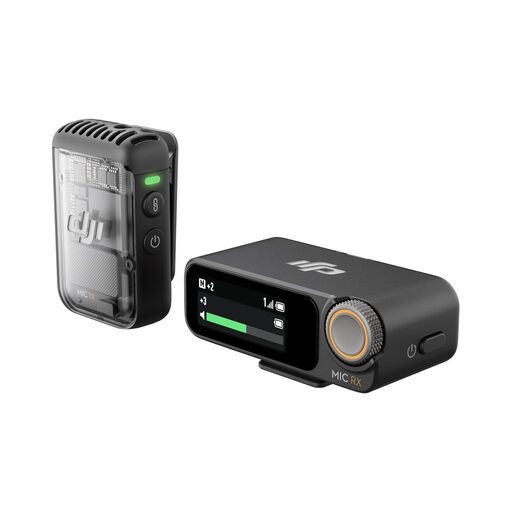 Image unavailable
DJI Mic 2 (1 TX + 1 RX)
A wireless set to consider if you want a separate recording feature as part of your decision. Check which recording you’ll be using.
The product name lists internal 32-bit float recording and a range of 250 m. This recording feature won’t fix room acoustics.
View at Joybuy
 Image unavailable
SYNCO S8 Lavalier Microphone
A wired lavalier mic to consider if you don’t need a wireless set-up for a fixed recording spot.
The product name lists use with a smartphone, PC, laptop and camera. Check the connection on the version you’ve chosen before ordering.
View at Joybuy
Frequently asked questions
Can noise reduction make a noisy flat sound quiet?
There’s no guarantee. Position the microphone at a suitable distance from the speaker and listen to a test recording from the spot where you plan to record. DJI and BOYA list noise reduction features for specific products; these claims don’t show what the results will be in your room.
Can you plug a standalone lavalier microphone straight into your phone?
Only if the plug and input are compatible. According to IK Multimedia, the iRig Mic Lav needs a compatible CTIA/AHJ-TRRS input or adapter. The RØDE Lavalier GO has a TRS plug; you’ll need a TRS-to-TRRS adapter for a suitable phone TRRS input. If your phone doesn’t have a 3.5 mm port, also check which port adapter is compatible.
How can you avoid clothing rustle and a lost recording?
Attach the microphone so that clothing doesn’t rub against the capsule, and make a short test recording. If you’re using a RØDE Wireless PRO, check that the transmitter recording is set to the mode you want. You’ll also need to export an internal recording afterwards.
Can you use a wireless microphone in the Netherlands without a licence?
You can if the device operates within the applicable licence-exempt frequency band and meets its conditions; some other microphone bands require a licence. The Dutch Authority for Digital Infrastructure lists licence-exempt bands. Check the frequency details for the specific set before assuming it can be used without a licence.
What should you check when buying, returning or claiming under a warranty?
For radio equipment, check the product information and the required CE marking. According to the Dutch government, many online purchases from a business come with a 14-day cooling-off period; your statutory rights to a product that works as it should may also apply after the manufacturer’s warranty expires. Also check everything included in the set and which adapters you’ll need.


