
Vandaag of morgen in huis

Kwaliteit gegarandeerd

Welkomstaanbiedingen ontgrendelen: GRATIS bezorging | Tot 80% korting | Gratis 30 dagen JoyPlus-proefperiode
Download de app
Choosing a new bottle of laundry detergent may seem straightforward, but differences in dosage, fabric suitability and number of washes can have a significant impact on your costs. Marketing claims such as “extra fresh”, “concentrated” or “for all laundry” do not always tell the whole story.
The most common pitfalls:
Start with the clothes you wash most often. For coloured and mixed laundry, colour detergent is a logical choice. For light-coloured towels, bedding and white clothes, you could consider a detergent for whites. For dark clothes, there is black laundry detergent, such as a formula specifically designed for dark fabrics.
Wool, silk and other delicate materials require a separate approach. Use only detergent for delicate laundry or detergent for wool and silk when this is stated on the label. Also always check the washing symbol on the garment. Not every liquid detergent is suitable for these fibres.
Do not compare millilitres alone. Focus mainly on the cost per wash. The recommended amount usually depends on:
A concentrated laundry detergent often uses fewer millilitres per cycle. That does not automatically mean it is better value: calculate the price based on the stated number of washes. Measure carefully and do not use more than necessary. Too much detergent can leave residue in the machine or on your clothes.
If you often use short programmes or low temperatures, check whether the product is suitable for them. Robijn Advanced QuickWash product information, for example, states that the formula is intended for short wash programmes from 15 minutes. According to the description, the detergent is suitable for various fabrics, except wool and silk.
Also pay attention to the product’s limitations. A colour detergent may be suitable for 20, 30, 40 or 60 °C, while a detergent for delicate laundry is often intended for cold washes and temperatures up to 30 or 40 °C. Always follow the garment label and the instructions on the packaging.
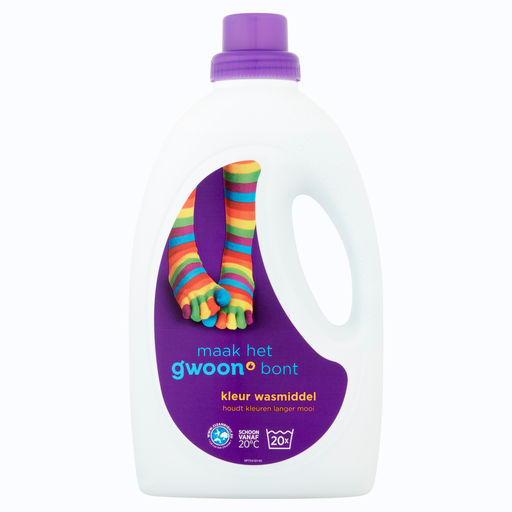
Why it suits this profile: This liquid detergent is designed for coloured laundry and provides clear dosage instructions for different laundry loads and water hardness levels.
The label lists 20 °C, 30 °C, 40 °C and 60 °C, with dosages from 40 to 85 ml for a 4–5 kg load.
Suitable for coloured laundry; dosage information for small, normal and heavily soiled loads.
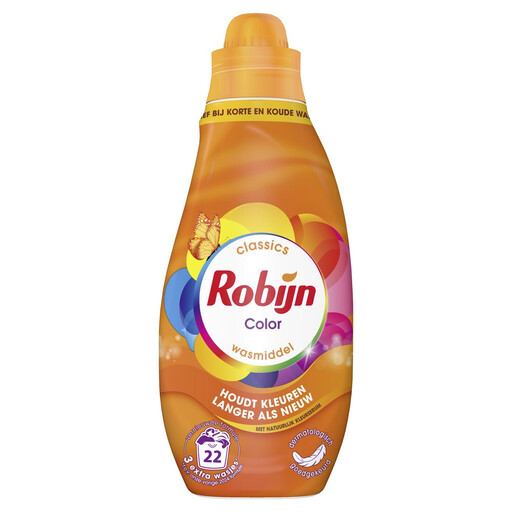
Why it suits this profile: A compact option for households that regularly wash coloured and mixed laundry and want to use a concentrated detergent.
The product information specifies a dosage of 30 ml per wash and 22 washes. This makes it easier to compare the cost of use more precisely.
Ultra-concentrated formula; according to the product details, 87% biodegradable ingredients.
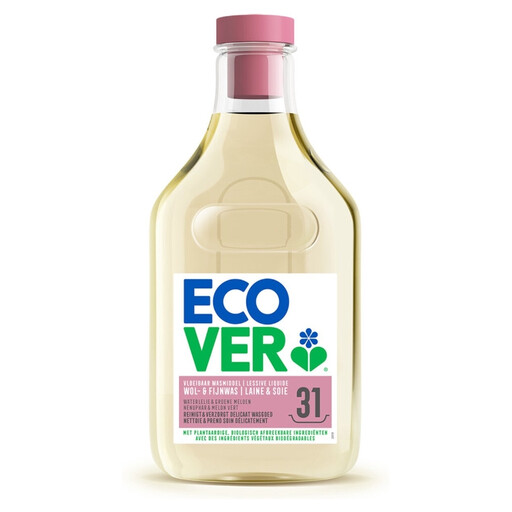
Why it suits this profile: Designed for households that wash wool, silk and other delicate clothing separately.
The product information explicitly states that it is suitable for wool and silk, as well as cold washing up to 30–40 °C.
31 washes from 1.43 litres; according to the product description, a vegan formula with plant-based ingredients.
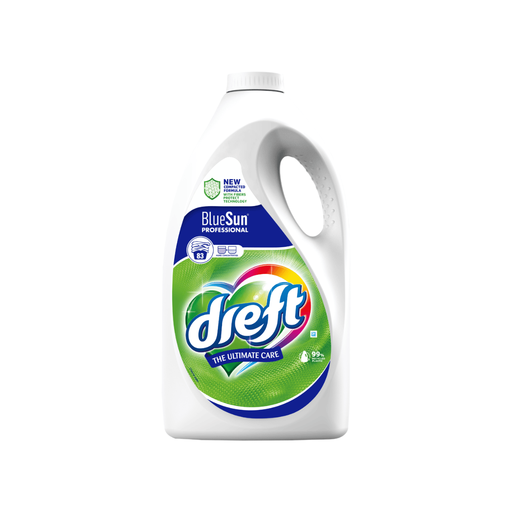
Why it suits this profile: The stated 83 washes make this practical for households that do laundry frequently and do not want to order a new bottle too often.
The product information states the number of washes and the suitable temperatures of 30, 40 and 60 °C.
83 stated washes; suitable for both coloured and white laundry according to the product description.
Liquid detergent is easy to measure and suitable for many everyday washes. Laundry capsules provide a fixed dose and are convenient when you want to wash quickly, but you cannot easily adjust the amount for a small load. According to the product information, Dreft Caps 4in1 is available in packs of 14 capsules.
An eco-friendly laundry detergent may be worth considering if ingredients and packaging are important factors for you. Check specific details, such as whether recycled plastic is mentioned, the number of washes and the formulation. Always keep capsules and liquid detergent out of the reach of children and follow the safety information on the packaging.
We have put together a complete, up-to-date list of products that fully meet these strict selection criteria and the applicable European safety regulations.
Use black laundry detergent if you mainly wash dark clothes and the product information states that it is designed for them. Wash black and light-coloured fabrics separately and turn dark clothes inside out. Always check the garment label.
This depends on the load, how heavily soiled it is and the water hardness. Use the dosage table on the packaging. With a concentrated detergent, a smaller amount may be sufficient. Using more detergent does not automatically result in cleaner laundry.
Compare the price per wash. Capsules have a fixed dose, while liquid detergent lets you adjust the amount to suit the size and soiling of the load. For small loads, that flexibility can be useful.
