
Fussy eaters who are used to white bread
You’re looking for a familiar flavour for a late-night snack and may want to gradually switch to brown or finely textured wholemeal bread, without choosing a coarser type of bread straight away.


If you mainly want wholemeal bread for a late-night snack, choose bread labelled ‘wholemeal’; according to the Netherlands Nutrition Centre, this is made from 100% wholemeal flour. Brown bread is a mix of wholemeal flour and white flour, and could be a good stepping stone if you’re looking to move on from white bread. If familiar flavour is the deciding factor, white bread is also an option, but it isn’t a substitute for wholemeal bread if fibre is your main priority.
You’re looking for a familiar flavour for a late-night snack and may want to gradually switch to brown or finely textured wholemeal bread, without choosing a coarser type of bread straight away.
Even for a small late-night snack, you want to make a conscious choice in favour of wholemeal bread. According to the Netherlands Nutrition Centre, the ‘wholemeal’ label tells you more than the bread’s brown colour.
You want to choose a type and size of bread that suit the occasion and how much you expect to use. That’s why you check the label, ingredients and pack size on the shelf or in the product information.
The type of bread doesn’t automatically determine whether it’s right for a late-night snack. Weigh up the label against the flavour you want and the amount you’ll use.
When: Choose this if wholemeal flour is your priority. Even with a fine texture, check that it’s labelled ‘wholemeal’.
Trade-off: The flavour and texture may be different from the white bread you’re used to.
When: A mix of wholemeal flour and white flour could be a good stepping stone if you’re looking to move on from white bread.
Trade-off: According to the Netherlands Nutrition Centre, brown bread isn’t the same as bread made from 100% wholemeal flour.
When: Choose white bread if a familiar white loaf matters more to you for this snack than whether it’s wholemeal.
Trade-off: White bread is made from white flour, so it doesn’t offer the same wholemeal flour option.
| What to consider | What to check | Who it matters to |
|---|---|---|
| More fibre without a big change in flavour | Look for the ‘wholemeal’ label if 100% wholemeal flour is a must; otherwise, compare it with brown bread. | I want to switch from white bread, but I also want to choose a loaf whose flavour works for me. For around 36% of shoppers, getting more fibre while adjusting to the flavour is the priority. |
| Familiar flavour and texture | Check the type of bread and its ingredients; a fine texture or brown colour alone doesn’t prove that it’s wholemeal. | When I want a late-night snack, I mainly want a type of bread whose flavour and texture I enjoy. Familiarity matters most to around 29% of shoppers. |
| Availability when you want a snack | Check the current range and whether your preferred type of bread is available as a whole loaf, half loaf or rolls. | For a spontaneous late-night snack, I want to choose from what I can buy and use at the time. Immediate convenience is the main consideration for around 21% of shoppers. |
| Quantity and food waste | Choose a size that matches how much you expect to use; follow the product instructions for storing or freezing it. | If I only have bread as a late-night snack occasionally, I don’t want to be left with lots of bread I haven’t used. Avoiding waste is the top priority for around 14% of shoppers. |
The colour and added seeds don’t tell you whether a loaf is made from 100% wholemeal flour. According to the Netherlands Nutrition Centre, brown bread is a mix of wholemeal flour and white flour.
Check the product label and ingredients if it’s important to you that the bread is entirely wholemeal.
According to the Netherlands Nutrition Centre, using baker’s salt isn’t compulsory. So the type of bread alone won’t tell you whether it’s been used.
Check the ingredients, or ask about it if you’re buying unwrapped bread.
A whole loaf may be more than you expect to eat if you only have a late-night snack occasionally.
Compare the available sizes and check how to store your chosen bread by following the product instructions.
Any bread you don’t use could end up being thrown away.
The ingredients vary from one type of bread to another, so the name of the bread doesn’t replace the ingredients and allergen information for the specific product.
Check the packaging or product information for the variety you’re actually choosing.
Albert Heijn lists separate categories for white bread and a wider range of bread online.
Jumbo describes its own bread range as including white, brown and wholemeal varieties.
Lidl lists white bread in its range and provides an ingredients and allergen overview for its freshly baked bread.
PLUS has separate online categories for wholemeal and white bread.
Dirk lists types of bread online including white, wholemeal, multigrain and sourdough.
These products offer a range of options for a late-night snack: white bread products, bread listing wholemeal ingredients and bread made with a mix of flours. If you’re choosing wholemeal bread, always check the packaging label; ‘whole wheat’ in a product name alone doesn’t confirm that it meets the Dutch definition of wholemeal.
 Image unavailable
These six flatbreads could be a good choice if you want individual pieces for a late-night snack.
The product information lists wholemeal wheat flour, 6 g of fibre per 100 g and a pack weight of 330 g. Check the bread type on the packaging if you require bread made from 100% wholemeal flour.
The product information lists wheat and gluten, and says it may contain soya and milk. Check the packaging if you have allergies.
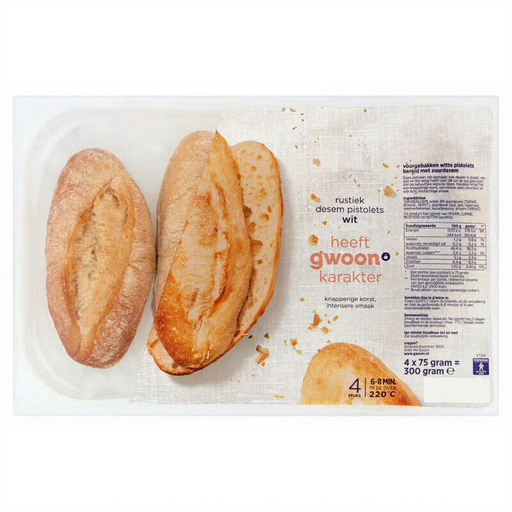 Image unavailable
These four white rolls are a good choice if you’d rather have individual rolls than a whole loaf.
The product information lists wheat flour. If you’re looking for wholemeal flour, check the product label and ingredients of the bread you choose.
Check the packaging if you have allergies; the product information lists gluten-containing cereals, lupin, mustard, nuts and sesame, among others.
 Image unavailable
The nine pre-cut portions could be a good choice if you want to have one portion at a time as a late-night snack.
The product information lists wholemeal rye and 9,6 g of fibre per 100 g. Bear in mind that it’s described as having a robust rye flavour if you usually choose white bread.
The information lists rye and gluten-containing cereals, and says it may contain traces of sesame, milk and nuts. Check the packaging if you have allergies.
 Image unavailable
This round loaf is an option if you’re looking for bread made with a range of listed flours and have time to prepare it.
The ingredients list both wholemeal wheat flour and wheat flour. Don’t rely on ‘Whole Wheat’ in the name alone if you want bread made from 100% wholemeal flour.
According to the product description, the bread needs to defrost, bake for 11–13 minutes at 220 °C and then cool. The ingredients list wheat and gluten; check the packaging if you have allergies.
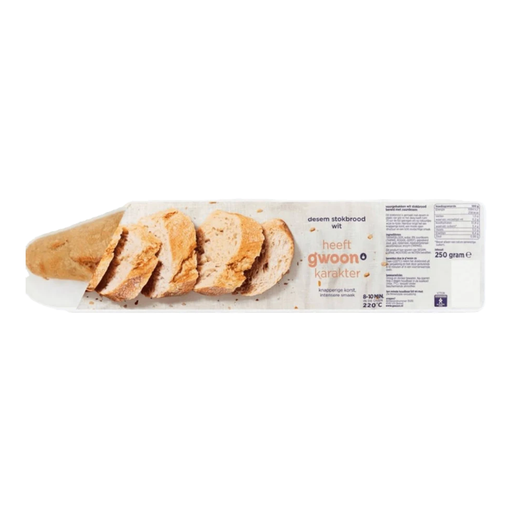 Image unavailable
This white baguette is a good choice if you’re looking for white bread, as long as you’re happy to bake it in the oven.
The product information lists wheat flour and describes the baguette as bake-at-home bread. Check the product label if wholemeal flour is a must for you.
The product information lists gluten-containing cereals, lupin and sesame; check the packaging if you have allergies.
Brown bread can be a stepping stone if you’re looking for a mix of flours: according to the Netherlands Nutrition Centre, it contains wholemeal flour and white flour. If you want bread made from 100% wholemeal flour, choose it based on the ‘wholemeal’ label, not just its colour.
No. White bread is still an option if you want a familiar white loaf at the time. If fibre is your main priority, it’s worth noting that according to the Netherlands Nutrition Centre, wholemeal bread contains more fibre than white bread; check which type of bread you’re buying.
No. According to the Netherlands Nutrition Centre, there’s no requirement to bake bread with baker’s salt. Check the ingredients, or ask the baker which salt they’ve used if you’re buying unwrapped bread.
Check the information for the specific loaf before choosing it. You can find this on the packaging, in the product specifications or in the shop; Lidl, for example, provides an ingredients and allergen overview for its freshly baked bread range.