
Producer of large batches of handouts
Prints lots of text pages for participants regularly and wants to spend less time refilling paper and replacing toner.


For mainly text-based handouts and larger print runs, a mono laser printer with automatic duplex printing is a sensible choice. Match the paper tray capacity to the size of your usual workshop print run. Compare the cost of toner and, where applicable, a separate drum, and check which connections studio members need. Choose a colour laser printer only if you genuinely need colour, and agree who will collect printouts containing personal data.
Prints lots of text pages for participants regularly and wants to spend less time refilling paper and replacing toner.
Needs a printer that works with the network connections in the studio and the arrangements for accessing printouts.
May need colour for diagrams or exercises, and weighs this against the cost of colour toner.
Best for: mainly text-based handouts and limited space.
The trade-off: no colour; factor in the cost of toner and, if it’s replaced separately, the drum.
Best for: regular large batches and several studio members printing over the network.
The trade-off: check the standard tray capacity; you may need an optional tray for extra paper capacity.
Best for: handouts where colour-coded elements are needed to convey information.
The trade-off: compare the cost of the colour toners you’ll need, and don’t pay for colour if mono will do.
If you’re choosing a laser printer for handouts in a shared studio, the key considerations are print run size, ongoing consumable costs, access and whether you need colour.
| What to consider | What should you check? | Who is this important for? |
|---|---|---|
| Large print runs | Compare the stated A4 speed on the same simplex or duplex basis, the standard tray and any additional trays against the size of your usual print run. | If I’m printing a large batch just before a workshop, I want to refill the paper less often. Around 36% of consumers prioritise print run size and uninterrupted printing. |
| Ongoing costs | Check the yield and type of replacement toner, and whether the drum is replaced separately. | For repeat workshops, I want to factor in the cost of toner and the drum, rather than looking only at the purchase price. Around 29% of consumers prioritise manageable ongoing costs. |
| Access and connectivity | Choose Wi-Fi or Ethernet to suit the studio network; if you’re printing personal data, also agree who can collect the printouts. | If several members print, I want the printer to work with the network and sensitive printouts not to be left unattended. Around 21% of consumers prioritise shared access and, where necessary, confidential document collection. |
| Use of colour | Check that a sample remains legible in greyscale. For a colour printer, also check the supported paper types and the colour toners you’ll need. | If colour makes information in diagrams or exercises clearer, I want to know that mono won’t be a suitable alternative. Around 14% of consumers prioritise colour as a functional requirement. |
The stated speeds and cartridge yields are manufacturer specifications, not a guarantee of the total time or consumables used for a workshop print job. For example, Brother lists a maximum of 48 pages per minute in simplex mode for the HL-L5210DW, with a standard 250-sheet tray and expandable paper capacity. The expansion isn’t included as standard. Compare models on a like-for-like basis, and consider the size of the print runs you typically produce.
The included toner and a high-yield replacement toner may have different stated yields. If a model has a separate drum, you’ll need to factor that in too.
Compare the same cartridge type, and include the drum if it’s replaced separately. Don’t treat manufacturer yields as a guarantee of how much you’ll use during your workshops.
Automatic duplex printing doesn’t determine how many sheets the printer tray holds. Brother lists the standard tray capacity for the HL-L5210DW as 250 sheets; increasing this requires an optional tray.
Compare the capacity of the standard tray with the size of your usual workshop print run, and add an extra tray only if you need one in practice.
HP describes dynamic cartridge protection for the LaserJet Pro 4002dw. This can block cartridges without a suitable HP chip, including after firmware updates.
Before buying, check the cartridge requirements for the exact model variant and make sure the toner you want to use is compatible.
Allowing several studio members to use a printer doesn’t stop a printout containing personal data from being left unattended in the output tray.
Check documents before sharing them, and agree who will collect printouts. Consider secure printing as an additional model feature if it suits the way you work.
The models mentioned range from a compact mono laser printer to one designed for larger shared print jobs.
The i-SENSYS models mentioned offer a mono option and a colour laser option.
The LaserJet Pro 4002dw is a mono model worth considering for a shared working environment.
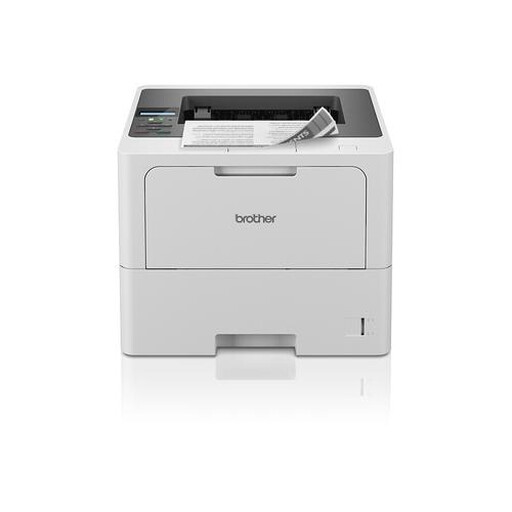
These Joybuy products include A4 laser printers for shared use and a colour laser printer for handouts where colour is needed.
 No image available
The product name specifies A4 laser printing and Wi-Fi; check that the connection suits your studio network.
Specifications in the product name: A4, Wi-Fi and 1200 x 1200 DPI.
 No image available
The Brother HL-L5210DW is suited to larger mono print runs and shared use, provided its stated connections work with the studio network.
Brother lists a maximum speed of 48 pages per minute in simplex mode and a standard 250-sheet tray with expandable paper capacity. The model has Gigabit Ethernet and Wi-Fi; extra paper capacity is optional.
 No image available
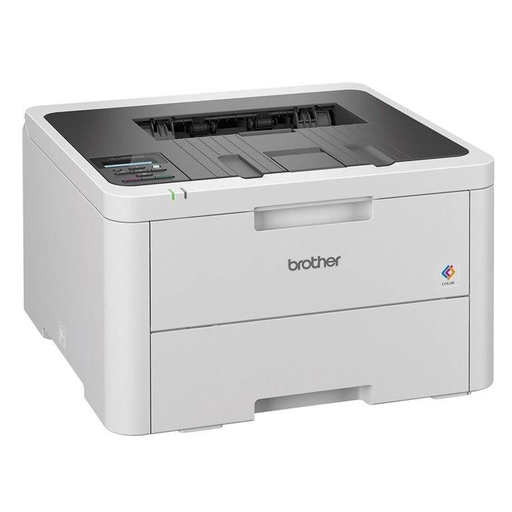
This colour laser printer is an option when colour is needed to convey information in workshop materials.
Specifications in the product name: colour, A4, Wi-Fi and 600 x 2400 DPI.
 No image available
The product name specifies an A4 laser printer; check that the connections on the exact variant suit your studio.
Specifications in the product name: A4 and 1200 x 1200 DPI.
Not if the text and illustrations remain legible in mono. Try a sample in greyscale; if you do need colour, compare a specific colour laser model and its toners.
Check that the printer can connect to the existing network and devices, and agree who will manage the paper, toner and printouts. Ethernet, Wi-Fi and Secure Print are separate features that vary by model.
Compare the stated yield of the included toner with that of the replacement version you intend to use. Factor in a separate drum too, if the model uses one. Yields are manufacturer estimates, not a guarantee of how much you’ll use.
The Dutch Data Protection Authority advises checking documents for personal data before sharing or publishing them, and taking appropriate security measures. For these handouts, agree who can access the printouts and how they’ll be distributed; this advice doesn’t mean every studio needs to buy a printer with a PIN code.
That depends on the model, paper weight, input tray and duplex support. Check the permitted paper types and settings for cover stock for the exact model.