
For text-focused itinerary planners
You mainly print a clear itinerary with times and descriptions, and don’t need colour. The Consumentenbond and Brother Netherlands describe monochrome models as options for printing documents.


If you mainly print text and times, an A4 monochrome laser printer is a good choice for a travel itinerary that doesn’t need colour. If your maps or charts need colour, compare colour laser printers with colour LED printers and factor in the cost of multiple toner cartridges. Choose a multifunction model only if you also want to scan or copy paper documents. The Consumentenbond recommends considering factors such as colour and additional features when choosing a printer.
You mainly print a clear itinerary with times and descriptions, and don’t need colour. The Consumentenbond and Brother Netherlands describe monochrome models as options for printing documents.
Your itinerary includes maps or charts where colour makes a difference, so you’ll also need to factor in the required colour toner cartridges. Brother Netherlands describes a colour LED printer, while Canon Netherlands describes a colour laser printer for colour documents.
You want to scan or copy notes and other paper documents as well as print. The Consumentenbond discusses these features as factors to consider when choosing a printer; Brother Netherlands lists them for the MFC-L2800DW.
| Factor to consider | What to look for | Who is this most important for? |
|---|---|---|
| Clear text and double-sided printing | Check for A4 support and automatic double-sided printing, and make sure the itinerary will still be easy to understand without colour. | If I mainly print times and directions, I want a clear itinerary without unnecessary colour. Around 36% of consumers making this choice prioritise clear text. |
| Colour for maps and images | Check whether colour is essential, which printing technology the exact model uses, and which toner cartridges are included or will be needed later. | If colour makes routes or charts clearer, I want to preserve that distinction on paper. Around 29% of consumers making this choice prioritise colour distinction. |
| Running costs after the project | For the exact models, compare the price and stated yield of compatible toner and any separate consumables. The Consumentenbond takes cartridge prices and the number of pages printed into account when comparing costs. | If I print regularly after the assignment too, I want to know in advance which consumables I’ll need. Around 21% of consumers making this choice prioritise ongoing printing costs. |
| Scanning and copying | Check whether the exact model has both functions. If you have several pages to scan, an automatic document feeder may be important. | If I’m using paper notes or documents in my project, I want to be able to digitise or copy them too. Around 14% of consumers making this choice prioritise scanning or copying. |
The purchase price alone doesn’t tell you how much printing will cost later. The Consumentenbond factors in things such as cartridge prices and the number of pages printed when comparing costs.
Before you choose, compare the compatible toner and stated page yield for the exact model, especially if you’ll carry on printing after the project.
Remember to allow for replacement toner and, depending on the model, separate consumables.
A printer that only prints can’t digitise paper documents. A multifunction model may add features you don’t need if all your project files are digital.
First decide whether scanning or copying is part of your workflow, then check the features of the exact model.
Brother calls the HL-L3240CDW a colour LED printer, while Canon describes the i-SENSYS LBP646Cdw as a colour laser printer. This distinction matters if your assignment specifically requires laser technology.
Check the printing technology in the specifications for the exact model, and compare the printing features you need.
The models reviewed include monochrome laser printers, a colour LED printer and a multifunction monochrome laser printer.
The LaserJet M209dw reviewed is a single-function monochrome printer for documents.
According to Canon, the i-SENSYS LBP646Cdw reviewed is an A4 colour laser printer with print-only functionality.
According to Kyocera, the ECOSYS PA2101cx is an A4 colour printer that can be compared as a more office-focused alternative.
These models are suited to text-focused monochrome itineraries and project pages where colour distinction is needed.
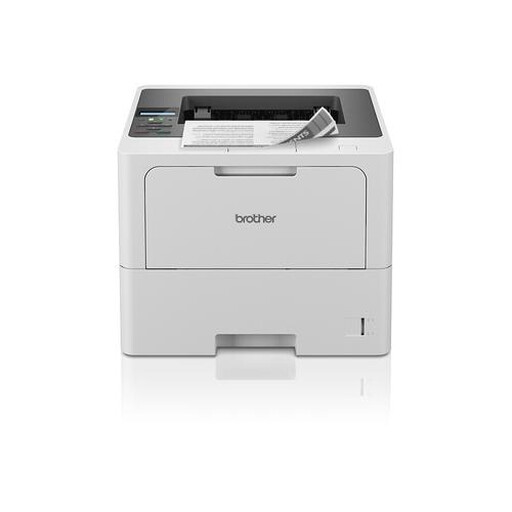 No image available
For A4 text itineraries without colour coding: the product information describes monochrome printing. The title lists 1200 x 1200 DPI and Wi-Fi.
 No image available
Automatic double-sided printing is useful if you want to fit a text itinerary onto fewer sheets. The product information lists monochrome printing, Wi-Fi, Ethernet and USB; this model doesn’t print in colour.
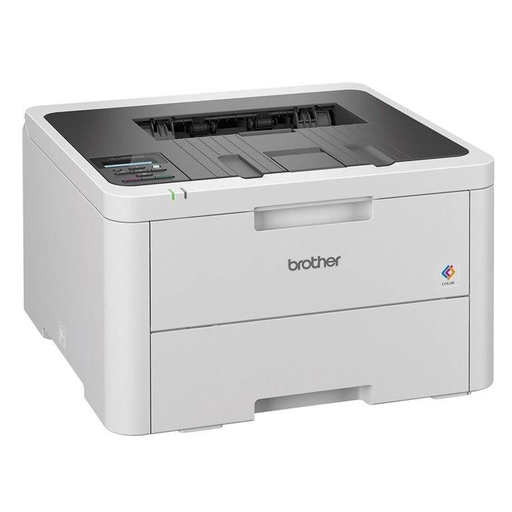 No image available
For route maps or charts where colour distinction matters: the product information lists A4 colour printing and Wi-Fi. Check the printing technology of the exact model if your assignment specifically requires a laser printer.
Only if colour conveys information that wouldn’t be clear in monochrome. Check the assignment and preview it in greyscale. If colour is needed, compare the cost of the colour toner cartridges too.
First check whether the exact model supports the connection you want to use with your device. Brother lists Wi-Fi, USB and printing via the mobile app for the HL-L2400DWE; HP lists dual-band Wi-Fi and setup via the HP Smart app for the M209dw. Then follow the setup guide for your chosen model.
Search by the exact printer model number to find compatible toner, then compare the price and stated page yield on a like-for-like basis. Allow for any separate consumables and model-specific requirements; HP lists restrictions relating to the cartridge chip for the M209dw.
If you buy as a consumer in the Netherlands, you’re entitled to a product that is fit for purpose and can contact the seller to find a solution. According to the Dutch Government, the legal guarantee has no fixed time limit; what you can reasonably expect from a product depends, among other things, on the product itself and the information provided at the time of purchase.
As a private individual, when you buy a similar new device, you can hand your old one in to the retailer; the take-back scheme also applies to online purchases. You can also take it to a collection point or use your local council’s recycling facilities.