What should you look for when choosing?
Start with the raffle ticket paper and the printout you want: these will determine whether a basic monochrome printer is enough or whether you need a different feed or colour printing. Then compare the costs of ongoing use and check how your housemates will connect.
| What to consider |
What to look for |
Who should pay extra attention? |
| Paper and ticket size |
Check the size and weight supported by each feed, whether the paper is designed for laser printers, and which settings you need. Print a test page first. Canon specifies 60–199 g/m² for the multifunctional feed on the i-SENSYS LBP243dw II; this limit applies to that feed. |
If I want to use thick, small or pre-perforated paper, I need to know whether that particular sheet can pass through the selected paper path. Around 33% of consumers put paper compatibility first. |
| Running costs |
Compare toner prices and stated page yields on the same basis. Factor in paper and any separate drum as additional costs; the yield may differ when printing your own raffle ticket design. |
If I’ll also use the printer for studying or everyday printing after the event, I want to know how replacement consumables will affect my spending. Around 27% of consumers put ongoing print costs first. |
| Space and shared access |
Measure the space available, allowing room to load paper, and check that the connections work with your housemates’ devices. Xerox says the B230 has Wi-Fi, Ethernet, USB and Wi-Fi Direct. |
If several housemates want to print, I need a practical space and connection that work for everyone. Around 20% of consumers put shared use and placement first. |
| Colour in your design |
Decide whether you really need colour. For a colour printer, compare the cost of the toners you’ll need and the stated colour print speed, not just the monochrome speed. |
If coloured text or images are important for my raffle tickets, monochrome printing won’t be enough. Around 20% of consumers say colour is their main selection criterion. |
Joybuy printers for monochrome raffle tickets
These models are monochrome A4 laser printers for text- and number-based raffle tickets, with networking features for use in a shared home. Before use, check that your chosen paper is suitable for the specific model.
 No image available
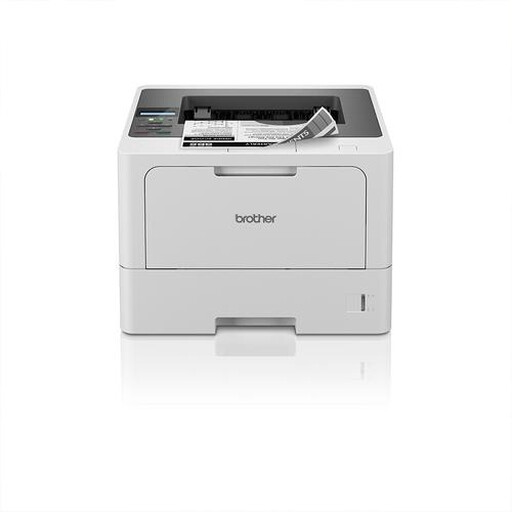
Brother HL-L5210DW wireless A4 monochrome laser printer
Suitable for text-based A4 raffle tickets if you want monochrome printing and network connectivity.
Brother HL-L5210DW; monochrome A4 laser printer; Wi-Fi, Ethernet and USB; automatic double-sided printing.
View at Joybuy
 No image available
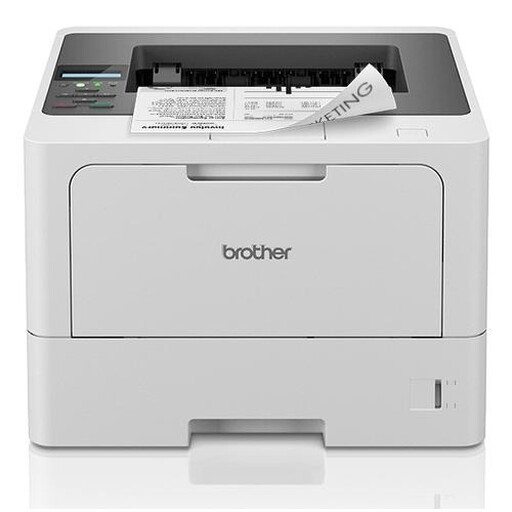
Brother HL-L5210DN A4 laser printer, 1200 × 1200 DPI
Suitable for text-based A4 raffle tickets if you’re looking for a monochrome laser printer for documents.
Brother HL-L5210DN; monochrome A4 laser printer; 1200 × 1200 DPI; the product information lists Wi-Fi, Ethernet and USB, plus automatic double-sided printing.
View at Joybuy
Frequently asked questions
Can I automatically print double-sided on thick or pre-cut raffle tickets?
You can’t tell from the mention of automatic double-sided printing alone. For the Canon i-SENSYS LBP243dw II, Canon specifies 60–199 g/m² for the multifunctional feed, while double-sided printing supports 60–120 g/m² and has different minimum sizes. Check that your paper and the print function are compatible, and print a test page.
How can I avoid problems feeding raffle ticket paper?
Use paper that’s suitable for laser printers, set the correct size and paper type, and print a test page first. Canon warns that coatings that aren’t heat-resistant can cause problems.
Which costs should I compare in addition to the printer price?
Compare toner prices and stated page yields on the same basis, and include paper and any separate drum as additional costs. Brother lists a separate drum and toners with different stated capacities for the HL-L2445DW. HP specifies dynamic cartridge security for the LaserJet M209dw; bear this in mind when choosing replacement toner.
Can I sell tickets for a paid lottery in a student house in the Netherlands?
Not without checking that the lottery meets the applicable conditions. According to the Dutch Gambling Authority, you can apply for a licence for a one-off lottery with paid tickets if it serves the public interest; a lottery for personal or commercial gain isn’t allowed. If the total prize value is less than € 4.500, the municipality where the draw takes place issues the licence; from € 4.500 upwards, the Dutch Gambling Authority is the licensing body. Whether a particular event meets the other conditions depends on how it is organised.
Is a free lottery automatically exempt from licensing?
No. A lottery isn’t automatically exempt from licensing just because there’s no ticket price. The Dutch Gambling Authority describes a licence-free route for a promotional game of chance, provided it meets the conditions of the Code of Conduct for Promotional Games of Chance. Such a game is intended to promote something, not to raise money; the right route depends on its purpose and terms of entry.


