
Quiz creator using colour maps
You use colour to distinguish areas or legends and want to check that the questions still make sense without it.


Start with the map itself: if colour-coded areas and legends are still clear in a greyscale test print, a monochrome laser printer may be enough. If colour conveys information, a colour laser printer is a better fit for your quiz. Then check the exact model to see whether it supports automatic double-sided printing, how it connects to your network, and which toner and, if applicable, drum need replacing.
You use colour to distinguish areas or legends and want to check that the questions still make sense without it.
You regularly print sets that are mostly text or greyscale maps, and consider paper handling, double-sided printing and the consumables you’ll need.
You want different studio users to be able to print, so you compare connectivity and shared-use features for each exact model.
First, print a representative quiz in greyscale. Then work out which network connection the studio needs and compare the paper handling and consumables of the models that make the shortlist.
| Consideration | What should you check? | Who is this important to? |
|---|---|---|
| Colour and readability | Print a representative map in greyscale and check that the areas and legends are still easy to identify. | If I use colour to distinguish information on maps, I don’t want that meaning to be lost on paper. Around 36% of consumers put colour readability first. |
| Consumables and paper handling | For the same expected print volume, compare toner yield, whether there’s a separate drum and the standard paper capacity. | For recurring quiz sets, I want to refill the paper tray less often and know which parts need replacing. Around 29% of consumers give repeated printing and paper handling top priority. |
| Access for multiple users | Check Wi-Fi or Ethernet, how the printer connects to the studio network and whether secure printing is needed. | If several people use the same printer, I want everyone to be able to print from a suitable workstation and documents not to be left unattended. Around 21% of consumers start by considering shared access. |
| Space and noise | Check the dimensions and available space; compare noise information only where it has been measured on a like-for-like basis. | When the printer is close to workstations, I want to know whether it will fit comfortably and how disruptive printing could be. Around 14% of consumers prioritise space and potential noise. |
Colour differences in a legend may be harder to distinguish in greyscale, making a quiz question appear different from how you intended it.
Before choosing, print a representative quiz in greyscale and check the map and legend on paper. If the test print isn’t clear, you may need to print the quiz again.
For repeated printing, toner yield, paper capacity and whether the drum can be replaced separately all matter too.
Compare the stated yield of the correct toner for the same expected number of quiz pages, and check whether the drum is replaced separately.
Brother describes the HL-L3220CWE as a colour LED printer. That doesn’t confirm that the model meets a specific requirement for laser printing.
If laser printing is a requirement, check the official technology description and the full model code.
HP states that the Color LaserJet Pro MFP 3302fdw has dynamic cartridge security, which may prevent the use of cartridges without an HP chip or electronics.
Before buying, check which cartridges you want to use and the requirements HP lists for this model.
Brother offers monochrome laser models for A4 documents and a colour LED model that doesn’t necessarily meet a colour laser printing requirement.
The i-SENSYS LBP246dw II is a monochrome laser printer to consider if shared A4 print jobs need extra paper capacity or print management.
The Color LaserJet Pro MFP 3302fdw is a colour laser model with scanning and copying functions, for quizzes that need colour and those extra features.
The B3442dw is a monochrome laser option to consider for a studio with regular shared document printing.
These models are suited to A4 quiz prints and shared network access. Please note: Brother describes the HL-L3220CWE as a colour LED printer, not a confirmed colour laser printer.
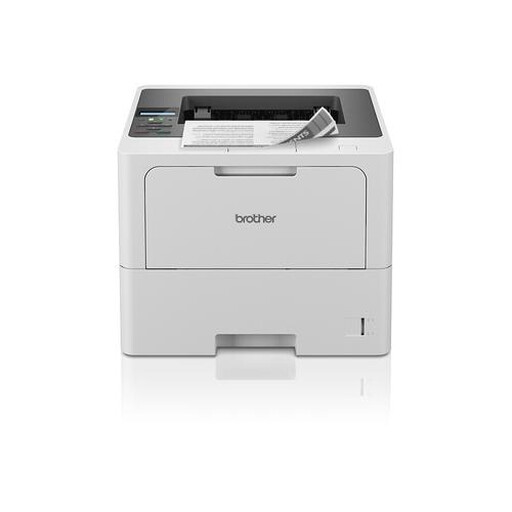 No image available
The listed A4 and Wi-Fi features are suited to quiz pages and wireless printing from multiple devices.
Specifications: laser printer, A4, Wi-Fi and 1200 × 1200 DPI.
 No image available
A monochrome model for text and greyscale quizzes, with network printing for multiple users.
Specifications: monochrome A4 laser printer, automatic double-sided printing, Wi-Fi, Ethernet and USB.
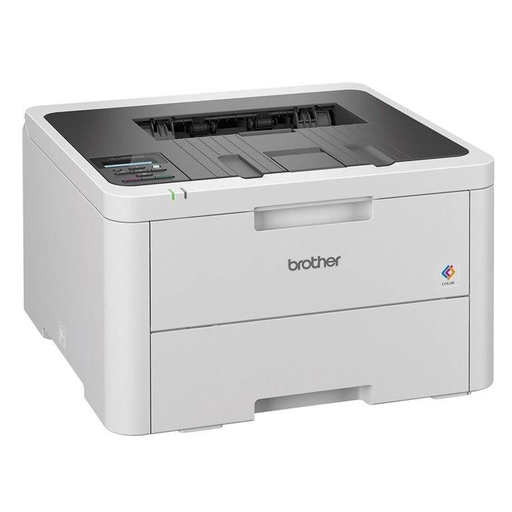 No image available
A colour option to consider when colour conveys meaning on quiz maps; Brother describes this model as a colour LED printer, not a confirmed colour laser printer.
Brother describes the model as a colour LED printer. The product listing specifies A4, Wi-Fi and 600 × 2400 DPI.
 No image available
A monochrome model for A4 quiz prints when the studio uses a wired network connection.
Specifications: monochrome A4 laser printer, wired LAN and 1200 × 1200 DPI.
A monochrome laser printer may be enough if areas and legends are easy to distinguish in greyscale. Print a representative quiz and check it on paper before choosing a monochrome model.
Choose Wi-Fi, Ethernet or another connection that suits the existing studio network, and follow the setup instructions for the exact model. Brother lists Ethernet, Wi-Fi and USB for the HL-L2445DW; for the HL-L2400DWE, Brother lists Wi-Fi and USB. For shared quiz documents, also consider whether secure printing is needed.
Compare the stated toner yield for the same expected number of quiz pages, and check whether the drum needs to be replaced separately. Brother lists a separately replaceable drum for the HL-L2445DW; actual yield also depends on what you print.
Brother describes the HL-L3220CWE as a colour LED printer, not a colour laser printer. If laser printing is a requirement, check the official technology description for the full model code.
No. According to the Dutch government, the Netherlands has no fixed statutory warranty period. However, when you buy as a consumer, you’re entitled to a product that meets the terms of the agreement. The retailer is your point of contact if a product is faulty. These consumer rules don’t necessarily apply to a business purchase for the studio.