
Musician practising at home
You mainly print digital sheet music and exercises, and want to check that small notes and leger lines remain clear on your chosen paper. If you need to enlarge sheet music, the supported paper size also matters.


If you mainly print digital music exercises that are clear in greyscale, an A4 black-and-white laser printer is a sensible place to start. Choose a black-and-white model with a scanner if you also want to digitise or copy paper sheets, and opt for colour only when your material relies on colour to distinguish information. Before buying, check that a test print is easy to read on your chosen paper size, and compare the consumables for the exact model.
You mainly print digital sheet music and exercises, and want to check that small notes and leger lines remain clear on your chosen paper. If you need to enlarge sheet music, the supported paper size also matters.
You regularly print several exercise sheets, so you compare paper handling, double-sided printing and consumables.
You may want to scan or copy existing exercises, which means an all-in-one could be more useful than a printer that only prints.
Best for: digital exercises that are clear without colour.
Bear in mind: a print-only model cannot scan or copy paper originals.
Best for: anyone who wants to scan or copy paper exercises as well as print new sheets.
Bear in mind: weigh up the extra features and space required against how often you will use them; black-and-white printing does not preserve colour information.
Best for: exercises where colour codes or coloured instructions carry meaning.
Bear in mind: compare the colour consumables and the space available; A4 support does not automatically mean the printer can handle A3.
The main question is whether you need clear printing, low running costs, good paper handling, scanning or colour. The Consumentenbond identifies the choice between black-and-white and colour, and between printing-only and models with scanning and copying, as important printer decisions.
| What to consider | What should you check? | Who should pay particular attention? |
|---|---|---|
| Readability | Print a sample of your own file on your chosen paper size, and check that the printer supports that size. | If I print small notes or leger lines, I want to see whether they remain clear on my chosen paper size. Around 31% of consumers put readability first. |
| Running costs | For the full model number, compare the toner, stated page yield and whether there is a separate drum. | If I print regularly, I want to compare consumables for the exact model. Around 25% of consumers put running costs first. |
| Paper handling | Check the paper tray and whether automatic double-sided printing suits your exercises. | When printing a set of exercises, I want to know how often I will need to reload paper and whether double-sided printing leaves room for notes. Paper handling is the top priority for around 19% of consumers. |
| Scanning and copying | Check whether the exact model has a scanner and copying function. | If I want to reuse paper sheets, I need scanning or copying as well as printing. This is the top priority for around 13% of consumers. |
| Colour | Check whether colour codes or coloured instructions are essential, and compare the colour consumables. | When colour codes carry meaning, I want to preserve that information in the printout. Preserving colour is the top priority for around 12% of consumers. |
The cost of printing regularly also depends on the right toner and any other consumables. The Consumentenbond includes consumables and printed pages in its cost comparisons.
For the full model number, compare the compatible toner, its stated yield and whether there is a separate drum or a subscription requirement. A stated page yield does not guarantee the same result for your exercises.
A blank reverse side can be useful if you make notes while practising. Automatic double-sided printing is a model-specific feature; Brother, for example, lists it for the HL-L2400DWE.
Choose single- or double-sided printing for each exercise, and check before buying whether the exact model can print double-sided automatically.
If colour codes convey information, a black-and-white printout cannot preserve that distinction.
First, view your exercise in greyscale. Choose a colour model if important information is lost.
The range relevant to this choice includes A4 black-and-white printers, a black-and-white all-in-one and an A4 colour LED printer.
The LaserJet M209dw is an A4 black-and-white model for anyone looking for a wireless connection and double-sided printing.
The i-SENSYS LBP246dw is an A4 black-and-white printer without a scanner, with a range of connection and paper-feed options.
The ECOSYS PA2101cwx is an A4 colour option for exercises where you need to distinguish between colours.
The B230 is an A4 black-and-white printer to consider when comparing connections and double-sided printing.
This selection includes A4 black-and-white models for exercises that are clear without colour, and an A4 colour model for material that needs colour.
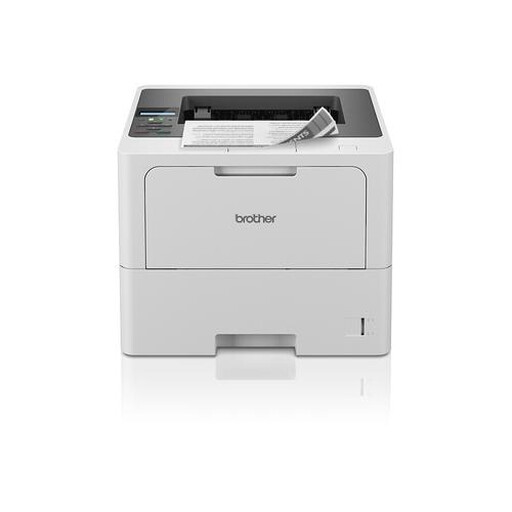 No image available
Suitable for digital exercises that are clear without colour. The Joybuy product listing specifies 1200 × 1200 DPI, A4 and Wi-Fi.
 No image available
Suitable for digital exercises that only need a wireless black-and-white printer. The Joybuy product listing describes a monochrome A4 laser printer with a wireless connection.
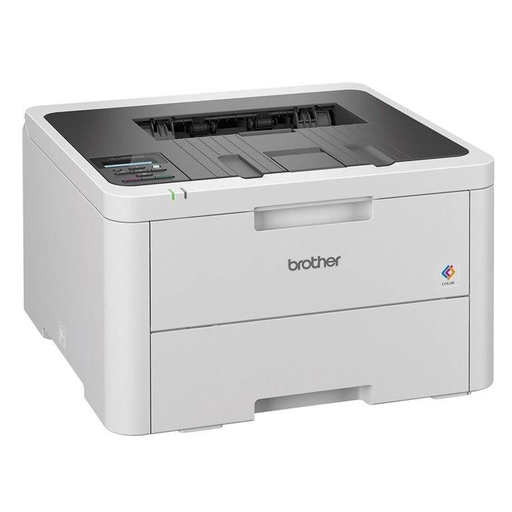 No image available
Suitable for exercises that need colour codes or coloured instructions. The Joybuy product listing specifies colour, A4, Wi-Fi and 600 × 2400 DPI.
 No image available
Suitable for digital exercises that do not need colour. The Joybuy product listing specifies an A4 laser printer and 1200 × 1200 DPI.
No. The resolution figure alone does not show whether your notes will be clear on your chosen paper size. Check a sample print of your own file and see which paper sizes the printer supports.
Choose a connection that works with your devices, and consult the manual for the exact model for installation, toner replacement and maintenance. When comparing running costs, also check whether the model uses a separate drum.
For a faulty product, the seller must provide a solution under guidance from the Rijksoverheid; there is no fixed statutory guarantee period in the Netherlands that applies to all products. Consumers who buy at a distance generally have a 14-day cooling-off period, subject to exceptions.
You may be able to make a copy for personal use under certain conditions, but you cannot distribute it or make it available to the public. The Rijksoverheid explains this distinction; Auteursrecht.nl states that permission is needed to copy protected sheet music for an entire choir. Check the rights before sharing material.
For household appliances bought for private use, the Rijksoverheid explains that retailers must offer free take-back of an old appliance when you buy a similar new one, including for online purchases. You can also take it to your local council recycling centre.