
Lesson plan creator
You mainly print text, instructions and diagrams, and want to know whether monochrome printing, double-sided printing and a suitable paper tray will do the job.


If you mainly print text and your diagrams remain clear in greyscale, a monochrome laser printer is a sensible starting point. Look for automatic double-sided printing, connectivity and the consumables required for the exact model. Choose an all-in-one if you also want to scan or copy handwritten notes; a colour laser printer is most useful when colour coding is essential to understanding your lesson materials. Check how much space you have, too, and make sure you’ll use the features you’re paying for.
You mainly print text, instructions and diagrams, and want to know whether monochrome printing, double-sided printing and a suitable paper tray will do the job.
You want to be able to scan or copy notes and existing worksheets as well as print lesson plans.
You use colour to distinguish different parts of a lesson and want to decide whether that feature is essential for your materials.
Best for: creating lesson plans digitally and mainly printing text and diagrams.
The trade-off: you won’t be able to scan paper notes or print in colour.
Best for: scanning or copying existing worksheets and handwritten notes.
The trade-off: the extra features take up space and offer little benefit if you only print digital files.
Best for: when colour differences in diagrams or exercises are essential to understanding the information.
The trade-off: colour printing doesn’t automatically mean the printer can scan documents.
| What to consider | What to look for | Who it matters most to |
|---|---|---|
| Readability and double-sided printing | Check one of your own lesson plans in greyscale, and check each model for automatic double-sided printing, A4 support and paper tray capacity. | If I print lots of text and diagrams, I want everything to remain easy to read without colour and to be able to print on both sides; around 36% of consumers say readability and double-sided printing are their top priorities. |
| Toner and maintenance | Check which toner fits the full model number, the stated page yield and whether the drum needs replacing separately. | I want to know which consumables my printer needs and whether it uses a drum as well as toner; around 22% of consumers prioritise consumables and maintenance. |
| Colour in lesson materials | Check whether colour-coded elements remain clear in greyscale, and find out which toners the model uses. | If colour highlights differences in a diagram or exercise, I want that meaning to come through in the printout; around 14% of consumers say colour is their top priority. |
| Scanning and copying | Check the scanning and copying features separately; don’t assume that double-sided printing also means double-sided scanning. | I want to digitise and copy existing paper notes or worksheets, not just print new files; around 14% of consumers prioritise scanning or copying. |
| Connectivity and placement | Check each model for Wi-Fi, USB or Ethernet, compatibility with your devices, and space for loading paper and maintenance. | If the printer needs to fit in my hobby room and work with my devices, connectivity and a practical place to set it up are essential; around 14% of consumers prioritise these points. |
The right toner depends on the model. Brother also lists a separate drum and toner for the Brother HL-L2445DW.
Check the consumables for the full model number and compare the stated page yields on a like-for-like basis.
HP warns that dynamic security may block cartridges without a new or reused HP chip, including after firmware updates.
Check the chip requirements for the HP LaserJet M209dw before relying on a third-party cartridge.
A colour printer can print lesson materials in colour, but that doesn’t mean it can scan. According to Canon, the Canon i-SENSYS LBP673Cdw II is a print-only model.
Check one of your own lesson plans in greyscale, then decide separately whether you want to digitise paper notes.
Brother offers monochrome models without a scanner, as well as an all-in-one for anyone who also wants to scan or copy paper documents.
The HP LaserJet M209dw is a monochrome printer with double-sided printing and dual-band Wi-Fi.
The Canon i-SENSYS LBP673Cdw II is an A4 colour laser printer for lesson materials where colour has a practical purpose.
The Kyocera ECOSYS PA3500x is an A4 monochrome printer worth comparing if you’re also considering more office-focused models.
This selection includes monochrome laser printers for text-focused A4 lesson plans, and a colour laser printer for materials where colour makes a difference. Check whether you also need a scanner for each model.
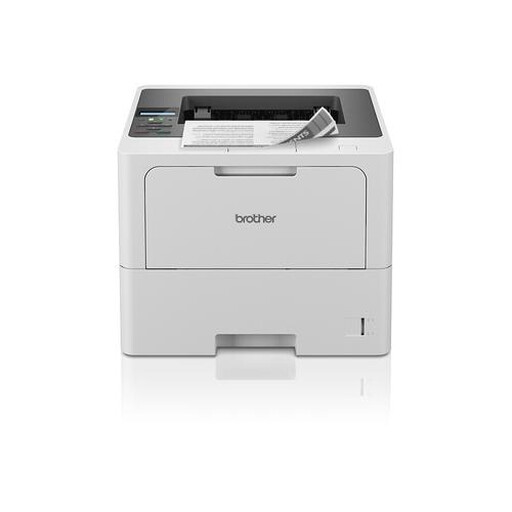 Image unavailable
An option for text-focused A4 lesson plans.
Monochrome printing; Wi-Fi; 1200 x 1200 DPI resolution.
 Image unavailable
A print-only option for text-focused A4 lesson plans and double-sided printing.
Monochrome printing; Wi-Fi, Ethernet and USB; automatic double-sided printing.
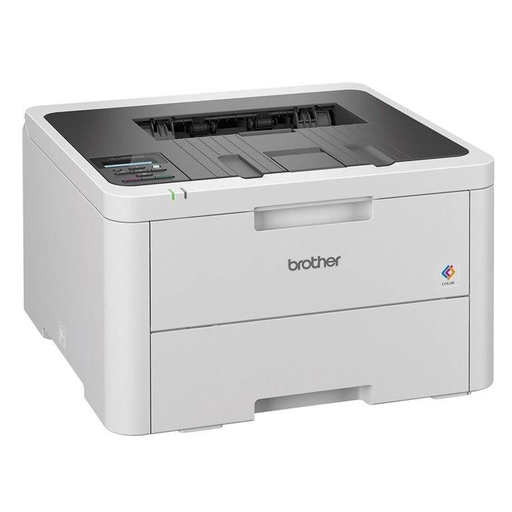 Image unavailable
An option when colour differences matter in your lesson materials.
A4 colour printing; Wi-Fi; 600 x 2400 DPI resolution. The product description lists printing, not scanning or copying.
 Image unavailable
A print-only option for text-focused A4 lesson plans with a wired network connection.
Monochrome printing; wired LAN; 1200 x 1200 DPI resolution.
Yes, if text, diagrams and highlights remain clear in greyscale. Check one of your own lesson files, and choose colour if important information would otherwise be lost.
No. Automatic double-sided printing doesn’t, in itself, tell you anything about the scanning features. Brother lists scanning features for the DCP-L2627DWE; check separately which scanning and document-feeding options you need.
Check the connections and leave enough space for loading paper and maintenance. The RIVM’s general guidance recommends ventilating indoor spaces; this is not a model-specific statement about printer emissions.
A subscription isn’t always necessary: Brother says the DCP-L2627DWE can also be used without EcoPro. Private purchases are also covered by statutory protection if a product is faulty. According to the Dutch government, the seller must then provide a solution, and there is no fixed statutory warranty period in the Netherlands.
According to the Dutch government, when buying a new appliance as a private customer, you can hand in an old, similar appliance to the seller. This also applies to online purchases; if they can’t take it back directly, a separate arrangement applies. You can also use a collection point or your local council’s recycling centre.