
Knitters with a small desk
You want to fit a printer into your workspace without losing room for your knitting. Compare the printer’s dimensions with the space needed to load and collect paper.


If you mainly print text and charts that remain easy to read in a test print, a black-and-white laser printer is a sensible choice. For longer patterns, automatic double-sided printing may matter more than having the smallest printer. If you need colour to distinguish parts of your pattern, consider a colour laser printer and check the space you’ll need, as well as a test print of your own pattern. The dimensions and features listed are provided by the manufacturers; they are not a test of your desk or pattern.
You want to fit a printer into your workspace without losing room for your knitting. Compare the printer’s dimensions with the space needed to load and collect paper.
You regularly print multi-page A4 patterns and want to weigh up whether automatic double-sided printing is worth the space required and the need to keep an eye on consumables.
You want to know whether a pattern will still be easy to follow when printed in greyscale. If colour helps you tell parts of the chart apart, a colour laser printer may be worth considering; check that it will fit on your desk too.
Start by checking the usable space on your desk and printing a test copy of your own pattern. Then choose based on how often you print longer patterns and whether you need colour information.
| What to consider | What should you look for? | Who is this important for? |
|---|---|---|
| Space required | Measure the available width, depth and height. Also check how the paper input and output trays open and whether you can access the toner. | If my knitting already takes up a lot of space, I want to know how much room the printer and handling paper will need. Around 28% of consumers put the space required first. |
| Readability | Print a test page with a key and fine symbols in greyscale; check the contrast, size and how easy the symbols are to tell apart. | I want to be able to follow text and charts with confidence. Around 22% of consumers make readability their top priority. |
| Double-sided printing | Check for automatic double-sided printing on A4, the paper capacity and whether double-sided printouts suit the way you read. | For multi-page patterns, I want to print on both sides without having to turn the sheets over myself. Around 22% of consumers choose mainly to meet this need. |
| Consumables | Look up the compatible toner for the full model number, whether a separate drum is needed and the terms of any subscription service. | I want to know in advance which parts my printer uses and what conditions apply when replacing them. Around 17% of consumers focus mainly on consumables and the terms that apply. |
| Connectivity | Compare the USB, Wi-Fi and mobile printing options for the exact model with your own computer, phone and network. | If I want to print from my own devices, the connection needs to work with my workspace and equipment. Around 11% of consumers make connectivity their main consideration. |
The stated dimensions don’t tell you how much room you’ll need to load and collect paper or maintain the printer.
Measure the space available and check how the trays open on the exact model, as well as where you’ll need access to the toner.
A pattern may use colour to distinguish different elements. That information could be lost when you print in black and white.
Print a representative page with its key as a test before choosing a type of printer.
An unusable test print can waste paper and toner.
Some models use a separate drum as well as toner; others may have conditions relating to the chip in a replacement cartridge.
Look up the consumables and any subscription terms using the full model number. Brother lists a separate DR-2510 drum for the HL-L2400DWE; HP states that cartridges for the LaserJet M110w are subject to chip requirements.
The HP LaserJet M110w is a black-and-white model to consider if a compact set-up and occasional text or pattern printing are your priorities.
Brother describes the HL-L2400DWE as a black-and-white A4 printer with automatic double-sided printing, designed for those who regularly print longer patterns.
Canon offers black-and-white options with double-sided printing, as well as a separate colour laser model for patterns where colour helps distinguish different elements.
This Joybuy selection includes A4 laser printers for knitting patterns, including models whose product names mention Wi-Fi, monochrome printing or colour.
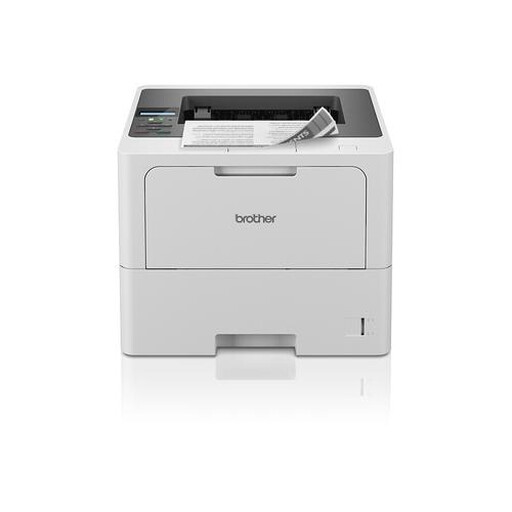 No image available
Suitable for those who want to print A4 knitting patterns wirelessly.
The product name specifies 1200 × 1200 DPI, A4 and Wi-Fi.
 No image available
Worth considering if you want to print A4 patterns double-sided; check the features of the exact version before buying.
The product name specifies monochrome printing, A4 and Wi-Fi.
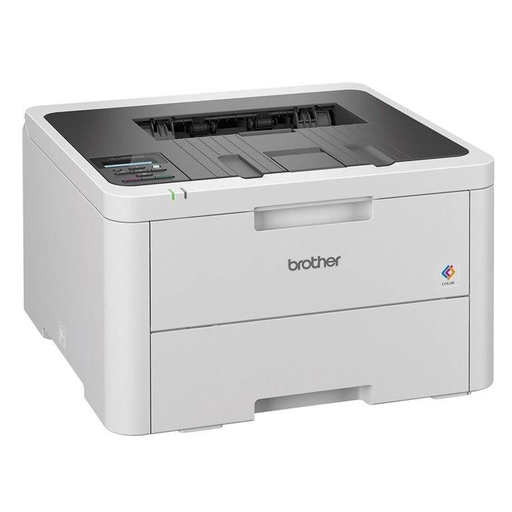 No image available
Worth considering if colour in your pattern conveys information you want to retain on paper.
The product name specifies colour, 600 × 2400 DPI, A4 and Wi-Fi.
Print a test page in greyscale, using your finest symbols and the key. If colours in your file become hard to tell apart, choose a printing method that preserves the colours you need. A printer’s stated resolution alone doesn’t prove that your pattern will be easy to read.
Compare the connections and supported mobile printing methods for the exact model with your own device. Brother lists USB, Wi-Fi and Mobile Connect for the HL-L2400DWE; Canon lists USB, Wi-Fi, AirPrint and Mopria, among other options, for the LBP122dw. Also check current compatibility with your devices.
Look up consumables using the full model number. Brother lists TN-2510 toner and a DR-2510 drum separately for the HL-L2400DWE; HP states that cartridges for the M110w are subject to chip requirements. Check any subscription terms separately.
Automatic double-sided printing can be useful if you want to print multi-page A4 patterns on both sides without turning the sheets over yourself. Check that the exact model prints double-sided automatically and that the print remains easy to read on your paper.
Yes, your statutory rights may still apply after the manufacturer’s guarantee has ended. According to ACM ConsuWijzer, the seller must resolve a fault free of charge if a product breaks down sooner than you could reasonably expect under normal use, for example by repairing or replacing it. The manufacturer’s guarantee period doesn’t automatically mark the end of your statutory rights.