
A studio that prints forms regularly
Needs to print batches of clear A4 forms quickly without having to top up the paper tray each time. The shared print volume can help you decide whether a larger paper capacity would be useful.


For standard text forms, a black-and-white laser printer is often a good choice. Let the studio’s shared print volume and available network connection guide you towards the right model. Choose a multifunction model if you also want to scan or copy completed paper forms, and only opt for colour if it’s needed to use the form properly. If responses include personal data, agree on who can collect and store printouts, too.
Needs to print batches of clear A4 forms quickly without having to top up the paper tray each time. The shared print volume can help you decide whether a larger paper capacity would be useful.
Needs a connection that works with the studio’s devices. If completed forms contain personal data, it’s also important to decide who can access printouts and responses.
May also want to scan or copy completed forms, so needs to choose between a printer-only model and a multifunction printer.
Start with the number of forms you usually print and the connection available in the studio. Then decide whether scanning, toner choice or colour is the deciding factor.
| What to consider | What should you check? | Who is this most relevant to? |
|---|---|---|
| Printing forms in suitable quantities | Estimate the number of A4 pages you print each time, then compare the paper tray, automatic duplex printing and any expandable paper input on the exact model. | If I regularly print batches, I want to top up the paper less often. Around 29% of consumers put the print capacity they need first. |
| Shared access and confidentiality | Check whether USB, ethernet or Wi-Fi works with the studio’s devices. If forms contain personal data, agree on who can print, collect and store them. | If several people print, I want a connection that works and clear arrangements for confidential printouts. Around 23% of consumers put shared access first. |
| Toner and maintenance | Check the compatible toner code, stated yield, whether there is a separate drum and any cartridge restrictions. Compare models based on the same expected print volume. | If I print batches regularly, I want to factor in the toner and, potentially, a separate drum. Around 18% of consumers focus mainly on running costs. |
| Scanning or copying | Work out whether completed paper forms will need to be processed, then check the scanning function and any document feeder on the exact model. | If responses come in on paper, I want to be able to process them with the same device when needed. Around 18% of consumers put this first. |
| Colour on the form | Print a test copy in black and white and check that instructions, answer boxes and any colour codes are still clear. Only then compare a colour model. | If colour carries information, I want to make sure forms won’t be unclear without it. Around 12% of consumers say colour is their main requirement. |
Consumables also add to the cost if you print regularly. Consumentenbond includes printing costs in its printer tests; Brother lists a separate toner and drum for the HL-L2445DW.
Compare the components and stated yields based on the same expected print volume. A cartridge’s quoted yield doesn’t guarantee the same result with your forms.
Brother lists USB and ethernet for the HL-L5210DN, while Wi-Fi is listed for the separate HL-L5210DW.
Before buying, check the full model code and the connections available on that version.
Automatic double-sided printing doesn’t mean the printer can automatically scan both sides of a form, too.
If forms are filled in on both sides, check the scanning function and document feeder separately.
Not every form needs colour. If forms contain personal data, the organisation must also decide which security measures are appropriate; a network connection alone won’t take care of this.
Check that the form is still clear in black and white, and look into the security features and set-up required for the exact model.
Brother offers black-and-white printer-only models as well as multifunction printers; the differences described here apply to specific versions.
The i-SENSYS range includes black-and-white printer-only models and multifunction printers.
The LaserJet M209dw is a black-and-white printer-only model.
The ECOSYS PA2101cwx is a colour laser option if colour is needed to use forms properly.
These product picks focus on A4 laser printing in a shared studio: black-and-white models for shared print runs, plus a colour option for forms that need colour.
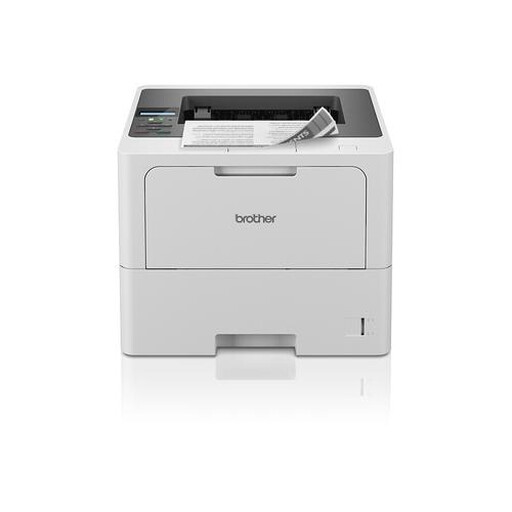 Image unavailable
Suitable for a studio that wants to print A4 forms wirelessly from multiple devices.
Specifications: A4, Wi-Fi, 1200 x 1200 DPI.
 Image unavailable
Suitable for larger shared A4 print runs when the studio wants to print wirelessly.
Specifications: black-and-white laser printer, A4, Wi-Fi, LAN, 1200 x 1200 DPI.
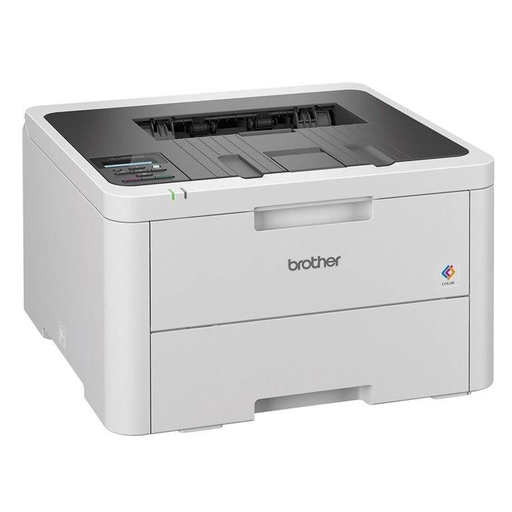 Image unavailable
A colour option if colour codes or coloured elements are important for using the form.
Specifications: colour laser printer, A4, Wi-Fi, 600 x 2400 DPI.
 Image unavailable
Suitable for larger shared print runs when the studio prints over a wired network connection.
Specifications: A4, ethernet, 1200 x 1200 DPI. Wi-Fi isn’t listed for this version; Brother lists Wi-Fi for the separate HL-L5210DW.
Black and white is enough if the text, answer boxes and instructions are clear without colour. Print a test copy first. If colour codes carry information, compare a colour model and factor in the running costs.
Only if you want to digitise or copy paper responses using the same device. Canon lists an automatic document feeder for the i-SENSYS MF275dw; also check that its scanning method suits your forms.
Choose a connection that works with the available devices and network. Brother lists USB and ethernet for the HL-L5210DN, and Wi-Fi for the separate HL-L5210DW. Check the full model code and installation instructions.
Check which toner is compatible, its stated yield and whether the model uses a separate drum. Factor in any cartridge restrictions and compare components based on the same expected print volume; stated yields won’t tell you exactly how many forms you’ll be able to print.
If the studio processes personal data, the organisation must decide which security measures are appropriate. The Dutch Data Protection Authority stresses that organisations are responsible for determining which measures are needed. So agree on who can collect and store printouts, and check the security features of your chosen model.