
Households with a regular breakfast routine
If you often eat the same flakes on weekdays, it helps to choose a pack size that suits the number of people eating and the space you have to store the cereal in a dry place.


Choose a larger pack of breakfast cereal only if it suits your usual breakfast and you can store and use it up while keeping it dry. For cold flakes, compare fibre, sugars and salt per 100 g; porridge or granola calls for a different choice. If you have allergies, always check the ingredients and allergen information on the exact pack.
If you often eat the same flakes on weekdays, it helps to choose a pack size that suits the number of people eating and the space you have to store the cereal in a dry place.
If you eat breakfast cereal regularly, you can compare the nutritional information for the exact variant, paying attention to wholegrain ingredients, fibre, sugars and salt per 100 g.
If you need to avoid wheat, barley or other ingredients, the latest ingredients and allergen information is more important than the name of the grain on the front of the pack.
First decide whether you want cold cornflakes, granola or a cereal breakfast that needs preparing. Then compare pack sizes and nutritional information within the product type that suits your morning routine.
| What to consider | What to check when buying | Who should consider this? |
|---|---|---|
| Pack size | Compare the weight in grams and check whether it is one pack or several individual packs. | If we eat the same flakes on weekdays, I want a quantity we can use up. For around 31% of consumers, choosing a pack that matches how much they use comes first. |
| Nutritional information | Read the ingredients list and compare fibre, sugars and salt per 100 g for the exact variants. | When I eat the same breakfast regularly, I want to know what goes into my bowl each day. Around 31% of consumers give the ingredients and nutritional profile top priority. |
| Morning routine | Check whether the product is ready to eat or needs preparing, and whether you can store it in a dry place. | On a busy morning, I don't want to find out unexpectedly that breakfast needs preparing; the amount I keep in stock also needs to work for me. For around 23% of consumers, this practical fit matters most. |
| Ingredients and allergens | Read the allergen information on the current pack and, if needed, look for a clear statement that it meets your dietary requirements. | If I need to avoid certain grains or other ingredients, I want to be able to check the exact variant. For around 15% of consumers, this check takes priority over the other considerations. |
Several individual packs can be different to use and store than one large bag. Albert Heijn lists the Kellogg's Special K Original multipack as containing five individual 335 g packs.
Check how many inner packs there are and choose a total quantity that suits how often you eat this particular product.
Cornflakes, granola and porridge differ in their ingredients and how you eat them. For Kellogg's Corn Flakes, Albert Heijn lists 3 g of fibre, 8 g of sugars and 1.1 g of salt per 100 g; for Brinta Volkoren graanontbijt, Albert Heijn lists 10 g of fibre per 100 g. Brinta is not a cold cornflake cereal.
Compare the nutritional information for products you actually plan to eat in the same way.
A name that mentions maize does not rule out other ingredients. The ingredients information for Kellogg's Corn Flakes listed by Albert Heijn includes barley malt extract.
If you need to choose a gluten-free product, check the ingredients, allergen information and any gluten-free statement on the exact pack.
A large pack will not necessarily suit the number of breakfasts you eat or the dry storage space you have available.
Check the pack size before buying and follow the storage and best-before information on the pack.
If an opened pack is not used up in time or is not stored properly, the quality may deteriorate or some may be left over.
Jumbo sells cornflakes under its own name, among other products; the variant reviewed comes in a 500 g pack.
Golden Bridge is an ALDI own-label brand that sells cornflakes, among other products; the cornflakes pack reviewed contains 500 g.
The range reviewed includes Kellogg's Corn Flakes and Special K; these names do not refer to the same recipe.
Brinta Volkoren graanontbijt is an alternative if you want a bowl of cereal that needs preparing rather than cold cornflakes.
Lidl is included here as a place to shop: the listing reviewed is for a 500 g cornflakes product sold in store.
These products are particularly relevant if you are considering granola or a cereal breakfast that needs preparing as well as cold cornflakes. Check the product type and pack size before comparing variants.
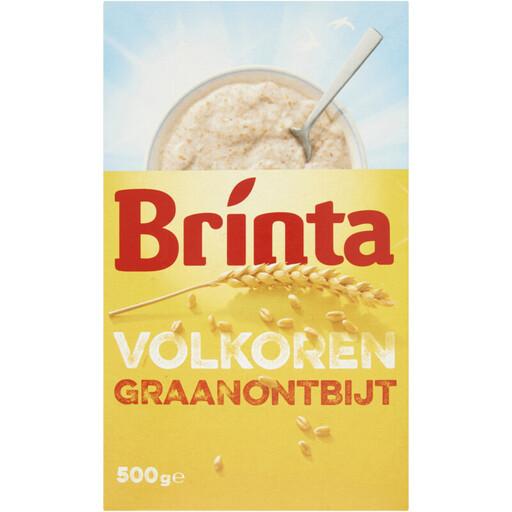 Image unavailable
For anyone who prefers a prepared bowl of cereal to cold cornflakes.
500 g pack. If you need to avoid wheat or gluten, check the current label.
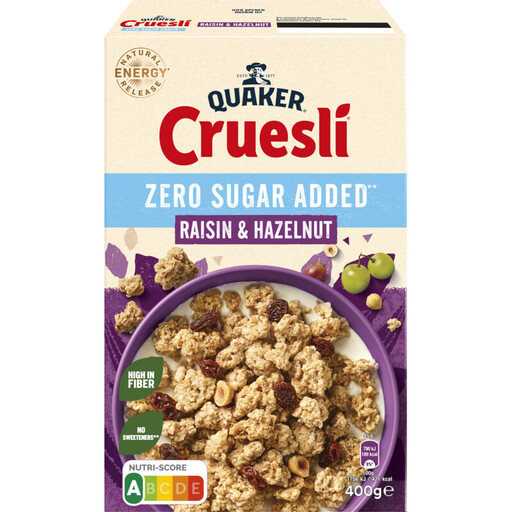 Image unavailable
For anyone looking for granola with raisins and hazelnuts instead of standard cornflakes.
400 g pack. If you have allergies, check the ingredients and allergen information for the exact variant.
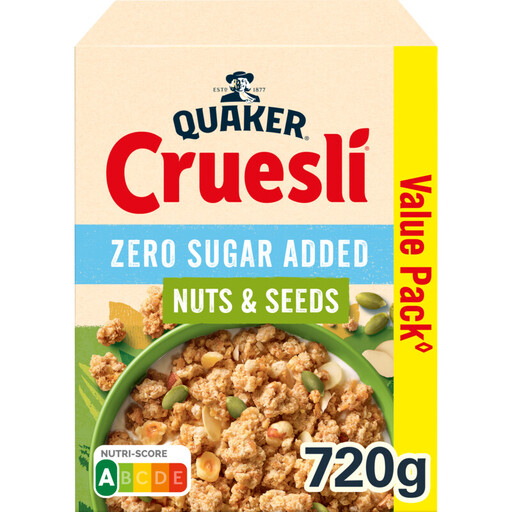 Image unavailable
For anyone who wants granola with nuts and seeds and can use up a 720 g pack.
This is not standard cornflake cereal. If you have allergies, read the current label for this variant.
 Image unavailable
For anyone who wants to prepare a warm bowl of porridge instead of eating cold flakes.
450 g pack. If you need to avoid certain grains, check the current ingredients and allergen information.
 Image unavailable
For anyone who regularly makes porridge and can use up a 600 g pack.
This is not a ready-to-eat cold cornflake cereal. If you need to avoid certain grains, check the current label.
A multipack can be a good fit if you eat the same product regularly and can store the individual packs in a dry place. Check how many packs it contains and whether you will use up the total quantity.
Compare the ingredients and nutritional information per 100 g for the exact variants, especially fibre, sugars and salt. The Netherlands Nutrition Centre recommends checking wholegrain ingredients and added sugar and salt when choosing breakfast cereal.
No, the type of grain in the product name is not enough to tell you. For example, the ingredients listed by Albert Heijn for Kellogg's Corn Flakes include barley malt extract; check the current label and any gluten-free statement for each variant.
Choose a pack size you can store in a dry place and are likely to use up. Follow the storage and best-before information on the packaging, especially if you are opening one large pack rather than several smaller ones.