
Solo shopper who likes to stock up
You regularly use crispbread for an occasional breakfast, lunch or snack. A larger pack suits that routine if you can seal it after opening and finish the contents.


A large pack of crispbread is most practical if you regularly use it for individual meals and can keep it dry and well sealed after opening. If you only eat it occasionally, a smaller pack may suit your needs better. Also compare the contents, grains, nutritional values and allergens of the exact product.
You regularly use crispbread for an occasional breakfast, lunch or snack. A larger pack suits that routine if you can seal it after opening and finish the contents.
You want a base for a variety of toppings and compare the grains, fibre and salt per 100 g. The pack size isn’t the only thing you consider.
You first check whether the ingredients and allergens suit your diet, or compare a higher-protein option for your meal. Only then do you decide which pack size is practical.
First, think about how often you eat crispbread and whether you can store an opened pack properly. Then compare the labels of the options that suit your meals.
| What to consider | What to check when buying | Who it matters to |
|---|---|---|
| Pack size and storage | Compare the pack sizes and any portion information. Check how to store the pack after opening. | If I often take crispbread for one meal at a time, I want enough in stock without the rest losing its crunch. This is a top priority for around 33% of consumers. |
| Grains and nutritional values | Read the ingredients list and compare fibre and salt per 100 g. | As I eat it with different toppings, I mainly want to know which grains it contains and how the nutritional values compare. This matters most to around 42% of consumers. |
| Allergens and protein options | Check the allergen information for the exact pack. If you’re looking for a specific protein content, compare the amount per 100 g. | If an ingredient doesn’t suit my diet, or protein in the crispbread is a particular consideration, that takes priority over the pack size. It’s the main concern for around 25% of consumers. |
If you eat crispbread occasionally, an opened pack will be in use for longer. If you don’t seal it properly, it may lose its crunch.
Choose a pack size that suits how often you eat crispbread and follow the storage instructions on the pack.
According to the Netherlands Nutrition Centre, the use of baker’s salt is not compulsory. So you can’t tell from the crispbread category alone whether a particular pack is made with it.
Check the ingredients list. If you often replace ordinary bread with crispbread, consider iodine as part of your overall diet.
Wholegrain crispbread can contain ingredients that matter to some shoppers. For example, Albert Heijn lists gluten and sesame seeds in AH Knäckebröd volkoren.
Read the ingredients and allergen information for the option you’re actually buying, even if you already know the brand.
Pack sizes and ingredients can vary within the same brand. Use the options below as points of comparison and check the label of the product you choose.
The own-brand range includes AH Knäckebröd volkoren in a 375 g pack, which Albert Heijn’s product information says contains 25 portions of 15 g.
Wasa offers options including Wasa Volkoren, a wholegrain rye crispbread, and Wasa Protein Wheat, a separate wheat option.
Bolletje has several ranges, including Knäckebröd Volkoren, Oerknäck Waldkorn and Proteïne Knäckebröd.
According to ALDI Netherlands, this ALDI own brand offers wholegrain crispbread with 25 pieces and a robust seeded option in a 265 g pack.
Ryvita Dark Rye is a rye option sold by specialist Dutch retailer Jac. A. Van Zanten in a 250 g pack.
These 240–375 g packs offer a range of sizes for occasional meals. Think about how much you use and, when choosing, also compare the nutritional information and allergens on the exact pack.
 Image unavailable
A 375 g pack to consider if you regularly use crispbread for individual meals. Check that this size suits your needs and follow the storage instructions after opening.
 Image unavailable
At 265 g, this is an option if you’d rather open a smaller pack than a 375 g one. Compare the ingredients, nutritional information and storage instructions on the pack.
 Image unavailable
A 300 g pack for anyone considering a mid-sized option. Check any nutritional claims against the nutritional information per 100 g on the exact product.
 Image unavailable
A 260 g pack to compare with larger sizes if you buy crispbread for individual meals. Check the ingredients and allergens for this option, and seal the pack as instructed.
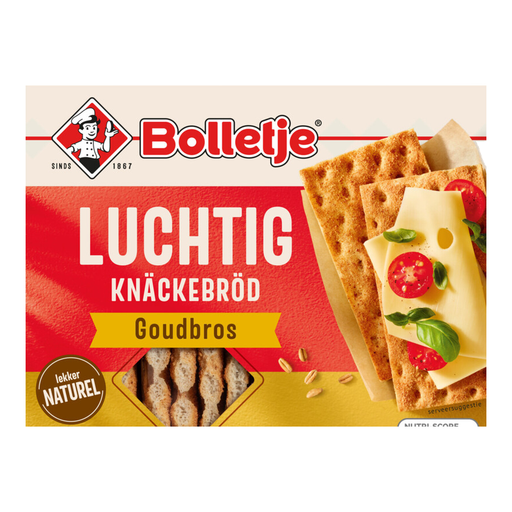 Image unavailable
The 240 g pack is a good option if you don’t eat crispbread often and would prefer a smaller size. Check the nutritional information and ingredients on the label; the product name alone isn’t enough.
Follow the product’s storage instructions and seal the pack well after opening. For AH Knäckebröd volkoren, Albert Heijn recommends a cool, dark, dry place and, once opened, a sealed container. Choose a large pack if you can store it this way and use the contents regularly.
No, you can’t tell from the product category alone. The Netherlands Nutrition Centre says baker’s salt is not compulsory, so check the ingredients list on the pack you choose. If you eat little ordinary bread, consider iodine as part of your overall diet.
No. Albert Heijn’s product information lists gluten in AH Knäckebröd volkoren and Wasa Volkoren. Check the allergen information for the exact option every time you buy, rather than relying on the word ‘wholegrain’.
Choose this type if the protein content of the crispbread itself is an important point of comparison for your meal. Jumbo lists 20 g of protein per 100 g for Wasa Protein Wheat; also consider the portion you eat, your toppings and the rest of the nutritional information.