
Vandaag of morgen in huis

Kwaliteit gegarandeerd

Welkomstaanbiedingen ontgrendelen: GRATIS bezorging | Tot 80% korting | Gratis 30 dagen JoyPlus-proefperiode
Download de app
A large dog bed needs to do more than look soft. For medium-sized and large dogs, the right dimensions, a stable base and easy care matter more than a striking colour or an extravagant marketing claim. A bed that’s too small, quickly loses its shape or is difficult to wash may soon end up unused in the corner.
A bed with high sides may look large from the outside, while leaving your dog with little room inside. Measure your dog from nose to the base of the tail, then add around 20 to 30 cm of room to move. Dogs that like to stretch out need a different size from those that curl up.
Also consider the height of the sides. Raised sides can be comfortable for dogs that like to rest their head on something, but they do take up usable space.
The term orthopaedic dog bed doesn’t tell you on its own how much support a bed actually provides. Check the type and thickness of the filling, and whether the inner mattress can be removed. For example, product information may mention egg-box foam, PP cotton or supportive fibre filling. These are verifiable material properties; they are not a medical treatment or a guarantee that a bed will relieve discomfort.
According to information provided by the brands concerned, some beds are designed to support joints or the back. Treat this as a product claim, and also consider the construction, dimensions and how the bed will be used.
With a washable dog bed, check which parts can actually go in the washing machine. Some models have a machine-washable cover, while the inner filling can only be aired or spot-cleaned. A water-repellent or, according to the product description, waterproof outer fabric can help with accidents, but that doesn’t mean every part is suitable for a full wash.
Choose a size that lets your dog lie down fully without their paws hanging over the edge. A round donut dog bed suits dogs that like to curl up and lean against a soft side. For dogs that stretch out, a rectangular bed or a large cushion is usually more practical.
When choosing a dog bed for a large dog, consider the internal dimensions, not just the diameter or length. A 120 cm model isn’t automatically suitable for every large dog if the sides take up a lot of space.
A soft dog bed filled only with loose fibres may feel comfortable, but can lose its shape more quickly. Look for:
A plush dog bed feels warm and cosy, but may be less suitable for dogs that overheat easily or bring in a lot of sand and hair. So check the ventilation and care instructions too.
A dog bed with a non-slip base will generally stay more stable on laminate, tiles or a smooth wooden floor. However, non-slip rubber won’t prevent all movement, especially if the bed is on a smooth rug or uneven surface. Place the bed on a flat, dry spot.
For a dog bed for a crate, measure the inside of the crate. A bed with high sides may block the door or take up too much room. Check the seams and zips regularly too, especially if your dog likes to dig or chew fabric.
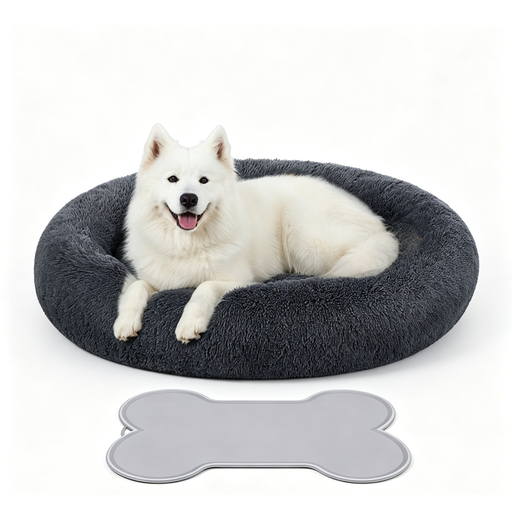
Why it suits this type of buyer: Its spacious round shape and soft plush fabric make it a practical choice for a dog that likes to curl up, or needs a dedicated resting spot in the living room or crate.
The product description lists a removable cover, non-slip rubber and separate inner filling. Check the care label, though: according to the instructions, the filling itself isn’t machine-washable.
Plush exterior, PP cotton filling, 120 cm diameter and a base with rubber non-slip dots.
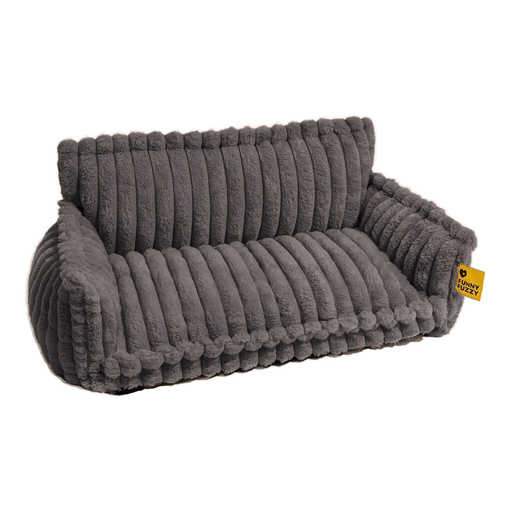
Why it suits this type of buyer: This model combines soft Sherpa and plush fabrics with egg-box-shaped foam, and is designed for dogs that need extra structured support.
The product information specifically mentions egg-box foam, a removable machine-washable cover and non-slip fabric. This makes the key construction features clearer than a bed with only a general comfort claim.
Egg-box foam, raised sides, a removable cover and a non-slip base. Check the size M dimensions carefully before ordering for a large dog.
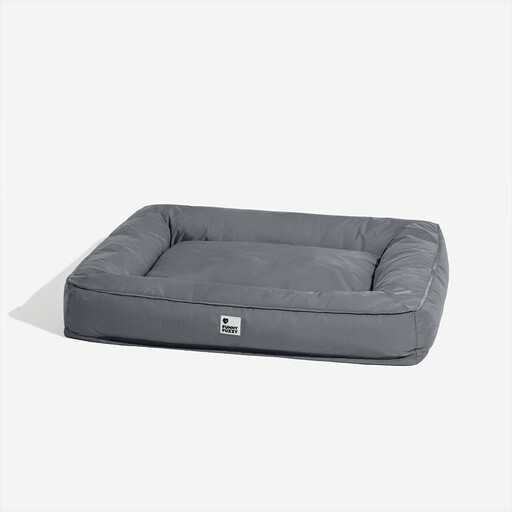
Why it suits this type of buyer: According to the product description, this bed is designed for large dogs. It has wraparound sides, Oxford fabric and a design intended for use in or next to a crate.
The product specifications say the cover is machine-washable and the Oxford fabric is designed to make cleaning easier. According to the instructions, the inner mattress should be spot-cleaned.
Water-repellent Oxford fabric according to the product description, supportive sides all around, a scratch-resistant material specification and a fully removable design.
We’ve put together a complete, up-to-date list of products that meet these strict selection criteria and the applicable European safety requirements.
Allow a vacuum-packed bed to fully expand first, then fluff up the filling according to the instructions. Wash the cover with a mild detergent and let all parts dry completely before putting them back together. Damp filling can develop a musty smell and lose its shape.
Check every few weeks for:
Dogs that chew their beds need to be supervised. Stop using the bed if any material or filling comes loose. Its lifespan depends on your dog’s weight, nails, washing, chewing habits and daily use, so it isn’t possible to give a reliable fixed timeframe.
Measure your dog lying down, from nose to the base of the tail, and add around 20 to 30 cm. Then check the internal dimensions, not just the overall size. For dogs that like to stretch out, a rectangular model often works better than a donut shape.
It can be, if there’s enough room inside and your dog likes to sleep curled up. If the sides are high, check that your dog can get in comfortably and stretch out. A 90 cm model is often better suited to medium-sized dogs; 120 cm models and larger offer more room, but should still suit your dog’s build.
Remove hair and crumbs weekly, and wash the cover when it’s visibly dirty or smells unpleasant. Always follow the care label. Clean the inner filling only as instructed by the manufacturer, and let every part dry completely before use.
