
Vandaag of morgen in huis

Kwaliteit gegarandeerd

Welkomstaanbiedingen ontgrendelen: GRATIS bezorging | Tot 80% korting | Gratis 30 dagen JoyPlus-proefperiode
Download de app
Does this sound familiar? You're deep into a relaxing yoga session, stretching into a Warrior pose, only to find your fingers or toes dangling off the edge of the mat. Or perhaps you're doing a home workout and notice you have to constantly readjust to avoid landing on the cold floor. For many people and various exercises, a standard yoga mat is simply too restrictive.
If you're looking for more freedom of movement, a large yoga mat is the solution. In this article, we'll provide practical tips to help you choose a mat that suits your needs. We'll also highlight a few popular choices based on their specifications, so you can make an informed decision.
The right mat can significantly enhance your practice. It's not just about length, but also about material and grip. Here are a few key points to consider.
A standard yoga mat is typically around 183 cm long and 61 cm wide. For taller individuals or for dynamic exercises, this can quickly feel too small. A yoga mat of 190 cm or longer provides the necessary length. Also, consider the width. A wide yoga mat (80 cm or even 100 cm) offers generous space for Pilates, core exercises, or any yoga style with a lot of lateral movement. Be sure to measure the space where you plan to use the mat beforehand to ensure it fits.
The material determines comfort, grip, and durability. Many modern mats are made of TPE (Thermoplastic Elastomer). A TPE yoga mat offers several advantages:
There's nothing more frustrating than a mat that slides around during your workout. A good non-slip yoga mat is essential for your safety and focus. Look for mats with a double-sided texture. Often, one side has a pattern that grips the floor, while the other is designed to provide a secure hold for your hands and feet. This makes the mat a versatile fitness mat for various types of floor exercises.
Based on the criteria above, we have selected a few products that stand out for their dimensions and specifications.
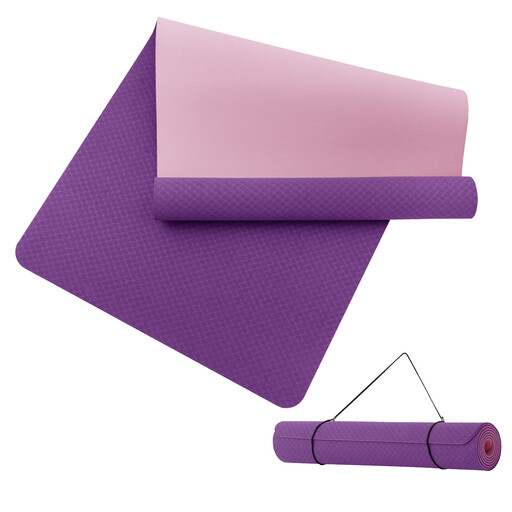
Why It Stands Out This mat offers a significant upgrade in space compared to a standard mat. With a length of 190 cm and a width of 80 cm, you have plenty of room for most yoga and Pilates exercises without constantly hitting the edge.
Key Features
Who It's For Ideal for anyone who has outgrown their standard mat and is looking for a reliable, spacious mat for home or studio use. Suitable for yoga, Pilates, and general fitness.

Why It Stands Out If 80 cm isn't quite wide enough, this extra-large yoga mat offers an unprecedented amount of personal space with its 100 cm width. You can fully concentrate on your movements without worrying about the boundaries of your mat.
Key Features
Who It's For For the serious yoga, Pilates, or fitness practitioner who wants to make no compromises on space. Also highly suitable as a comfortable surface for partner yoga or workouts with kids.

Why It Stands Out Sometimes, grip comes not just from the mat, but also from what you wear on your feet. These non-slip socks are an interesting addition, especially for those who practice at home on a cold floor or need extra traction.
Key Features
Who It's For A great option for practitioners of Pilates, barre, or yoga who prefer not to practice barefoot. Also ideal for extra warmth and grip during a gentle, restorative yoga session at home.
A great workout starts with the right foundation. That applies to your mat, but also to what you wear. Comfort is essential, both during and after your training. If you're looking to supplement your workout gear with comfortable basics, you can take a look here for a purple brief.
Although the terms are often used interchangeably, there are differences. A yoga mat is usually thinner (3-6 mm) and focuses on grip and stability for balancing poses. A fitness mat is often thicker (10 mm or more) and provides more cushioning for high-impact exercises like jumping or sit-ups. A large yoga mat that is 6 mm thick, like the recommended models, is a great all-rounder for both activities.
A TPE yoga mat is easy to maintain. Wipe the mat with a damp cloth after each use. For a deeper clean, you can dissolve a small amount of mild soap in water. Do not use harsh cleaning agents or put the mat in the washing machine. Roll up the mat only when it is completely dry to prevent odours.
Not necessarily. A thicker mat offers more cushioning, which is nice for your knees and spine when using a Pilates mat or for restorative yoga. However, for active yoga styles with many standing poses, a mat that is too thick and soft can disrupt your balance. A thickness of 6 mm is often considered a happy medium that combines cushioning and stability.
