First, measure the distance from your seat to the planned screen position, then check that subtitles and details are comfortable to see. Sony Netherlands outlines minimum viewing distances for 4K, not ideal distances for films. Next, choose based on the light in your room and how you watch: for example, OLED for film nights and mini-LED LCD for a bright room.
Who is this TV guide for?
Film fans who sit far from the screen
They want to enjoy animation, details and subtitles from their usual seat. Measure the viewing distance and check the space available for the screen. Sony Netherlands also stresses that the content, room layout and personal preference all matter.
Viewers in a bright living room
They also watch during the day and want to weigh up screen size, brightness and reflections against the light in their room. Sony Netherlands highlights ambient light and reflections as factors to consider when choosing a TV.
Evening viewers who care about contrast
They often watch films in subdued lighting and care about dark scenes and colour reproduction. The Consumers' Association describes OLED and LCD, including QLED variants, as different screen technologies to consider when choosing a TV.
What should you look for in a TV for watching animated films from a distance?
Start with the viewing distance and the space available for the screen. Then compare the display technology and connections with your room and film sources.
| What to consider |
What to look for when buying |
Who is this most important for? |
| Screen size at a distance |
Measure the distance from your seat to the screen and check the TV's overall dimensions and stand width. Don't treat the minimum 4K viewing distance as the ideal distance for watching films. |
If I want to see subtitles and details clearly from my usual seat, I start with the viewing distance and screen size. Around 31% of consumers prioritise screen size for viewing from a long distance. |
| Contrast and colour |
Compare OLED and mini-LED LCD using similar film content, and check that the TV and film source support the same HDR formats. |
For film nights, I want dark scenes and colours to suit what I'm watching, not just a 4K label. Around 25% of consumers prioritise contrast and colour. |
| Daylight and reflections |
Look for windows and lamps opposite the screen position, and assess reflections in lighting conditions similar to those in your room. |
In a bright living room, I want to assess reflections in the daylight that actually comes in. Around 19% of consumers prioritise daytime visibility. |
| Sources and sound |
Check that your preferred streaming apps are available and that the TV connects to your film source and existing soundbar. |
If I watch films through a particular app or with a soundbar, I want to know that the TV, source and audio device work together. Around 13% of consumers say compatibility with sources and sound is their main concern. |
| Energy use and installation |
Compare the EU energy label for the exact model in SDR and HDR, and check the VESA size and bracket compatibility if you plan to wall-mount it. |
I want to factor in energy use and practical installation requirements before choosing extra features. Around 12% of consumers put total costs and aftercare first. |
Common mistakes when choosing a large TV
-
Assuming the minimum 4K viewing distance is ideal for watching films
A minimum distance relates to seeing individual pixels. The right screen size also depends on the film, your preference and the space available.
Measure from your seat and check both the viewing experience you want and the TV's overall dimensions.
-
Taking ‘4K’, ‘QLED’ or ‘mini-LED’ as proof of the best film viewing experience
QLED and mini-LED are types of LCD. Resolution and screen technology alone don't tell you how a TV will display films in your room.
Compare models using suitable film content and lighting conditions similar to those in your own viewing space.
-
Waiting until after buying to check your soundbar or mounting options
A large TV needs to fit on your unit or wall, and its connections need to match your equipment.
Compare the exact model's dimensions, VESA size and audio connections with the specifications of your unit, bracket and soundbar.
-
Confusing an extended warranty with your statutory rights
Your statutory rights exist alongside any retailer or manufacturer's warranty. An additional warranty product does not replace those rights.
Read the terms of any additional cover and compare them with your statutory rights against the retailer, as explained by ACM ConsuWijzer.
Brands to compare
LG
The Dutch-market OLED77G68LW is a 77-inch OLED model for anyone considering a large film screen with OLED contrast.
- LG lists reflection handling and 4K features among this model's highlights.
- These are manufacturer claims, not an independent comparison. Sony warns that prolonged or repeated static images can cause permanent image retention on OLED screens.
Sony
The K-75XR5 is a 75-inch 4K mini-LED LCD model worth comparing for different lighting conditions.
- Sony lists features including local dimming, 120 Hz and eARC for this model.
- Sony's general preference for mini-LED in bright rooms is manufacturer advice, not an independent comparison with other TVs. Also check the exact dimensions for installation.
Samsung
The 75-inch QE75QN90FATXXN is a Neo QLED mini-LED option for anyone looking to factor in reflections.
- Samsung lists Glare Free and Neo Quantum HDR+ among this model's features.
- These features aren't performance measurements that can be directly compared with other models. Assess reflections in your own room.
TCL
The 75C7K is a 75-inch QD mini-LED LCD model to consider when weighing up screen size and its stated dimming and HDR features.
- TCL lists features including dimming zones, HDR functions and 144 Hz for this model.
- These are stated features, not a ranking measured against other TVs under the same conditions.
Philips
The 75MLED950/12 combines a 75-inch QD mini-LED screen with Ambilight plus.
- Philips lists Ambilight plus, Dolby Vision and Dolby Atmos among its features.
- Ambilight is different from screen contrast. Also check that the connections work with your existing soundbar.
Large TVs on Joybuy for long viewing distances
These product picks focus on 85- or 86-inch screens for viewers who sit further away. Measure your viewing distance and available space before choosing a size.
 No image available
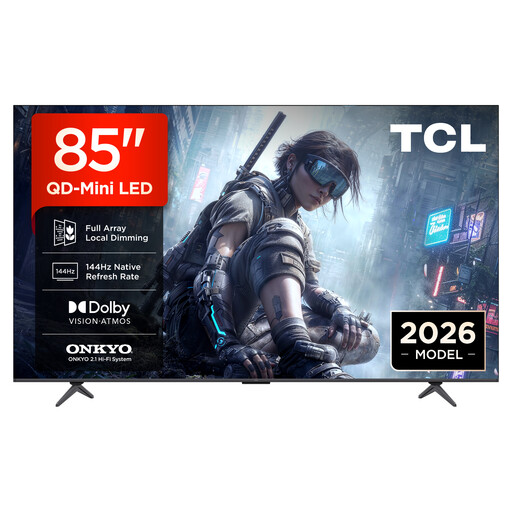
TCL T8D 85-inch 4K QD-Mini LED Smart TV (2026)
An 85-inch diagonal is a size to assess from your own seat and in the space available.
4K, QD-Mini LED and 144 Hz.
View at Joybuy
 No image available
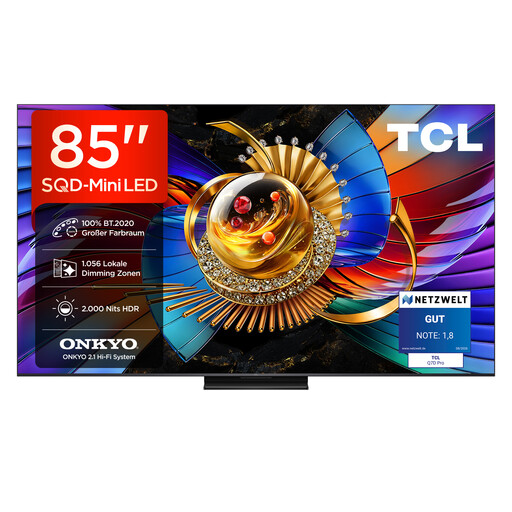
TCL 85Q7D PRO 85-inch 4K SQD-Mini LED TV
An 85-inch diagonal is a size to assess from your own seat and in the space available.
4K, SQD-Mini LED and 144 Hz.
View at Joybuy
 No image available
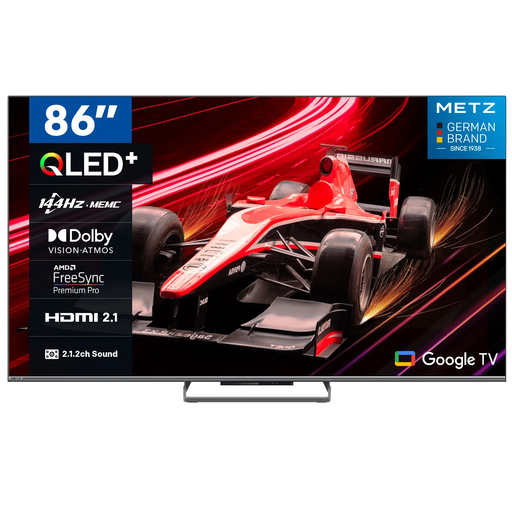
METZ 86MQE8000Z 86-inch QLED Google TV
An 86-inch diagonal is a size to assess from your own seat and in the space available.
QLED, 4K and 144 Hz.
View at Joybuy
 No image available
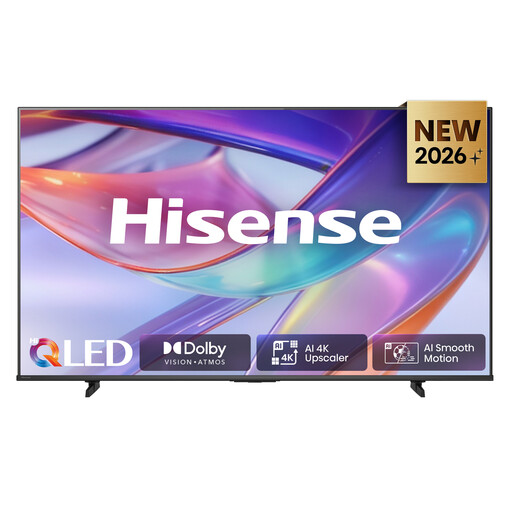
Hisense 85E7S 85-inch 4K QLED Smart TV
An 85-inch diagonal is a size to assess from your own seat and in the space available.
4K, QLED and HDR10+; energy rating E.
View at Joybuy
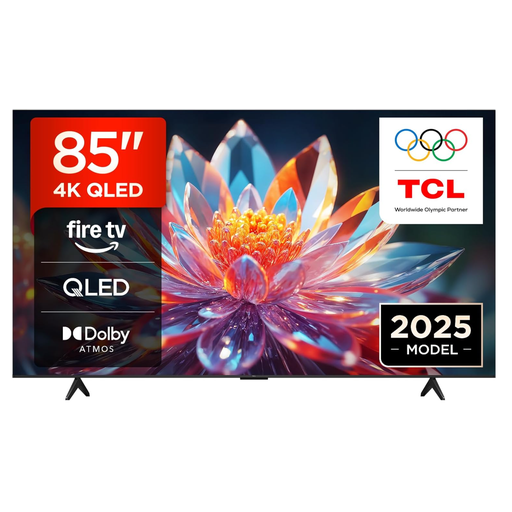 No image available
TCL 85T6C 85-inch 4K QLED Smart TV
An 85-inch diagonal is a size to assess from your own seat and in the space available.
4K, QLED and 60 Hz.
View at Joybuy
Frequently asked questions
Is Sony's minimum viewing distance for 4K also the ideal distance for watching films?
No. Sony Netherlands describes a minimum viewing distance and notes that content, room layout and personal preference also matter. So assess the screen size from your own seat, considering subtitles, details and the picture size you want.
What should you check before wall-mounting a large TV or placing it on a unit?
Compare the exact model's width, height, stand width and weight with the space available. For wall mounting, check the VESA size and make sure the bracket and wall are suitable. Sony Netherlands lists these installation details for the K-75XR5.
How can you prevent image retention on an OLED TV you often use to watch films?
Avoid leaving static images on screen for long periods or repeatedly. Sony warns that this can cause permanent image retention and describes protective features for compatible TVs. Check the manual for your own model.
How do you compare the energy use of two large TVs?
Look up the EU energy label for each exact model and compare them on the same basis. According to the European Commission, the label for electronic displays provides separate information for SDR and HDR viewing.
Is there a cooling-off period after buying online in the Netherlands, and what happens after the manufacturer's warranty?
For a TV bought online, ACM ConsuWijzer says you generally have a statutory cooling-off period of up to 14 days after delivery. Your statutory rights against the retailer also depend on what you could reasonably expect from the product under normal use; they aren't automatically limited to the manufacturer's warranty.


