
Cooking with a large soup pan
You’re making split pea soup for a group and want to check that the pan base fits a suitable zone and that the soup can simmer gently.


Start by checking the base diameter of your soup pan and the connection available: these determine which cooking zones and models are suitable. Induction is ideal for a compatible pan and lets you adjust the heat quickly; ceramic could be an option if you want to keep using your existing pan, but you’ll need to take residual heat into account. Milieu Centraal gives a general comparison of 175 kWh per year for induction and around 225 kWh for ceramic. These figures aren’t predictions of the energy used to cook a single pot of soup.
You’re making split pea soup for a group and want to check that the pan base fits a suitable zone and that the soup can simmer gently.
You’re looking for a freestanding electric hob and want to check in advance what your earthed socket and circuit can handle, especially if other pans will be on at the same time.
You want to know whether your soup pan is suitable for induction, or whether a ceramic hob would be a better fit for your pan and connection.
First decide whether you want a freestanding hob, have a suitable built-in connection, or want to keep using your existing pan. Then compare pan size, power and controls.
Choose this option if: you don’t want a built-in hob, your pan is induction-compatible and your existing earthed connection can handle the load.
The trade-off: the available power is shared, so using several pans at a high setting at the same time may mean they heat up more slowly.
Choose this option if: your built-in space and connection are suitable, and you want to cook other dishes alongside the soup.
The trade-off: check the pan base and installation. A flexible zone or simmer setting doesn’t guarantee that thick soup won’t catch on the bottom.
Choose this option if: your existing pan isn’t induction-compatible and your kitchen has the space and connection needed for a built-in hob.
The trade-off: the hob retains residual heat, so bear this in mind when cooking and cleaning.
| What to consider | What should you check? | Who is this important for? |
|---|---|---|
| Pan size and simmering | Measure the base of your pan and compare it with the cooking zone. Also check how the hob regulates heat at low settings. | When I’m cooking for a group, I want the base of my large soup pan to fit the zone and the heat to be easy to control. Around 33% of consumers prioritise being able to simmer gently in this pan. |
| Existing connection | Check the plug, rated connection, earthed socket and the circuit’s capacity. If necessary, ask a qualified professional to assess the connection. | I want to know whether my existing connection is suitable before choosing or having a hob installed. This is a priority for around 27% of consumers. |
| Your current soup pan | Check that the base is suitable for induction and compare its diameter with the zone. Ceramic is an alternative if the pan doesn’t work on induction. | If I want to keep using my current soup pan, I’ll first check that it works on induction. Around 20% of consumers prioritise keeping their own pan. |
| Safe use and leftovers | Look for a residual heat indicator, and plan for safe supervision while cooking and safe storage of any leftover soup. | When I’m cooking for guests, I want to know how to use the hob safely and store leftovers. This aspect of use is a priority for around 20% of consumers. |
The key measurement is the pan base compared with the usable cooking zone. With induction, the pan also needs to be compatible with this cooking method.
Measure the base of your pan and check the zone size and induction compatibility before you order.
A single-phase model shares its available power when several zones are in use at the same time. The Consumentenbond states that a suitable standard circuit should be able to supply a peak load of 3.65 kW without problems.
Check your connection and cooking plans first. Only then compare with a built-in model, which may need a higher-capacity connection.
A ceramic hob retains residual heat after it’s switched off. This matters when cleaning and when other people are using the kitchen.
Check the residual heat indicator and wait until the hob has cooled sufficiently before cleaning it.
The VKI6010ZIL is a freestanding induction hob with four zones and a plug, for anyone considering a portable cooking setup.
The KC260ZT (ceramic) and KIS670ZT (induction) offer different options to consider when choosing a pan and connection.
The built-in induction hob PXY675DC1E is worth considering if you’re looking at flexible zones.
The EX977NVV6E is a wider induction hob for anyone who also needs room to cook several dishes.
This selection includes freestanding induction hobs, built-in ceramic hobs and a portable infrared hob. Check the CE marking on the product you’re considering: according to the NVWA, it’s required for electrical products sold in the Netherlands. Also check that the connection and pan are suitable for your kitchen and the way you cook.
 No image available
For cooking with one pan on induction in a freestanding setup. Check in advance that your pan is compatible and the connection is suitable.
The product description lists one zone, 10 power levels and a temperature range of 60–240 °C. According to the description, this single-phase hob has a Euro/Type-C plug and a timer of up to 240 minutes.
 No image available
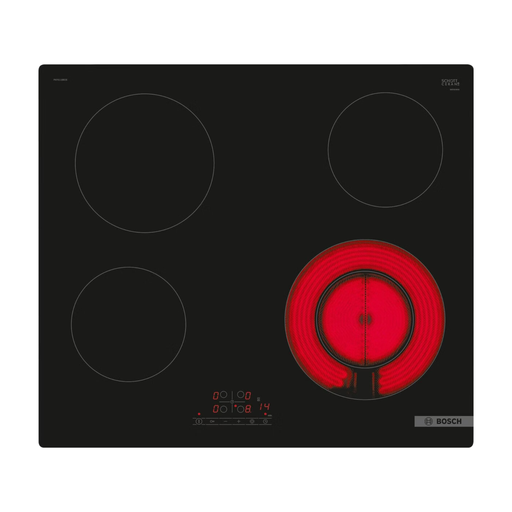
For anyone looking for a built-in ceramic hob and wanting to keep using their existing pan. Check that the connection is suitable for your kitchen.
The description lists four zones, 17 power settings, a timer for each zone and a residual heat indicator. The hob requires a two-phase connection with a 5-pin Perilex connection. The cable and plug aren’t included.
 No image available
For a freestanding cooking setup with room for two pans. Check that your pans are induction-compatible.
The product description lists two zones rated at 1500 W and 1000 W, and five temperature settings. Simmering and slow cooking are listed as suitable uses.
 No image available
For a simple cooking setup with one pan. Check that the pan base is suitable for induction.
The product name lists one burner and five power settings; the description gives a power rating of 1000 W.
 No image available
For a freestanding cooking setup if you don’t want to use an induction pan. Check that your pan and the surface it stands on are suitable for the hob.
The description lists a ceramic surface, a timer and adjustable power of up to 3500 W. Ceramic, glass, stainless steel and cast-iron pans are listed as suitable. The surface gets very hot during use.
Look for the induction symbol and see whether a magnet sticks to the base. Then compare the diameter of the pan base with the cooking zone. The width of the hob alone won’t tell you whether the pan will fit.
No, it depends on the hob and the electrical circuit. For a suitable single-phase model, the Consumentenbond recommends an earthed socket and a circuit that can supply a peak load of 3.65 kW without problems. A higher-powered built-in model may need a different connection. If necessary, get the setup assessed before you buy.
No. Don’t treat a timer as a substitute for supervision. Check the soup and heat setting while it simmers. Inventum’s manual warns that accessible parts get hot. Stir leftovers well while reheating them.
Refrigerate perishable leftovers within two hours and store them at 4 °C. When reheating, stir thoroughly and heat until piping hot throughout. The Voedingscentrum’s advice to keep it in the fridge for two days applies to fresh split pea soup with bacon and sausage, and doesn’t automatically apply to every recipe variation.
Yes. According to the NVWA, CE marking is required for electrical products sold in the Netherlands. Check the marking on the specific product you’re considering; a general product description doesn’t confirm that every item on offer has it.