For generous toppings, start by looking for a clearly stated size, such as ‘extra large’, rather than relying on the search term ‘thick cut’: a larger rusk won’t necessarily be better able to support heavy or moist toppings. If wholegrain or fibre content matters more to you, compare the nutritional information per 100 g. For every variety, check the current ingredients and allergen information too.
Who is this choice relevant to?
Easter brunch guests who like generous toppings
If you want to top your rusks with things like egg, cheese, fruit or a spread, check the stated size and weight per piece. A description such as ‘extra large’ tells you how the product is presented, but doesn’t prove how much topping the rusk can hold.
Breakfast eaters comparing fibre content
If the ingredients matter more than a large size, compare wholegrain and multiseed rusks by their ingredients and fibre content per 100 g. Also check the number of pieces and the nutritional information per serving when comparing packs.
Shoppers checking ingredients
For the rusk varieties reviewed, wheat, egg or sesame may be relevant considerations, depending on the product. If you’re serving anyone with an allergy, always check the allergen information on the packaging of the exact variety.
What should you look for when choosing?
Decide what matters most for your Easter breakfast: room for toppings, the ingredients, the flavour you prefer or ingredients you need to check. Then compare the packaging of the varieties that meet your needs.
| What to consider |
What to look for |
Who is it most relevant to? |
| Size for generous toppings |
Compare descriptions such as ‘extra large’ and the weight per piece. Don’t treat these as a measure of how resistant the rusk is to breaking. |
If I want to add generous toppings to my Easter rusks, I’m looking for plenty of surface area without assuming the rusk is sturdier. Around 36% of consumers prioritise size. |
| Fibre and wholegrain |
Read the ingredients list and compare the fibre content per 100 g; check separately whether the variety is labelled ‘wholegrain’. |
For breakfast, I’d rather choose based on the type of grain and nutritional value than the size of the rusk. For around 29% of consumers, fibre or wholegrain is the first consideration. |
| Flavour and texture |
Consider whether you’d prefer a classic rusk or a variety with seeds, spelt or mixed grains. |
For Easter brunch, I want a rusk whose flavour and texture work well with my toppings. Flavour and texture are the top priority for around 21% of consumers. |
| Ingredients and allergens |
Check the current allergen information for each variety. If you have a question about baker’s salt or iodine, ask what applies to the specific product. |
If I’m buying rusks for guests, I need to find out first which ingredients they can eat. For around 14% of consumers, checking this is the main concern. |
Common mistakes
-
Assuming ‘extra large’ means it can hold more
A size description doesn’t tell you how much heavy or moist topping a rusk can hold without breaking.
Use size as a guide when choosing. If the toppings are key to your brunch, try the combination beforehand or consider a cracker instead for very moist toppings.
-
Not checking allergens in seeded rusks
The multiseed varieties reviewed contain sesame; egg is also present in the classic and wholegrain varieties reviewed. Ingredients vary by product.
Read the current allergen information on the exact pack, even if you’ve bought rusks from the same brand before.
-
Assuming a product contains iodine because it’s a rusk
According to the Netherlands Nutrition Centre, bakers in the Netherlands aren’t required to use baker’s salt. So you can’t tell whether it’s been used in a rusk just from the word ‘rusk’.
If this matters for your purchase, check the label or ask the manufacturer.
-
Planning a specific Easter menu around unconfirmed stock
Availability of a particular rusk variety may differ by shop or order.
Check stock at your chosen shop or for your delivery address before picking one specific variety for Easter breakfast.
Brands and rusk ranges to explore
Bolletje
The Bolletje range reviewed includes a Baker’s rusk described as extra large, wholegrain rusks and an extra-large multiseed variety.
- Useful if you want to weigh up size, wholegrain and seeds as separate preferences.
- Check the allergens for each variety: wheat, egg and sesame are considerations for the products reviewed.
PLUS
Alongside other rusk varieties, PLUS lists a luxury plain variety with seeds, described as a large, crisp rusk.
- A supermarket own-brand option to compare if you’re looking for a large rusk with seeds.
- Check local availability and, for the luxury seeded variety, check the packaging for wheat, egg and sesame.
Jumbo
The Jumbo range includes plain, wholegrain, rustic multigrain and rustic spelt rusks.
- The product names help you search for a particular type of grain or texture.
- ‘Rustic’ isn’t an independent measure of how much generous toppings a rusk can hold.
Albert Heijn
Albert Heijn’s rusk range includes its own plain, wholegrain, multiseed and spelt varieties.
- You can compare ingredients and nutritional information across the range.
- The category descriptions don’t mean that the own-brand varieties are thicker or sturdier.
Goud Gebakken
ALDI lists plain and wholegrain rusks from Goud Gebakken.
- You can compare plain and wholegrain varieties within the same rusk range.
- The listed varieties don’t provide evidence of an extra-large size or tested strength.
Rusks to suit different preferences
This Joybuy selection includes multiseed and classic rusks for toppings, as well as a wholegrain variety for anyone who’s mainly comparing ingredients. If you want generous Easter toppings, don’t choose based on the product name alone: check the size and, for heavy or moist toppings, try the rusk with your chosen combination.
 Image unavailable
Bolletje Multi-Seed rusks, 10 pieces
A multiseed variety to consider if you’re looking for a rusk with seeds and kernels that’s described as extra large for Easter breakfast. Size doesn’t tell you how much it can hold; check the current packaging for allergens, including wheat and sesame.
View at Joybuy
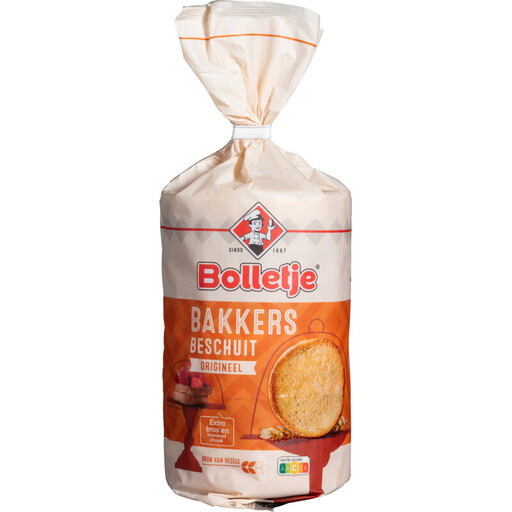 Image unavailable
Bolletje Original rusks, 10 pieces
A classic rusk for Easter toppings if you’re looking for a variety described as extra large. For heavy or moist toppings, don’t rely on that size description alone; also check the packaging for wheat, egg and possible traces of sesame.
View at Joybuy
 Image unavailable
Bolletje wholegrain rusks, 13 pieces
A wholegrain option if the type of grain and fibre content matter more to you than an explicitly large size. Compare the nutritional information on the packaging and check the size separately if you’re planning generous toppings; also check the allergen information for wheat, egg and possible sesame.
View at Joybuy
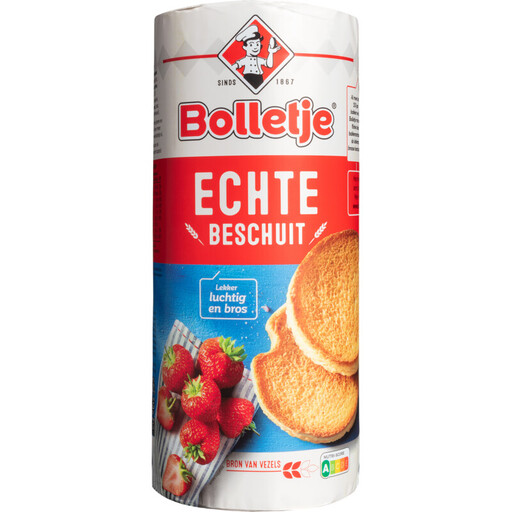 Image unavailable
Bolletje Real rusks, 13 pieces
A classic rusk for anyone looking for a base for breakfast toppings. If plenty of surface area is essential for generous toppings, check the size of this variety before buying; if you’re serving guests, read the current ingredients and allergen information too.
View at Joybuy
Frequently asked questions
Is ‘thick cut’ a standard thickness for rusks?
No. Don’t use ‘thick cut’ as a standard way to compare rusks. Instead, look for specific product descriptions such as ‘extra large’ and, if stated, the weight per piece. Even those details don’t prove that a rusk is resistant to breaking.
Which rusks should I choose for generous Easter breakfast toppings?
Start with a variety described as extra large if you’re mainly looking for more surface area for toppings. For very moist or heavy toppings, you could also consider a sturdy cracker, such as the one PLUS lists alongside rusks for Easter breakfast. Try it beforehand to see what works with your toppings.
Do rusks automatically contain iodine because of baker’s salt?
No, you can’t assume this is true of every rusk. According to the Netherlands Nutrition Centre, bakers in the Netherlands aren’t required to use baker’s salt. Check the label or ask the manufacturer about a specific product.
Which allergens should I check if I’m serving guests?
Check the current allergen information for every rusk variety you choose. For the products reviewed, wheat and, depending on the variety, egg or sesame are relevant considerations. Don’t assume the ingredients are the same as in another product from the same brand.


