Who is this relevant to?

Developer who finds keys difficult to read

You want to be able to distinguish the letters and symbols on the keys while working with a portal that has enlarged text. Clevy and Logickeyboard describe keyboards with larger or large-print legends. The text on screen needs to be adjusted separately.

Keyboard-focused accessibility tester

You test forms and other features without a mouse, and are looking for a layout and shortcut keys that suit the way you work. The W3C states that web content functionality must be operable through a keyboard interface; a particular keyboard model can’t prove that it is.

Developer who types for long periods

You’re looking for a practical layout for long working sessions, with enough space for your mouse. A compact keyboard may suit you if you don’t need a built-in number pad.

What should you look for when choosing?

Large-print or high-contrast keyboard

When to choose it: If you find the characters on standard keys difficult to distinguish, compare the size and contrast of the legends.

Trade-off: A simplified layout may differ from the keys you’re used to, so check the language variant and number of keys.

Keyboard with magnification shortcuts

When to choose it: This is most relevant if you use ZoomText or Fusion and regularly access their features.

Trade-off: The special shortcut keys are designed for that software and don’t replace larger key legends.

Backlit work keyboard

When to choose it: A model with adjustable backlighting and work-related features may suit you if repetitive tasks matter more than large-print legends.

Trade-off: Backlighting isn’t the same as enlarged key legends. Check the layout and software compatibility too.

Compact keyboard

When to choose it: A compact layout may suit you if you want more space next to your keyboard during long working sessions.

Trade-off: If you enter numbers frequently, you may need a separate number pad. A compact design won’t solve problems with small key legends.

What to consider What to check before buying Who might value this most?
Readable key legends Compare the letter size, colour contrast, symbols and language variant. If you find the characters on standard keys hard to distinguish, you’ll want clear, easy-to-read legends. Around 42% of consumers say readable key legends are their top priority when buying.
Testing without a mouse Check the key layout and any software requirements. Also test how the portal’s own features work. If you build or test forms and features with a keyboard, you’ll want to carry out repetitive tasks and check that the site can be used without a mouse. Around 33% of consumers say this is their main requirement when buying.
Layout for long working sessions Check the size of the layout, number pad, connectivity and language variant. If you type for long periods and want to keep space beside your keyboard, you’ll need to weigh up a compact design against the need for a built-in number pad. Around 25% of consumers prioritise extended typing and desk layout.

Common mistakes

  • Confusing large key legends with larger on-screen text

    Large-print legends don’t change how the portal is displayed.

    Assess the readability of the keys separately from the text settings, and test whether the portal remains usable when you enlarge the text.

  • Choosing a keyboard variant without checking the layout

    The physical language variant may differ from the input layout set on your computer, so symbols may appear on different keys from the ones you expect.

    Check the product variant and your computer’s input layout before buying. Then test the symbols you use when developing.

  • Assuming shortcut keys or a compact size are improvements for everyone

    ZoomText shortcut keys are designed for specific software. With a compact model, you may want a separate number pad if you enter numbers frequently.

    Choose extra features based on the software you use and how much number entry your work involves.

Brands to consider

Clevy

The Contrast Keyboard 3 is designed with visible key legends and a simplified layout.

  • Clevy says this model has larger characters, 67 keys, and USB and Bluetooth connectivity.
  • The layout may differ from a standard keyboard layout. Clevy says the older Contrast Keyboard 2 is no longer supported.

Logickeyboard

The Large Print NERO version for Windows reviewed here combines large-print legends with a full-size layout.

  • Logickeyboard says this version has a wired USB-A connection, two USB hubs and an included dimmable keyboard light.
  • Check the language variant you choose, as several layouts are available.

Vispero / ZoomText

The ZoomText large-print keyboard described by Optelec is designed for use with ZoomText or Fusion.

  • Optelec lists high-contrast legends, a numeric keypad, USB and shortcut keys for the associated software.
  • The dedicated shortcut keys are most relevant if you use that software.

Logitech

The MX Keys S is a work keyboard with adjustable backlighting, not a keyboard that Logitech presents as a large-print model.

  • Logitech lists adjustable backlighting and Smart Actions through Logi Options+.
  • Check that the layout and software features suit your system. Backlighting doesn’t mean the legends are enlarged.

R-Go Tools

The Compact Break is designed for a compact workspace where you use the keyboard alongside a mouse.

  • The manufacturer describes a compact design and a break indicator controlled by R-Go Break software.
  • R-Go recommends the separate Numpad Break for number entry. The product information reviewed doesn’t promise large-print key legends.

Joybuy keyboards

These Joybuy products are keyboards for computer use, including compact layouts and one model with a full-size US QWERTY layout. Compare the layout you need and check that the key legends are easy for you to read.

Redragon M68 Magnetic Switch keyboard with 68 keys and US layout

Redragon M68 Magnetic Switch, 68 keys, US layout

The compact layout may suit you if you want to save desk space.

Mechanical keyboard with 68 keys, a 65% layout, RGB lighting, an aluminium top plate and a detachable USB-C cable.

View at Joybuy

Ajazz AK820 Pro mechanical keyboard with 82 keys and US QWERTY layout

Ajazz AK820 Pro, 75%, US QWERTY

The compact layout may suit you if you want to save desk space.

Mechanical keyboard with 82 keys and USB-C, Bluetooth and 2.4G connectivity. The product name also mentions RGB lighting and hot-swappable keys.

View at Joybuy
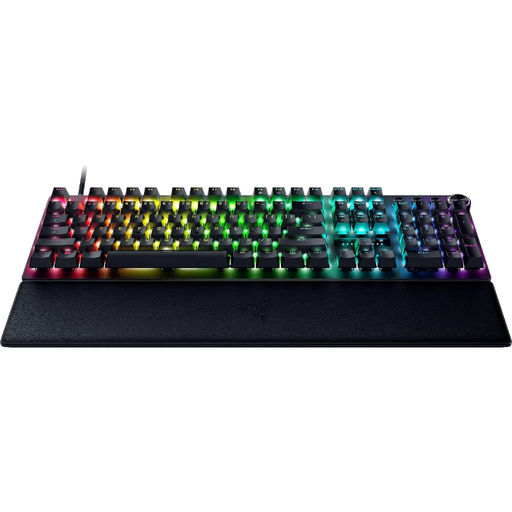
Razer Huntsman V3 Pro keyboard with US QWERTY layout

Razer Huntsman V3 Pro, US QWERTY

The full-size layout may suit you if you want to use a standard full-size keyboard.

Full-size keyboard with US QWERTY layout.

View at Joybuy
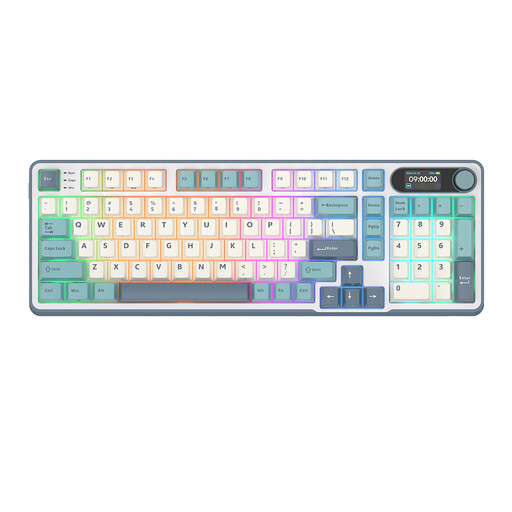
RK ROYAL KLUDGE S98 mechanical keyboard with 98 keys

RK ROYAL KLUDGE S98, 96% layout, 98 keys

The 96% layout may suit you if you want a compact design with a large number of keys.

Mechanical keyboard with Bluetooth, 2.4G and USB-C connectivity. The product description says this layout doesn’t have a number pad.

View at Joybuy

MageGee TS91 wired keyboard with 61 keys and US QWERTY layout

MageGee TS91, 60%, 61 keys, US QWERTY

The ultra-compact layout may suit you if you want to use as little desk space as possible.

Wired keyboard with 61 keys and RGB lighting. The product description says this 60% layout doesn’t have a number pad.

View at Joybuy

Frequently asked questions

Will a large-print keyboard make the portal text bigger?

No. Large letters on keys and larger text on screen are separate things. Microsoft describes settings for text size, scaling and Magnifier in Windows. Also test whether the portal remains usable when magnified.

How can you check whether the keyboard layout is correct?

Compare the physical language variant with the input layout set in your operating system. Microsoft explains how to view and change layouts in Windows. Then test the symbols you use when developing.

Do you need a special keyboard to make the portal accessible without a mouse?

No. Under the W3C keyboard accessibility criterion, web content must be operable through a keyboard interface, with a stated exception for path-dependent input. This is something you need to build into and test on the portal; buying a keyboard doesn’t demonstrate that it is accessible.

What return and warranty rights apply to an online purchase in the Netherlands?

For an online purchase as a consumer, ACM ConsuWijzer says you generally have up to 14 days after delivery to change your mind, subject to legal exceptions. You also have a statutory right to receive a product that, under normal use, does what you could reasonably expect. This is separate from any stated manufacturer’s warranty period.

Does a Dutch tool-lending portal have to be accessible by law?

That depends on the operator and the nature of the service. DigiToegankelijk describes the obligations of public-sector organisations. The Dutch government lists accessibility requirements that have applied since 28 June 2025 to certain products and services, subject to exceptions and conditions. Whether those rules apply to this portal depends on the specific circumstances.
