
Nut eaters who keep an eye on portions
You want to keep eating nuts while keeping track of the total and saturated fat in your weighed portion. The figures on the label and the portion size are a better guide than how a product looks.


Ordinary nuts are not low in fat under the European claim threshold: the three 500 g packs checked contain 48.6 to 60 g of fat per 100 g, compared with a maximum of 3 g per 100 g for the ‘low-fat’ claim, according to the European Commission. So compare the fat content in a weighed portion and check the ingredients for the exact variant. Choose a pack size that suits how much you use and how you store it.
You want to keep eating nuts while keeping track of the total and saturated fat in your weighed portion. The figures on the label and the portion size are a better guide than how a product looks.
You use nuts regularly and want to check whether the pack size suits how much you get through. A resealable pack and suitable storage are important when you open a larger bag.
You want unsalted nuts and want to know the difference between unroasted, roasted and nuts prepared with added oil or a coating. Check the ingredients for the exact variant.
Start with the nutritional information for the amount you eat. Then check whether the ingredients and pack size suit the way you use them.
| What to consider | What should you check? | Who is this important for? |
|---|---|---|
| Fat per portion | Check total fat and saturated fat per 100 g separately. Work it out for your portion: figure on the label × portion weight / 100. | If I want to compare fat per portion, I weigh out the same amount and look at both figures separately. Around 36% of consumers prioritise fat per portion. |
| How you use the pack | Choose a pack size that suits how often you eat nuts and whether you can seal the opened pack properly. | If I use nuts regularly, I want to know whether a larger bag suits how much I get through and the space I have to store it. Around 29% of consumers prioritise how they use the pack. |
| Ingredients and preparation | Check whether oil, salt or a coating has been added, and read which types of nuts are in the mix. | If I’m looking for a simple ingredients list, I check the exact nuts and how they have been prepared. Around 21% of consumers prioritise ingredients and preparation. |
| A suitable amount to keep in stock | Compare the pack weight with how much you use and follow the storage and best-before instructions on the pack. | If I use nuts occasionally, I don’t want to open a larger pack than I can store properly. Around 14% of consumers prioritise keeping a suitable amount in stock. |
These descriptions tell you about the salt or ingredients, not necessarily the total fat content. The PLUS mix checked, which has no added oil, still contains 55.7 g of fat per 100 g.
Check total fat and saturated fat separately, and calculate the amount for the portion you weigh out.
A larger pack needs enough storage space and a plan for sealing it properly once opened. Some may go unused if you don’t eat many nuts.
Choose a pack size based on how much you use and the storage advice on the pack.
Nut mixes can vary in their ingredients and nutritional information. For example, the AH and PLUS mixes checked have different ingredient proportions.
Check the brand, variant, pack and current ingredients list for the product you’re buying.
Nuts can go rancid or absorb odours if they’re stored incorrectly, and they’re also susceptible to mould.
Seal the pack properly or use an airtight storage container, and follow the storage advice for the specific product.
A relevant option for unsalted peanuts and a range of party snack varieties.
AH Notenmix ongezouten is a 500 g mix of almonds, hazelnuts, walnuts and Brazil nuts.
A relevant option for unsalted cashews in a 500 g value pack.
The Alesto range includes natural nuts and party snack varieties.
The Dutch product page describes TRADER JOE'S Notenmelange ongezouten in a 500 g pack.
PLUS Notenmix ongebrand ongezouten is a 500 g mix containing four types of nuts.
These Joybuy products offer a choice of larger packs, smaller quantities and different types of nuts. Before choosing, check the current nutritional information, ingredients and storage advice for the exact variant.
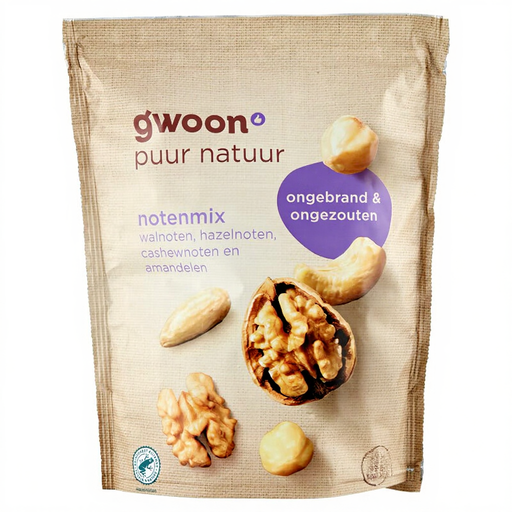 No image available
A larger pack for anyone looking for unroasted mixed nuts. Check the nutritional information and ingredients on the pack.
 No image available
A 500 g pack for anyone looking for peanuts in their shells. Check the nutritional information and allergens on the exact pack.
 No image available
A smaller pack of roasted, unsalted cashews. Compare the nutritional information and ingredients for this preparation with those of other varieties.
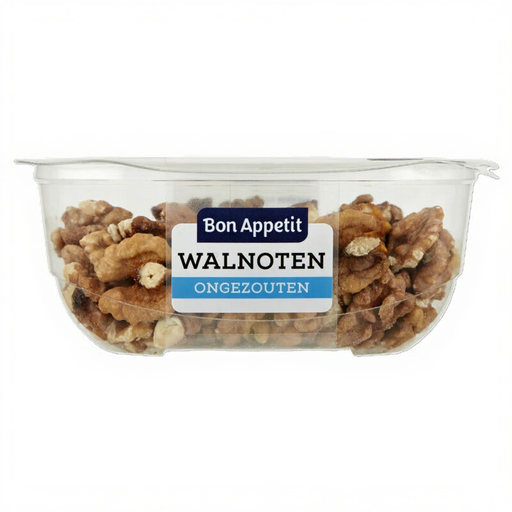 No image available
A small pack of unsalted walnuts for anyone looking for a limited quantity. Check the ingredients and nutritional information on the pack.
 No image available
A 250 g pack for anyone who wants to store fewer peanuts at a time than they would in a larger bag. Check the ingredients and nutritional information for the exact variant.
Not if its fat content is above the European threshold for that nutrition claim. According to the European Commission, solid foods must contain no more than 3 g of fat per 100 g; the three 500 g packs checked contain between 48.6 and 60 g per 100 g. This is a condition for using the claim, not a personal daily limit.
No. In this comparison, 25 g is simply a standard portion used for calculations. Albert Heijn lists this amount on the product page checked, but that doesn’t make it a current general nutrition recommendation. The Netherlands Nutrition Centre updated its Wheel of Five on 9 April 2026; follow appropriate guidance and any personal dietary advice.
Multiply the fat content per 100 g by the weight of your portion, then divide by 100. A 25 g portion of Jumbo cashews contains 12.15 g of total fat, based on 48.6 g of fat per 100 g. If you’re following a prescribed diet, use the amount agreed with your healthcare professional.
Seal the nuts well, store them in a cool, dry place and follow the instructions on the exact pack. The Netherlands Nutrition Centre recommends storing nuts in an airtight container. Don’t eat nuts with mould on them.
Not necessarily: ‘unsalted’ tells you nothing about allergens. Check the ingredients list and warnings on the exact pack. The Netherlands Food and Consumer Product Safety Authority requires relevant allergens to be clearly distinguished from the other ingredients.