
People with a large, damp living room
First, check whether the stated capacity and room coverage are suitable for your living room. The Consumentenbond stresses that both the size and temperature of the room matter when choosing a dehumidifier.


A desiccant dehumidifier is worth considering if your large living room often stays cool. In a heated room, a suitably sized compressor dehumidifier may also be a good fit. The Consumentenbond says compressor dehumidifiers work best above 15 °C, so compare capacity at the same temperature and relative humidity. Tackle sources of moisture and ventilation problems too: according to the Dutch government, a dehumidifier is no substitute for ventilation.
First, check whether the stated capacity and room coverage are suitable for your living room. The Consumentenbond stresses that both the size and temperature of the room matter when choosing a dehumidifier.
Your living room often stays cool, and you want to know whether the type and exact model you choose are designed to work at that temperature.
You want to dehumidify the room while you’re in it, so you’re considering noise levels, power consumption and how to drain the collected water.
Start with the actual room temperature and the stated room coverage, then compare noise levels and day-to-day use. The Consumentenbond measures capacity at different combinations of temperature and humidity.
| What to consider | What to look for | Who this matters to |
|---|---|---|
| Capacity for your room | Check the stated room coverage and capacity, including the temperature and relative humidity at which that capacity applies. | If my living room is large or open-plan, I want to know whether the stated room coverage and capacity are suitable before choosing a unit. Around 33% of consumers prioritise suitable capacity. |
| Performance at your room temperature | Check how warm your living room usually is and look up the operating temperature range for the exact model. | If my living room often stays cool, I want a model designed for that temperature, not just one with an impressive capacity on paper. Around 27% of consumers prioritise performance in cold conditions. |
| Noise in the living room | Compare the noise level at each fan setting and check the dehumidifying performance at that setting. | If I’m staying in the living room, I want to use the unit without its noise disrupting conversation or relaxation too much. Around 20% of consumers prioritise noise levels in the living room. |
| Power use and operation | Compare the power rating under the same test conditions, and check the tank capacity, humidistat and continuous drainage options. | If I use the unit regularly, I want to weigh up power consumption and the effort involved in emptying or draining the water. Around 20% of consumers prioritise running costs and maintenance. |
Actual dehumidification depends partly on temperature and humidity, and the stated room coverage also varies by model.
Compare capacity under the same test conditions, and check the stated room coverage against the size and layout of your living room.
A dehumidifier doesn’t remove stale indoor air or fix a leak or building defect. According to the Dutch government, ventilation removes both moisture-laden and polluted air.
Investigate and address the cause of the damp, and use a dehumidifier as an additional measure if needed.
A suitable operating temperature range doesn’t automatically mean the stated room coverage is large enough. For example, Trotec specifies a maximum of 20 m² or 50 m³ for the TTR 57 E.
Check the temperature limits and room coverage separately before comparing models.
A manufacturer’s warranty is an extra. The Dutch government states that there is no fixed statutory warranty period in the Netherlands, and that the retailer must offer a solution if a product is faulty.
Check the terms of any additional warranty and keep the retailer’s details.
EcoAir states that its DD3 Classic MK3 is a desiccant model for rooms up to 90 m². This room coverage is worth comparing with the size of your large living room.
Meaco offers models using different technologies: the DD8L Zambezi is a desiccant model, while the Arete One 20L is a compressor model.
The WDD80 is a desiccant model worth comparing if your living room falls within its recommended room coverage.
The TTR 57 E shows that a desiccant model designed for cooler rooms isn’t automatically powerful enough for a large living room.
Compare the stated room coverage, capacity and drainage options of these dehumidifiers with your living room. A litres-per-day figure alone doesn’t tell you whether a model is right for your space.
 No image available
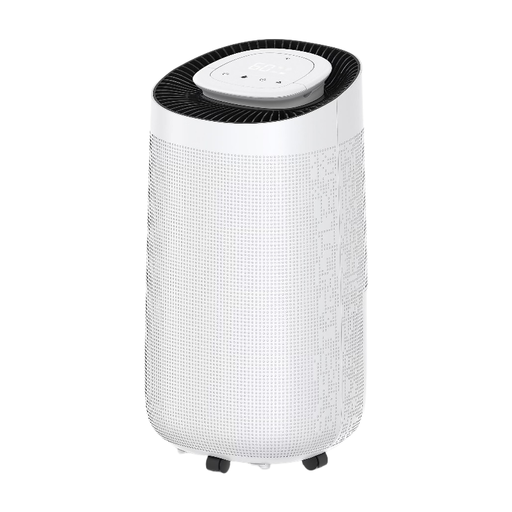
The stated maximum room size is 30 m², so compare this limit with the size of your living room.
Stated capacity: 16 L/day. Tank: 3,2 L. The product information lists a timer, multiple settings and a drainage hose.
 No image available
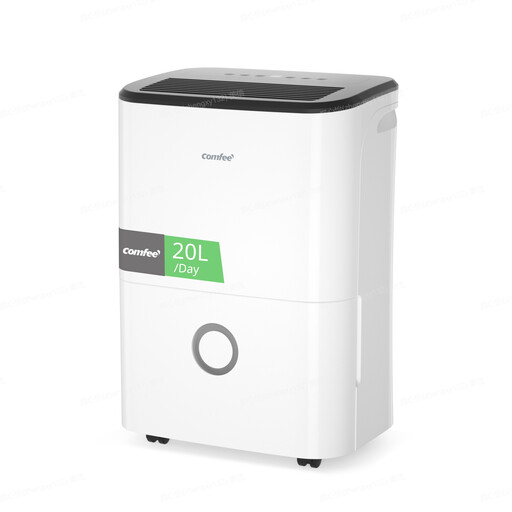
The product information gives a maximum room size of 40 m²; check that this is suitable for your living room.
Stated capacity: up to 20 L/24 hours. Tank: 3 L. It has three settings and uses R290; the drain hose is not included.
 No image available
The product information gives a maximum room size of 60 m²; compare this with the size and temperature of your living room.
Stated capacity: up to 16 L/day at 95 °F and 90% relative humidity. Tank: 2,5 L. It also has continuous drainage and a 24-hour timer.
 No image available
The stated room size is approximately 32 m²; the product information says this model is designed for rooms within that limit.
Stated capacity: up to 16 L/day. Tank: 1,35 L, with an option for continuous drainage. The recommended operating temperature is 5–35 °C; below 15 °C, frost may form and the compressor may stop during defrosting.
 No image available
The stated maximum room size is 25 m²; compare this limit with the size of your living room.
Stated capacity: up to 12 L/day. Tank: 3,8 L. The product information lists automatic shut-off when the tank is full and a hose for continuous drainage.
Yes. According to the Dutch government, ventilation removes both moisture-laden and polluted indoor air. A dehumidifier doesn’t replace fresh air, so check for leaks and other sources of moisture too.
Compare figures measured at the same temperature and relative humidity. The Consumentenbond tests dehumidification at different combinations of these conditions, so a single maximum figure doesn’t describe performance in every living room.
Check whether the exact model comes with a hose connection and hose, and follow the manual for installation and maintenance. EcoAir lists a drain hose as standard with the DD3 Classic MK3; Wood’s lists a hose connection for the WDD80.
No. The European Commission states that no EU energy rating system has been established for dehumidifiers. Compare energy use under the stated conditions instead of relying on an assumed letter rating.
The Dutch government states that electronic products placed on the market in the EU must carry a CE mark; check this for the exact version. If a product is faulty, the retailer must offer a solution. The Dutch government says there is no fixed statutory warranty period in the Netherlands.