
Vandaag of morgen in huis

Kwaliteit gegarandeerd

Welkomstaanbiedingen ontgrendelen: GRATIS bezorging | Tot 80% korting | Gratis 30 dagen JoyPlus-proefperiode
Download de app
A large cat tree needs to offer more than a tall post with soft covering. Stability, weight capacity and easily accessible scratching areas are especially important for larger cats or homes with several cats. A cat tree that looks impressive on paper may prove too narrow, wobbly or difficult to keep clean in practice.
Watch out for these common pitfalls:
A tall tower with a base that’s too small
A height of 170 or 206 cm means little if the base is narrow. The structure may wobble when cats jump and climb. A level surface and, for taller models, wall fixing can help reduce the risk of tipping.
Plenty of levels, but little usable lounging space
A large cat tree may have several platforms that are too small for an adult cat. So check not just the number of levels, but also the dimensions of the baskets, hideaways and lounging platforms.
Sisal on paper, but not where cats scratch
Some models have just one thin sisal post. For cats that like to scratch vertically, several sturdy posts with a sufficient diameter are more practical. They also give cats a choice of scratching heights.
A 170 cm tall cat tree gives cats more opportunities to climb and a place to survey their surroundings. However, a taller structure needs extra attention to stability. Check:
An XXL cat tree over 150 cm tall should be assembled carefully according to the instructions. After assembly, check the screws, joints and platforms regularly.
A sisal cat tree is most practical when the sisal is firmly wrapped around the posts and cats can use the full length of each post. According to the product information, the PAWZ Road models have 13 sisal posts with a diameter of 11 cm. These are measurable specifications that tell you more than a general description such as ‘extra sturdy’.
Also check the stated maximum weight. According to the product information, the PAWZ Road variants are designed for cats weighing up to 10 kg. The JOYFURNOS/SOMNGICSHOME cat tree is listed as having a total static load capacity of up to 75 kg. Static load capacity is no guarantee for every situation: jumping, running and unevenly distributed weight all affect how the tree performs. So choose a model with plenty of leeway, and secure a tall tree where recommended.
A cat tree for multiple cats works better when they don’t constantly have to share a single platform. Several hammocks, baskets, hideaways and lounging platforms offer more choice. Look for:
A cat tree with a hammock is appealing to cats that like to lounge somewhere soft and elevated. A cat tree with a hideaway also offers a more sheltered spot. No layout suits every cat, so observe whether yours prefers to rest up high, in the open, somewhere sheltered or close to the floor.
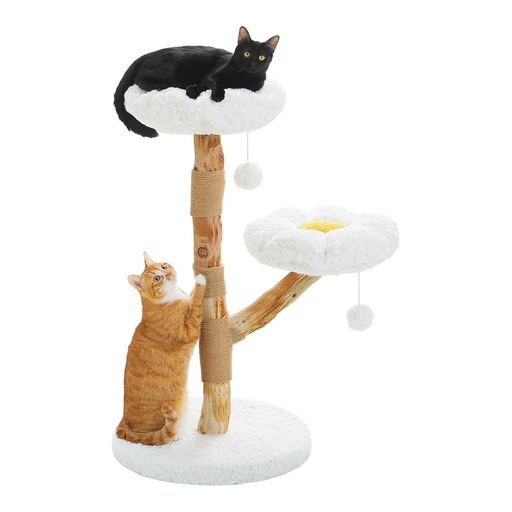
Why it suits this profile: A more compact model for a smaller home, a single cat or up to two cats within the stated weight limit.
The double-reinforced base and dimensions of 49 × 49 × 90 cm make the structure less imposing than a very tall tower. Do check the joints regularly.
Two resting spots, a wooden frame and a sisal-wrapped post; suitable for cats weighing up to 7.3 kg according to the product information.
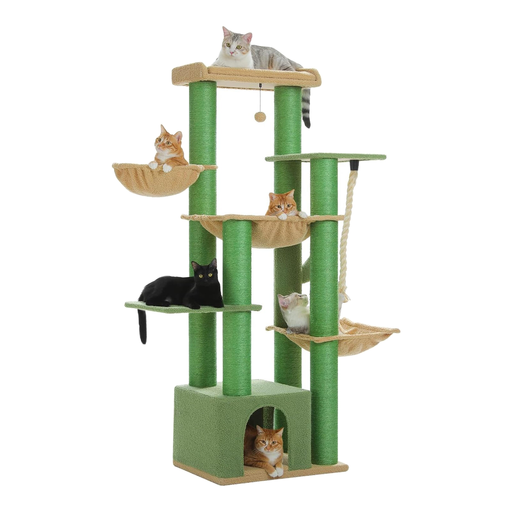
Why it suits this profile: Designed for households looking for a tall, versatile indoor cat tree with several resting and scratching areas.
According to the product information, the tree has 13 sisal posts measuring 11 cm, three hammocks, three spacious top platforms and a large hideaway.
Dimensions of 58 × 45 × 170 cm, a weight of 25 kg and a stated suitability for large and medium-sized cats.
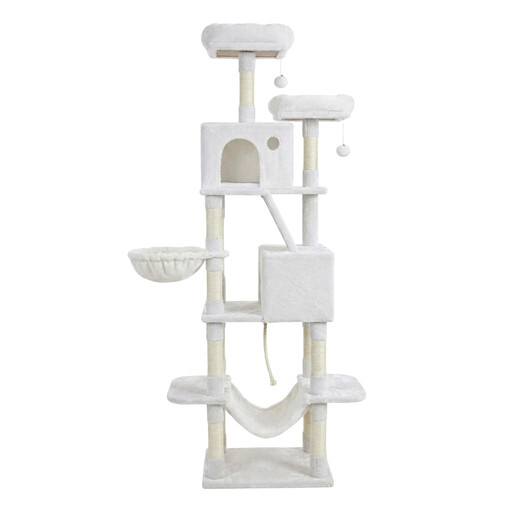
Why it suits this profile: For active cats and multi-cat households where cats make good use of vertical space and separate resting spots.
The product information lists a reinforced base, 13 sisal posts, two hideaways, two platforms, a basket and a hammock. Wall fixing with the anti-tip kit supplied is strongly recommended.
A height of 206 cm and a stated total static load capacity of up to 75 kg; check covers and components regularly for wear.
We’ve put together a complete, up-to-date list of products that meet these strict selection criteria and the applicable European safety regulations.
Place your cat climbing tree somewhere your cat can reach easily, but not next to an open window, radiator or loose cables. A view of the room or window may encourage your cat to use it. Make sure there’s enough clear space around the tree for jumping up and climbing down.
After assembly, check:
Washable covers make care easier. Replace parts as soon as they tear or no longer stay firmly attached. A cat tree won’t necessarily last for years: its lifespan depends on how intensively it’s used, the cats’ weight and the quality of the assembly.
Place the cat tree on a level, non-slip surface and follow the assembly instructions carefully. For models over 150 cm, wall fixing with an anti-tip kit or suitable fixings is a sensible precaution when recommended by the manufacturer.
Check the overall dimensions, stated weight capacity and number of separate resting spots. Several hammocks, platforms and hideaways reduce the chances of cats having to share the same space. Also make sure the lounging areas are large enough for adult cats.
Check a new tree after the first few days, then inspect it regularly. If your cats climb and jump on it every day, monthly checks are a practical routine. Tighten any loose screws and stop using the tree if a platform, post or joint is damaged.
