
Vandaag of morgen in huis

Kwaliteit gegarandeerd

Welkomstaanbiedingen ontgrendelen: GRATIS bezorging | Tot 80% korting | Gratis 30 dagen JoyPlus-proefperiode
Download de app
A large cat tree for multiple cats needs to offer more than just a tall post with a soft bed. In a household with several or larger cats, the construction, routes between levels and distribution of resting places soon face intensive use. A model that looks spacious in the shop may still wobble at home, provide too little room to lie down or be difficult to keep clean.
So don’t just look at the number of levels or the appearance. The following three pitfalls are common:
A tall cat tree makes good use of vertical space, which is useful in a flat or home with limited floor space. At the same time, jumping and landing create more movement. So look at:
A stable cat tree should be placed on a level surface. Follow the assembly instructions and check all connections after assembly. For some models, permanent wall fixing is part of the safety instructions. This applies, for example, to the SONGMICS tower mentioned below.
A cat tree with several resting places does not automatically prevent competition. Look at the practical layout:
A 60 × 40 cm or 65 × 45 cm platform offers more room to move than a small round platform, according to the product specifications. Always check whether the stated load capacity applies per cat, per platform or to the furniture as a whole. The manufacturer’s information for some models states, for example, a maximum of six cats weighing 6.8 kg each; this is not a general standard for every cat tree.
A large cat scratching post should allow cats to scratch at different heights. Sisal posts at multiple levels can guide cats towards designated scratching areas, but their positioning is just as important as the number of posts. Look at:
A cat tree with sisal posts is not guaranteed to protect furniture from scratching damage. It is, however, a practical way to combine scratching opportunities with climbing and resting in the same piece of furniture.
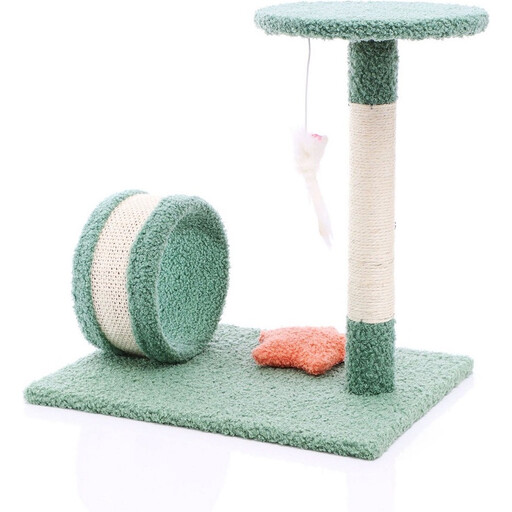
Why it suits this profile: Measuring 40 × 30 × 41 cm, this compact model is suitable as a first scratching and play area or as an addition to a small flat. It is not a substitute for a large cat tree for multiple cats, but takes up very little floor space.
The dimensions and 1 kg weight make it clear that this is a lightweight supplementary piece of furniture, not a tall tower designed to provide stability for several heavy cats.
A tunnel, toys, three resting areas according to the product information and a sisal surface, all in a compact format.
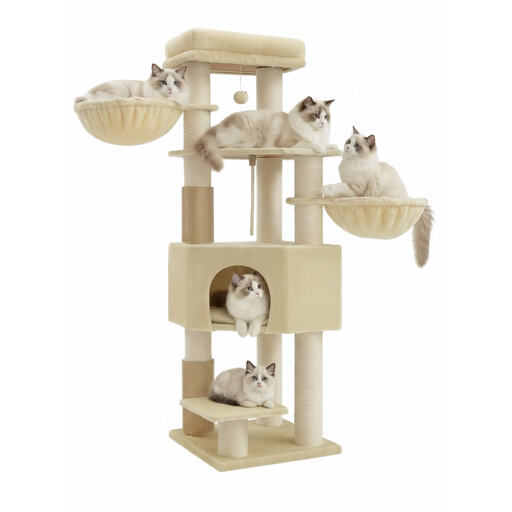
Why it suits this profile: This cat tree for large cats combines a wide 50 × 50 cm base with nine sisal posts, a cave, beds and a large resting area. It is a good fit for households that want to factor maintenance and permanent fixing into their purchase.
The instructions state that, after assembly, the tower must be permanently secured to a load-bearing wall using the supplied anti-tip kit. This makes the safety requirement clear.
9 sisal posts, removable mats, a built-in brush, anti-tip kit and a stated static load capacity of 105 kg.
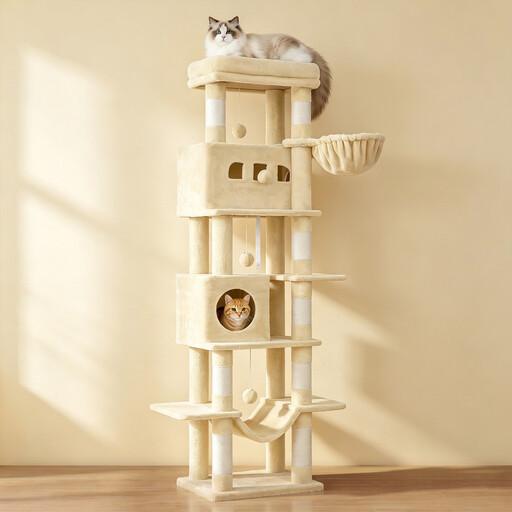
Why it suits this profile: Standing 212.5 cm tall, this cat tree is designed for multiple cats and active climbers. Two cat houses, a bed, hammock, wide platforms and eight sisal posts distribute the functions across six levels.
The product description states that it has a double base, anti-tip locking and a stated capacity of up to six cats weighing less than 6.8 kg each. Always compare this with the weight of your own cats.
65 × 45 cm platform, two houses, hammock, two washable cushions and eight sisal posts in a six-tier structure.
We have put together a complete, up-to-date list of products that fully meet these strict selection criteria and the applicable European safety regulations.
Ideally, place a large cat tree in a quiet spot where your cats can see the room. Avoid a cramped passageway, radiator or damp area. In a flat, a vertical cat tree can work as a cat furniture solution for small spaces, provided the base is not constantly positioned in a walkway.
After a few days, check again that all the screws are tight. Then regularly inspect the tree for loose connections, fraying sisal, damaged hanging toys and cracks in the cushions or houses. Washable covers and removable cushions make it easier to remove hair and dust. A cat tree does not have a fixed lifespan: how intensively it is used, the cats’ weight, assembly and maintenance all determine how long the furniture remains usable.
Don’t just consider the overall height. Choose a model with several separate resting places, at least one wide lookout platform and multiple scratching areas. For larger cats, platforms from around 50 cm wide are more practical than small round platforms. Also check the stated load capacity and maximum cat weights.
Assemble the tree exactly according to the instructions on a level surface. Use the supplied anti-tip kit when required and secure it to a suitable load-bearing wall. Check the screws and connections regularly, particularly when several cats jump or climb at the same time.
Place the cat tree somewhere your cats already like to spend time and make sure the sisal posts are vertical and easy to reach. Reward desirable behaviour without forcing your cat. If the furniture has several scratching areas, cats can choose their own preferred spot more easily. For persistent scratching, an additional freestanding scratching post next to the furniture your cats favour may help.
