
Vandaag of morgen in huis

Kwaliteit gegarandeerd

Welkomstaanbiedingen ontgrendelen: GRATIS bezorging | Tot 80% korting | Gratis 30 dagen JoyPlus-proefperiode
Download de app
A large cat tree for multiple cats needs to do more than reach a good height. Cats want to climb, scratch, sleep and be able to get out of each other’s way. In a home with several cats or larger cats, weak points become apparent sooner: a narrow base, too few resting places or sisal covering just one post.
The product name doesn’t always tell you everything. Pay particular attention to the construction, dimensions and instructions for use. That way, you can avoid buying an XXL cat tree that starts wobbling after a short time, gets little use or doesn’t fit in your home.
A two-metre cat tree might look appealing, but height without a sufficiently wide base and secure anchoring increases the risk of movement when your cat jumps. So check:
For models over around 150 cm, many manufacturers recommend securing the tree to the wall, according to their instructions for use. Also place the cat tree on a flat, stable surface.
A cat tree with several platforms isn’t automatically suitable for multiple cats. Narrow resting spots can lead to crowding, especially when cats want to climb up at the same time. Check the dimensions of the largest platforms and the distance between levels.
For many cats, a layout with around 20 to 40 cm between levels may be easier to navigate than large, awkward jumps. For older, heavier or less agile cats, having enough room to move around remains important.
A product may have lots of posts, but only a few might be covered in sisal. So check not only the total number of posts, but also:
Sisal can encourage cats to use designated scratching areas and help redirect them away from furniture. It can’t guarantee that a cat will never scratch a sofa or curtain again.
For a 212 cm cat tree or a similarly tall model, stability is a key consideration. A double or reinforced base, thick boards and a low centre of gravity are all relevant design features. However, the result also depends on assembly. Tighten the screws carefully and check them again after a few weeks of use.
Be aware of the difference between a static weight capacity and normal use. A figure such as 75 kg usually refers to a static load, according to the product information. Jumping cats exert a different force. Always use the recommended wall fixing and don’t exceed the stated weight limits.
A cat tree with cat houses, a hammock, a basket and open platforms offers a range of places to rest. This is useful if your cats don’t all want to share the same sleeping spot. Two enclosed houses can also offer somewhere to retreat, while a high platform suits cats who like to keep an eye on their surroundings.
Check whether the cushions can be removed and washed. Plush surfaces are comfortable, but they collect hair and dust. A removable cover or separate cushion makes cleaning easier.
Measure the space not just across the floor, but upwards too. Check ceilings, lamps, doors and windows. Don’t place a tall cat tree right next to radiators, open flames or blind cords. Choose a spot where your cats can jump safely and where you can secure the tree to a suitable wall.
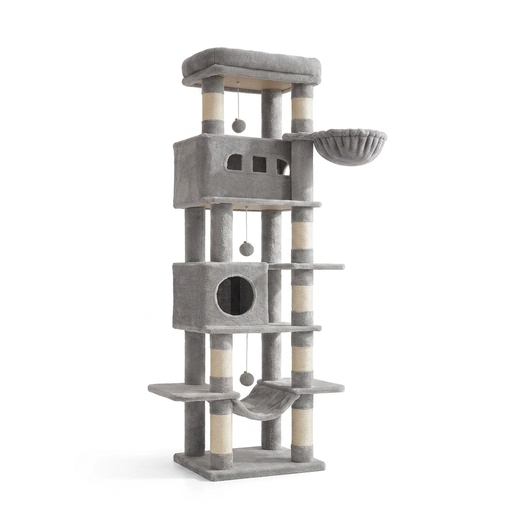
Why it suits this type of buyer: A straightforward option if you’re buying a tall cat tree for the first time and want several features without taking up much floor space.
The product description lists a double reinforced base, an anti-tip device and 17 support posts, 8 of which are covered in sisal.
170 cm tall, with six levels, two houses, a hammock, a basket and two removable cushions.
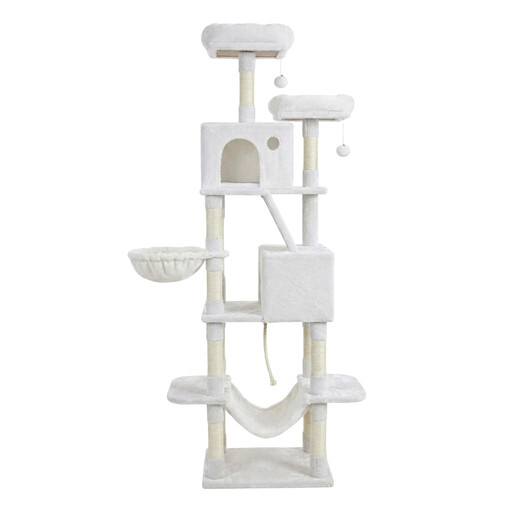
Why it suits this type of buyer: A good choice for households looking to combine several separate resting and scratching spots with a high vantage point.
The listing mentions a large reinforced base and a wall-mounted anti-tip kit. Correct assembly is still essential for safe placement and use.
13 sisal posts, two platforms, two houses, a basket and a hammock; stated static weight capacity of up to 75 kg.
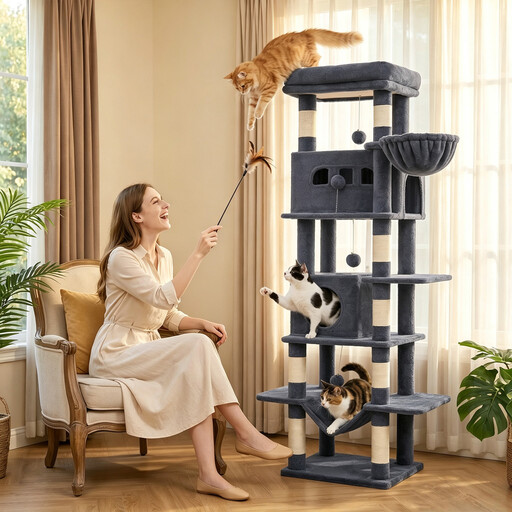
Why it suits this type of buyer: For active cats and owners who want to make the most of vertical space without using up extra floor area.
The description lists a wide reinforced base, anti-tip devices and eight sisal posts spread across the levels.
Six levels, a 60×40 cm platform, two cat houses, a hammock and a basket with removable cushions.
We’ve put together a complete, up-to-date list of products that meet these strict selection criteria and the applicable European safety regulations.
How long a sturdy cat tree lasts depends on assembly, how often it’s used and how well it’s maintained. Check regularly for:
You can usually remove dust and cat hair with a vacuum cleaner or lint roller. Washable cushions are handy, but always follow the washing instructions. Stop using the tree if any part is loose, broken or unstable.
Place the tree on a flat, non-slip surface and assemble all the parts according to the instructions. For tall models, it’s best to secure the tree to the wall using the supplied anti-tip kit or suitable fixings. After assembly, check that the base doesn’t shift.
It depends on how it’s used. A model used every day by several cats will wear more quickly, particularly around the sisal, cushions and joints. Regularly tightening screws, cleaning the tree and replacing worn parts in good time can extend its lifespan.
Day-to-day care is usually limited to vacuuming and removing hair. The main additional task is to check the screws, sisal posts and anti-tip fixing from time to time. With frequent use, you may need to replace worn sisal or plush parts.
