
Vandaag of morgen in huis

Kwaliteit gegarandeerd

Welkomstaanbiedingen ontgrendelen: GRATIS bezorging | Tot 80% korting | Gratis 30 dagen JoyPlus-proefperiode
Download de app
A large cat tree needs to do more than provide somewhere to scratch. For large, heavy or multiple cats, climbing, resting, playing and having enough room to move around are just as important. A model that looks spacious in the product photo might still be too narrow, wobbly or difficult to clean in a British living room.
Look out for these common pitfalls before buying a cat tree:
A tall cat tree gives cats a good view and extra climbing opportunities. Don’t just look at the overall height; check:
For heavier cats, a wide resting area is more practical than several small platforms. A large cat tree measuring around 170 to over 210 cm could be a good option if you have enough ceiling height and floor space. Before you buy, measure the space next to a cupboard, radiator or doorway too.
A sturdy cat tree has a wide base, enough support posts and, ideally, an anti-tip fitting. A double or reinforced base plate can help reduce movement, but overall stability also depends on a level floor and correct assembly.
Check the stated weight capacity per cat, not just the total number of cats. The product descriptions for some of the models in this guide specify a capacity of up to six cats weighing 6.8 kg each. This is product-specific information, not a general standard for every large cat tree.
Secure a tall cat tree properly during assembly and check after a few days that all the screws are still tight. Multiple cats create more dynamic stress when they jump or play at the same time.
Sisal scratching posts provide a suitable surface for claws. Check how many posts are actually wrapped in sisal and where they are positioned. Scratching areas on several levels make it easier to give different cats their own space.
Plush upholstery feels comfortable in a cat bed, cat house or cat hammock, but it collects hair. Removable cushions and surfaces you can vacuum are therefore practical. Also check whether dangling balls can be replaced. This helps prevent an otherwise usable cat tree from quickly becoming incomplete if a toy gets damaged.
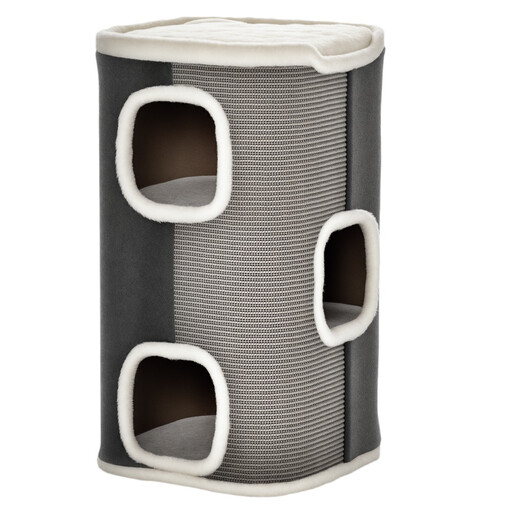
Why it suits this profile: At 40 × 40 × 74 cm, this compact model is easier to fit into a smaller living room, or to use as an additional climbing tree alongside a larger one. The product name specifies three levels, natural sisal and two large, connected openings.
The dimensions and layout are clearly listed, so you can check whether the unit will fit your space before buying. If you have large or multiple cats, make sure the compact size will be big enough.
Compact size; three levels; plush and natural sisal combination.
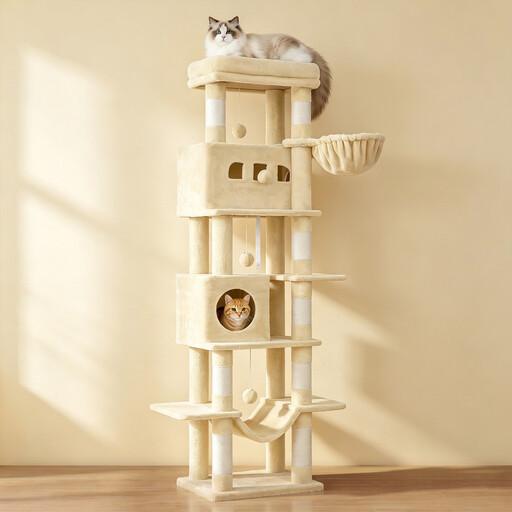
Why it suits this profile: At 212.5 cm tall, it has six levels, two cat houses, a hammock and an elevated bed, offering a range of places to rest and play. It’s a good match for households with multiple cats that like to climb or relax at the same time.
The product description lists 17 support posts, 8 of which are wrapped in sisal, as well as a double base and anti-tip fixing. Check your ceiling height and secure the structure according to the instructions.
212.5 cm tall; 8 sisal posts; two cat houses; a hammock and two washable cushions.
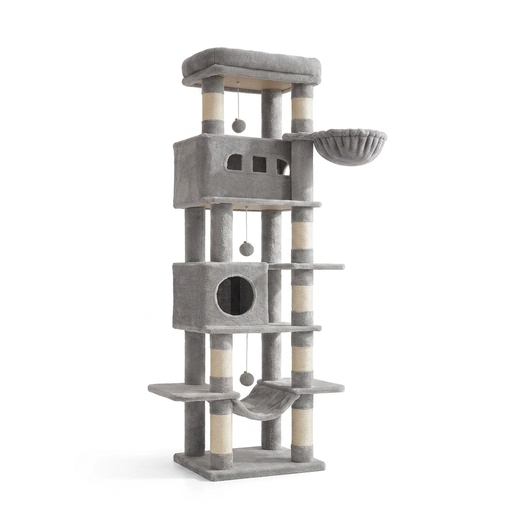
Why it suits this profile: This model combines six levels with a 50 × 30 cm platform, a 50 × 40 cm cat house, a 30 cm bed and a hammock. It’s suited to households looking to combine several features in one cat tree.
The product description lists 17 support posts, 8 sisal-wrapped posts, a widened double base and an anti-tip fitting. The stated capacity is up to 6 cats weighing 6.8 kg each; compare this with the weight of your own cats.
Six levels; 8 sisal posts; two removable, washable cushions; replaceable dangling balls.
Place a large cat tree on a level surface, ideally somewhere your cats can look outside without blocking a walkway. Leave enough space around the base for jumping, and make sure doors and windows can open freely.
Vacuum plush surfaces regularly and remove loose hairs with a lint roller. Washable cushions are handy, but always follow the product’s care instructions. Check the sisal, joints, platforms and dangling toys for signs of wear. Replace any loose or damaged parts before your cats continue to use the tree extensively.
We’ve put together a complete, up-to-date list of products that meet these strict selection criteria and the applicable European safety regulations.
That depends on the space available and your cat’s behaviour. A tall cat tree of around 170 cm or more provides extra room to climb, but wide platforms and a stable base matter more than height alone. Measure your ceiling height before ordering too.
Its lifespan depends on the number of cats, their weight, how much they scratch and how well the tree is assembled. Check the sisal covering and screw joints regularly. A model with replaceable toys or parts may stay practical for longer.
It can be, provided there are enough resting spots, scratching areas and accessible levels. Compare the stated total weight capacity with the combined weight of all your cats, and check the width of the base. For very active cats, an anti-tip fitting provides useful extra security.
