
Vandaag of morgen in huis

Kwaliteit gegarandeerd

Welkomstaanbiedingen ontgrendelen: GRATIS bezorging | Tot 80% korting | Gratis 30 dagen JoyPlus-proefperiode
Download de app
A large cat scratching post needs to do more than just provide a place to scratch. Large adult cats jump, climb and land with considerable force. In a multi-cat household, you also need enough space to prevent arguments over a single resting spot.
Yet many cat trees are less practical than their product photos suggest. So don't just focus on the height or colour – pay attention to the construction, dimensions and maintenance instead.
A 170 cm scratching post sounds impressive, but height alone doesn't tell you much about stability. A narrow base or a heavy top section can make the cat tree prone to wobbling. Always check the length and width of the base, the weight of the furniture, and whether an anti-tip device is included.
Thin sisal posts can be fine for small cats, but large cats need more room to stretch out fully. Look at the diameter of the posts and how the sisal has been applied. A thicker post generally offers a larger scratching surface and feels less flimsy when scratched.
Bear in mind: a product description may mention durability, but that's no guarantee of a specific lifespan. So also check whether spare parts are available, and inspect the sisal regularly.
A cat tree with seven levels isn't automatically suitable for multiple cats. Small platforms, hammocks or hideaways can be unusable for heavy adult cats. Focus on the dimensions of the resting areas and check whether cats can pass each other without having to wait on one narrow shelf.
For a sturdy scratching post for large cats, three things matter:
Place a tall cat tree on a level floor, ideally against a wall. Follow the assembly instructions and check after a few days of use that the screws are still tight.
A 170 cm scratching post gives cats the chance to climb up and survey the room from a higher platform. This is especially appealing for active cats. The height must also suit the space in your home. Measure the clearance above the cat tree so that a cat can't jump into a ceiling light or shelf.
An XXL cat tree usually has multiple rest and play zones. Don't just look at the number of levels, but also at:
Sisal scratching posts are designed for daily scratching use. Thicker sisal rope wrapped around sturdy posts is practical when cats scratch vigorously. Soft plush upholstery can be comfortable, but it also traps hair and dust. Removable, washable cushions or hammocks make maintenance easier.
Check the cat tree regularly for loose rope, damaged fabric, loose screws and wobbly platforms. Replace or repair a part if it's torn or if the filling becomes visible.
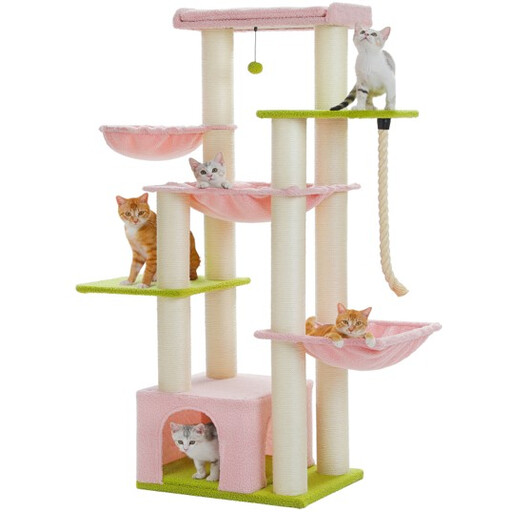
Why this fits the profile: This model combines a tall cat tree with multiple resting spots and is designed for cats up to 10 kg according to the product information.
The specifications mention 13 sisal posts with an 11 cm diameter, three hammocks, three extra-large resting spots and a hideaway. So the layout doesn't rely on just one small resting area.
170 cm tall, 24 kg heavy, seven levels and removable, washable hammocks and beds.
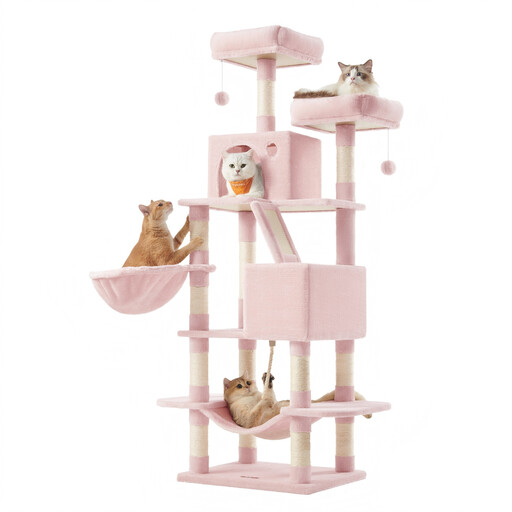
Why this fits the profile: The combination of multiple rest and play zones suits households where cats have different preferences for sleeping, climbing and scratching.
The base is reinforced and the product information mentions an anti-tip device. The included fixing must be attached to the wall for the prescribed stability.
168 cm tall, 18.4 kg heavy, 13 scratching posts, two caves, a basket, a hammock and two platforms.
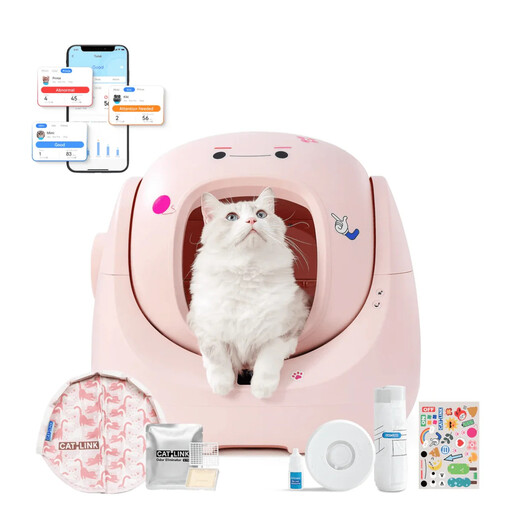
Why this fits the profile: This isn't a scratching post, but an additional choice for multi-cat households that want to organise their cat space practically.
The spacious interior and multi-cat features address another practical issue: sufficient hygiene and ease of use alongside a large cat tree.
Suitable for clumping cat litter, with automatic, timer and manual cleaning modes according to the product description.
We've put together a full, up-to-date list of products that fully meet these strict selection criteria and comply with current European safety regulations.
Put the cat tree in a spot where your cats like to spend time, for example near a window or in the living room. Don't place it directly next to a delicate piece of furniture if you're trying to limit scratch damage. A sisal post only works if your cat can easily reach it and has enough room to stretch out.
Check the connections, the sisal and the resting spots every month. With heavy use by multiple cats, wear and tear can become visible more quickly. Washable hammocks and cushions can be cleaned according to the included instructions; don't use harsh cleaning products on plush or sisal.
Choose a model with a wide base, firmly attached levels and ideally an anti-tip device. A tall cat tree must stand on a level surface and be anchored to the wall according to the instructions when that is specified.
It can be, as long as there are several resting spots and the hammocks are large enough. Check the maximum weight capacity, the dimensions of each platform and whether cats can avoid each other on the different levels.
The lifespan depends on the weight and behaviour of your cats, the quality of the connections and the maintenance. You shouldn't continue using a cat tree with damaged sisal, loose screws or torn fabric without repairing or replacing the part.
