
Vandaag of morgen in huis

Kwaliteit gegarandeerd

Welkomstaanbiedingen ontgrendelen: GRATIS bezorging | Tot 80% korting | Gratis 30 dagen JoyPlus-proefperiode
Download de app
A large cat litter tray may seem easy to choose at first. Yet many owners buy a model that disappoints after a few weeks. Space, ease of cleaning and odour control matter more than a striking design or a clever app, especially for Maine Coons, Ragdolls and households with multiple cats.
Before buying, look out for these common pitfalls:
There’s no universal EU size for an XL litter tray. So use your cat and the available interior space as your guide. Your cat should be able to turn around, dig and squat comfortably without bumping into the hood or rim.
When choosing a litter tray for a large cat, pay particular attention to:
Length and width of the interior
Don’t just look at the external dimensions. For a Maine Coon or Ragdoll, a spacious rectangular tray is often more practical than a compact model with lots of rounded corners.
Entrance and rim height
A litter tray with a high rim helps contain scattered litter and can reduce leaks. Just make sure the entrance is low enough. A separate ramp can be useful for older cats or kittens.
Space available at home
Measure the floor space before you order. Leave room around the tray for access and cleaning, and to open a flap or front panel. Place an electric model on a stable, level surface, not on a carpet or a floor that’s sensitive to moisture.
One large tray may not be enough for multiple cats. Placing extra trays in quiet spots can help reduce territorial behaviour around the litter tray. Also consider access: a tray with a flap offers privacy, but some cats may be less comfortable with a closed door.
A stainless steel litter tray has a non-porous surface that may retain less odour and moisture than some porous materials. The VVM tray in this selection is made from stainless steel and, according to the product information, has high sides. Don’t use an abrasive cleaner, as it could damage the surface.
For plastic models, smooth interior walls and removable parts are practical features. Check whether the main unit of an automatic litter tray can be submerged in water. Electronic components usually need to be wiped with a slightly damp cloth.
For odour control, look for:
An odour filter is no substitute for regular cleaning. You’ll also need to check a self-cleaning litter tray for blockages and built-up litter.
An automatic litter tray can be useful if you work long hours or care for multiple cats. Check which types of litter it accepts. Some models only work with clumping litter. According to the product information, using an unsuitable material may affect the mechanism.
A manual tray has fewer technical parts and is often easier to move. However, you’ll need to scoop it daily and clean the whole tray more often. With a smart tray, Wi-Fi, an app, a power supply and sensors also become part of everyday use.
Features such as weight tracking, usage reports and alerts can be useful for keeping an eye on each cat’s habits. Treat information from the app as a tool to support everyday use, not as a medical assessment.
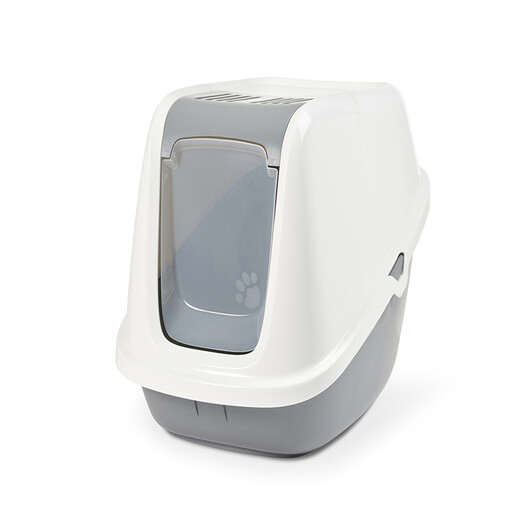
Why it suits this buyer: A spacious, non-electric option for anyone looking for plenty of room and simple everyday maintenance.
The listed dimensions of 76 × 56 × 55,5 cm make it easy to check the available space in advance. The hinged front panel means you don’t need to remove the whole hood every time you clean it.
Spacious dimensions, a high back, a plastic flap and a replaceable carbon filter, according to the product description.
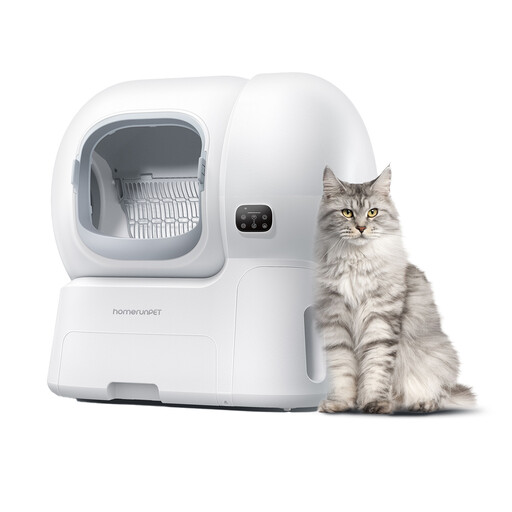
Why it suits this buyer: Designed for owners who want to scoop by hand less often and are looking for a spacious automatic option for large cats.
The product information lists an 8-litre waste compartment, automatic litter refills and blockage detection. This gives you a clearer idea of the maintenance involved than a model with only a general odour claim.
Self-cleaning function, automatic litter refills and a stated suitability for cats weighing up to 10 kg, according to the product description.
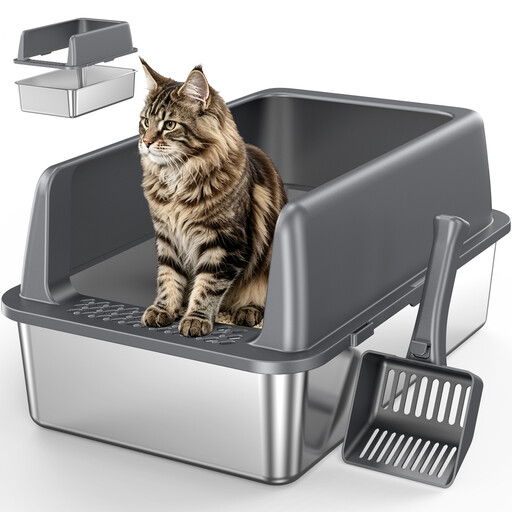
Why it suits this buyer: A practical choice for large cats and households where high sides, generous capacity and quick scooping are priorities.
The dimensions of 58,4 × 37,1 × 26,2 cm and the 20-litre capacity are clearly stated. This makes it easier to compare the tray with the space available and your cat’s size.
Non-porous stainless steel, 10.3-inch-high sides and a scoop included, according to the product information.
We’ve put together a complete, up-to-date list of products that meet these strict selection criteria and current European safety requirements.
First, measure your cat from nose to the base of its tail, then check the usable interior space. Your cat should be able to turn around and dig without bumping into the sides. Also compare the entrance height and the position of any flap.
That depends on electricity use, waste bags, filters, odour-control products and any automatic refill system. Check which type of litter is allowed, too. A manual tray needs fewer consumables, but you’ll need to spend time scooping and cleaning it every day.
Its lifespan depends on the material, how often it’s used and how well it’s maintained. Stainless steel resists moisture, while plastic and electronic parts should be checked regularly for damage. Always follow the care instructions, and stop using an automatic tray if it’s visibly damaged or develops a fault.
