
You analyse counts in R
If you regularly process count files, choose a configuration to suit your datasets and analyses. Posit says the processing power and memory you need depend on the work you do.


Start with the software you use and the size of your datasets: simple spreadsheets have different requirements from large R datasets or mapping work in QGIS. The Consumers’ Association (Consumentenbond) considers 16 GB of RAM practical when you’re using several programmes at once, while Posit says the amount of memory you need for R depends on the analysis. Then consider screen space, ports, portability and the exact configuration. More processor cores or a dedicated graphics card aren’t automatically necessary for every bird count.
If you regularly process count files, choose a configuration to suit your datasets and analyses. Posit says the processing power and memory you need depend on the work you do.
If you combine count results with locations or map layers, you can choose an operating system and screen size to suit the way you work. QGIS is available for Windows and macOS.
If you check and compare counts across several windows, screen space and memory both matter. You don’t automatically need a configuration designed for demanding spatial analysis.
Start with your main task, then check that the configuration you choose suits your software, workspace and existing equipment.
| What to consider | What to look for | Who this matters to |
|---|---|---|
| Analysis and memory | Choose the memory to suit your datasets and programmes. The Consumers’ Association considers 16 GB practical for running several programmes at once; Posit emphasises that R requirements depend on the analysis. | If I’m processing larger count files, I want to know that my datasets and programmes will run smoothly. Around 33% of consumers make analysis performance their top priority. |
| Maps and data | Check that your version of QGIS, extensions and files are compatible with the operating system. Allow space for your own map data. | When I combine counts with locations or map layers, I want to be sure my workflow will work on the system I choose. Around 25% of consumers prioritise mapping. |
| Screen and ports | Compare screen size and resolution, and check the ports for a monitor and your peripherals. A larger built-in screen makes a laptop less compact. | If I’m viewing spreadsheets and maps side by side at home, I want a clear overview without overlooking the ports my equipment needs. Around 17% of consumers make screen space their top priority. |
| Configuration and accessories | Compare the full model number and the included items, such as a compatible charger or any required adapter. | If I want to match my spending to what I actually need, I want to compare the complete configuration and avoid missing essential accessories. Around 17% of consumers prioritise the total purchase cost. |
| Portability | Consider how often you’ll take your laptop with you and compare its size with the option of using an external monitor at home. Don’t assume the stated battery life will apply during an analysis session. | If I’ll also use my laptop away from home, portability matters more to me than a large built-in screen. Around 8% of consumers make portability their top priority. |
More processor cores won’t automatically improve R performance; it depends, among other things, on your dataset, analysis and software.
Check which tasks you run and how large your files are before comparing configurations.
Configurations within the same model range can differ in memory, storage, screen and included accessories.
Check the full model number and what comes with the specific configuration, including the charger and any adapters.
Microsoft offers Microsoft 365 web apps on Chromebooks, but the Windows and Mac desktop versions can’t be installed on them.
Check that the features and analysis software you need are available in the version you plan to use.
The ProBook 4 G1iR 16 configuration we looked at is a Windows option with a large screen.
The Dell Pro 14 PC14250 configuration we looked at offers a more compact Windows screen size.
The 15-inch MacBook Air with M5 is a macOS option for working at home and on the go.
The ThinkPad T14 Gen 6 (Intel) is a 14-inch range to consider if compactness and repair options matter to you.
The Aspire 5 configuration we looked at, NX.KQ4EH.002, is a Windows option with a 15.6-inch screen and physical ports.
This selection focuses mainly on Windows laptops with plenty of screen space for working at home, alongside a macOS option for a setup shared between home and on the go. Check the exact configuration and make sure it’s compatible with your software and files.
 Image unavailable
The large built-in screen could suit spreadsheet work at a dedicated home workspace.
18.4-inch WUXGA screen, Ryzen 7 260, 16 GB DDR5 memory and a 512 GB SSD. The product information says a power adapter isn’t included; a compatible 45–65 W USB-C PD charger is required.
 Image unavailable
This Windows configuration could be worth considering if you’re looking for a 16-inch screen for spreadsheets and several programmes.
WUXGA OLED screen, Snapdragon X, 16 GB LPDDR5X memory, a 512 GB SSD and Windows 11 Home. Check that the R packages and QGIS extensions you need work with this specific configuration.
 Image unavailable
The 16-inch screen and listed ports suit a dedicated workspace with several windows open or peripherals connected.
WUXGA IPS screen with anti-glare coating, Intel Core Ultra 5 135H, 16 GB DDR5 memory, a 512 GB SSD and Windows 11 Pro. The product information says the memory is expandable and there are two M.2 storage slots.
 Image unavailable
This macOS configuration is an option if your R or QGIS workflow is compatible with macOS and you’d like a larger built-in screen.
15.3-inch Liquid Retina screen, 16 GB of memory, a 512 GB SSD and two Thunderbolt 4 ports. The product information says a USB-C power adapter isn’t included; also check that your peripherals connect directly.
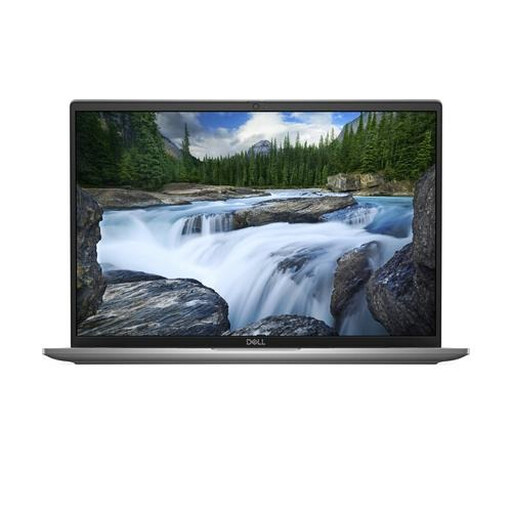 Image unavailable
The 16-inch screen and listed ports could suit a home workspace with an external monitor or other peripherals.
Full HD+ screen with a resolution of 1920 × 1200, 16 GB LPDDR5x memory, a 512 GB SSD and Windows 11 Pro. The product information lists HDMI and two Thunderbolt 4 ports.
No, 32 GB isn’t a general requirement for all bird counts. Posit says the memory you need depends on your R analyses and suggests paying extra attention to memory when working with datasets larger than 1 GB. The Consumers’ Association considers 16 GB suitable when running several programmes at once. Choose a configuration to suit the size of your files and the way you work.
Install R before using it in RStudio, and choose a QGIS installation that’s compatible with your operating system. QGIS also offers a long-term release if stability matters more to you than the latest features. Check that your scripts, extensions and data files work with the versions you choose.
Yes, if the web version suits the way you work. Microsoft offers Microsoft 365 web apps on Chromebooks, but the Windows and Mac desktop versions can’t be installed on them. Also check separately whether you can use your other analysis software on the Chromebook.
For online consumer purchases, ACM ConsuWijzer says you generally have 14 days from delivery to change your mind, subject to legal exceptions. If a product is faulty, you’re also covered by the statutory guarantee, which is separate from any manufacturer’s warranty. This information applies to consumer purchases, not every business purchase.