Start by thinking about where you write and how much room you need to read your text and sources at the same time. A more compact screen is easier to carry, while a larger one gives you more space for two windows. Then check the keyboard layout, the exact screen specification, the memory and your back-up process. A second built-in screen is most useful if you also want that extra workspace when you’re out and about.
Who is this buying guide for?
Writers who need sources alongside their text
You want to see your text and a document or web page at the same time while editing. Microsoft Support and Apple Support explain how to place windows side by side. The space available depends in part on your screen and the apps you use.
Writers who work in different places
You take your journal issue with you and weigh screen space against size and the ability to work away from a socket. The Dutch Consumers’ Association outlines what to consider when it comes to laptop memory. Apple lists screen and battery details for the MacBook Air that apply to specific configurations and test conditions.
Writers who want to protect their work
You want to be able to restore earlier versions and know in advance how to back up your work. Microsoft Support explains File History, while Apple Support covers Time Machine. Both methods require a suitable storage location.
What should you look for?
Compact laptop with a single screen
Best for: people who often write in different places and can switch between windows, or use an external screen at a fixed workstation.
Trade-off: a smaller screen leaves less room for two open windows at once. Check that your apps are still easy to read on it.
Larger conventional laptop
Best for: people who usually write at a desk and want to view their text and references at the same time. Lenovo and Acer list 15.3-inch and 15.6-inch screens respectively for specific configurations.
Trade-off: a larger device takes up more room on your desk and in your bag. Check the exact screen aspect ratio and resolution too.
Laptop with two built-in screens
Best for: people who want a dedicated space for sources without a separate monitor. ASUS lists two 14-inch screens and a detachable keyboard for the Zenbook DUO UX8407.
Trade-off: check the keyboard layout and what’s included with the specific configuration. The ASUS store configuration reviewed is sold without a power adapter and specifies a required power output of 100 W.
| What to consider |
What should you check? |
Who should pay particular attention? |
| Space for reading two windows |
Compare the exact screen size, resolution and aspect ratio. Check whether your writing and reference windows are comfortable to read at that size. |
If I want to read my text and sources at the same time, I focus on the usable space for each window. Around 31% of consumers say reading space is their top priority. |
| Keyboard and memory |
Try out the layout and key feel, and check how much memory the configuration has and whether it can be upgraded. The Dutch Consumers’ Association says 8 GB is enough for light use and recommends 16 GB where possible. |
If you write for long stretches and often switch between documents and programmes, it’s worth paying attention to keyboard comfort and memory. Around 25% of consumers put this combination first. |
| Portability and battery use |
Check the dimensions, weight, ports, included charger and test conditions behind any quoted battery figures. A web-browsing test doesn’t guarantee how long you can write for. |
If I write in different places, I want to know what I need to take with me and how long the laptop will last with my own use. Around 25% of consumers make portability their top priority. |
| Keeping your work safe |
Decide where to store your back-ups and try restoring an earlier version. Microsoft Support explains how to use File History with an external drive or network location; Apple Support explains how to use Time Machine with a suitable storage device. |
If you want to be able to restore earlier versions of a journal issue, check your back-up storage and recovery steps in advance. Around 19% of consumers say preserving their work is their top priority. |
Buying pitfalls
-
Assuming a general series description covers your exact configuration
Screen aspect ratio, processor and included accessories can vary by configuration. A general description doesn’t always tell you what comes with the exact model.
Compare the full model or part number with the model-specific specifications and the list of items in the box.
-
Treating the stated battery life as guaranteed writing time
Apple lists separate battery tests for the MacBook Air, including tests for video and wireless internet use. Those conditions aren’t the same as working with a word processor, browser and reference files.
Only compare battery figures when they’re based on the same test conditions, and bear in mind your own screen brightness, apps and usage.
-
Assuming all the accessories you need are included
The ASUS Zenbook DUO and Acer Aspire Go 15 configurations reviewed are sold without a charger. The back-up methods described also require a suitable storage location.
Before buying, check what’s in the box, the required charging power and where you’ll store your back-ups.
You may need to buy a suitable charger or back-up storage separately.
-
Confusing the manufacturer’s warranty with all your legal rights
According to the Dutch government, there’s no fixed statutory period for the legal guarantee in the Netherlands. The retailer is your point of contact if a product is faulty; a manufacturer’s warranty is an additional benefit.
Check who the retailer is and what any additional warranty covers.
Brands to consider
Lenovo
IdeaPad Slim 5 configurations are worth considering if you’re looking for a conventional laptop with room for two windows.
- For the IdeaPad Slim 5 15ARP10 with Ryzen 7 7735HS reviewed, Lenovo specifies a 15.3-inch WUXGA screen, 16 GB of soldered memory and a 512 GB SSD.
- These specifications apply to that configuration, not every IdeaPad Slim 5. Check the processor and full configuration.
Apple
The MacBook Air comes in 13-inch and 15-inch configurations, giving you a choice between a more compact size and more screen space in macOS.
- For the 13-inch MacBook Air M5, Apple lists a 13.6-inch display and a configuration with 16 GB of memory and a 512 GB SSD, among other specifications.
- The quoted battery life is based on specific tests. Also check that your writing software works with macOS and which configuration you’re choosing.
ASUS
The Zenbook DUO UX8407 is an option if you want to keep reference material on a second built-in screen.
- For the configuration reviewed, ASUS lists two 14-inch screens and a detachable keyboard.
- The configuration is sold without a power adapter; ASUS specifies a required power output of 100 W. The product page gives different weights in its descriptive and technical information, so don’t rely on a single figure to judge how easy it is to carry.
Acer
The Aspire Go 15 is a conventional 15.6-inch option for everyday writing, but the exact screen specification matters.
- For the AG15-72P-57QA, part number NX.JRREH.015, Acer lists 16 GB of memory, a 512 GB SSD and a 1920 × 1080-pixel screen with a 16:9 aspect ratio.
- The store page says this configuration is supplied without a charger. General information about other aspect ratios in the series doesn’t necessarily apply to this model.
Joybuy laptops for writing and research
These Joybuy laptop picks have a conventional single screen and are suited to viewing text and sources side by side.
 No image available
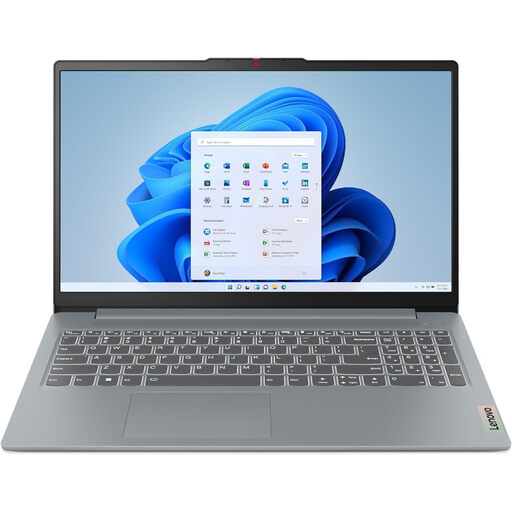
Lenovo IdeaPad Slim 3 15AHP10, Ryzen 5 8640HS, 16 GB, 512 GB SSD, QWERTY
A conventional single-screen laptop for anyone who uses documents and web pages while writing.
The 15.3-inch WUXGA IPS screen has a resolution of 1920 × 1200 and a 16:10 aspect ratio. This configuration has 16 GB of DDR5 memory and a 512 GB SSD.
The description says the charger must be bought separately.
View at Joybuy
 No image available
Lenovo V15 G5 IRL, Intel Core i5-13420H, 16 GB, 512 GB SSD
A conventional single-screen laptop for anyone who wants to use documents and a browser side by side.
The anti-glare screen measures 15.6 inches and has a Full HD resolution of 1920 × 1080. The configuration described has 16 GB of DDR5 memory, a 512 GB NVMe SSD and Windows 11 Pro.
View at Joybuy
 No image available
MSI Venture 16 AI A2HMG-068NL, Intel Core Ultra 7 255H, 32 GB, 512 GB SSD
A larger-screen option for anyone who wants more room to view text and references side by side.
The 16-inch screen has a resolution of 1920 × 1200, a 16:10 aspect ratio and an anti-glare finish. This configuration has 32 GB of DDR5 memory and a 512 GB PCIe 4.0 NVMe SSD.
The description says this configuration is sold without a power adapter.
View at Joybuy
 No image available
Apple MacBook Air 15-inch M5, 16 GB, 512 GB, Starlight, QWERTY
An option for anyone who wants to view text and references on a larger screen in macOS.
The configuration described has 16 GB of memory and a 512 GB SSD. The 15.3-inch display has a resolution of 2880 × 1864.
According to the product description, a USB-C power adapter of 35 W or higher is not included.
View at Joybuy
 No image available
Lenovo IdeaPad Slim 5 15ARP10, Ryzen 5 7535HS, 16 GB, 512 GB SSD, QWERTY
A conventional single-screen laptop for anyone who wants to refer to sources while writing.
The 15.3-inch IPS screen has a resolution of 1920 × 1200 and a 16:10 aspect ratio. The configuration described has 16 GB of memory and a 512 GB SSD.
The description says a compatible charger must be bought separately.
View at Joybuy
Frequently asked questions
Can you put your text and a reference side by side without a second monitor?
Yes, you can use the window layouts in Windows and macOS. Whether both windows are comfortable to read depends on your screen and apps. Try the layout on a similar screen size before you choose.
How can you avoid losing an older version of your journal issue?
Set up a separate back-up and try restoring a file. Microsoft File History can save earlier versions to an external drive or network location; Apple Time Machine can use a suitable external storage device.
Should you allow for buying a separate charger?
Check what’s in the box and the charging power required for the exact configuration. The Dutch ASUS Zenbook DUO configuration reviewed is supplied without a power adapter and specifies a required power output of 100 W. According to the store page, the Acer Aspire Go 15 configuration reviewed is also supplied without a charger.
What are your rights when buying online in the Netherlands?
According to the Dutch government, when you buy from a business online as a consumer, you’ll often have a 14-day cooling-off period. Exceptions and the identity of the retailer matter. There’s no fixed statutory period for the legal guarantee in the Netherlands. If a product is faulty, the retailer is your point of contact, even if a separate manufacturer’s warranty has expired.


