
Tutorial creator who edits their own photos
Writes with a photo editor and several reference images open. Look for software that meets your chosen app’s requirements, a usable screen and enough storage for your files.


Start with the workspace you need: a larger screen makes it easier to view text and reference images at the same time, while a more compact laptop is easier to carry around. If you also edit photos, check the requirements for your software version. For colour-critical work, don’t judge a screen solely by its panel type or stated colour gamut.
Writes with a photo editor and several reference images open. Look for software that meets your chosen app’s requirements, a usable screen and enough storage for your files.
Compares example images with the text and mainly wants enough workspace built into the laptop. If you explain colour differences, it’s also worth checking the colour management.
Writes and edits in different locations. The main trade-off is between a screen that lets text and images sit comfortably side by side and a laptop that’s easy to take with you.
A good fit if: you often write on the go and mainly view or check reference images.
Trade-off: a smaller built-in screen gives you less room to place text and images side by side. An external screen can help at home.
A good fit if: you regularly have text and reference images open at the same time, or edit your own photos.
Trade-off: a larger laptop is less convenient to carry. A GPU or wide colour gamut alone is no guarantee of colour accuracy.
| Key consideration | What should you check? | Who is this important for? |
|---|---|---|
| Screen and reference images | Check the exact screen configuration, resolution and stated colour gamut. A suitable monitor profile is also important for colour-critical work. | If I want to assess photos alongside my text, I need enough workspace and a screen I can check for my colour work. Consumers who put screen quality first account for around 36% of this task-focused group. |
| Writing and editing at the same time | Compare the exact software version and operating system with the manufacturer’s requirements. For Photoshop 27.x, Adobe lists 8 GB RAM as the minimum and 16 GB or more as recommended; this isn’t a general requirement for every tutorial writer. | If you write and edit photos on the same laptop, you’ll want to match the configuration to your chosen software. Around 29% of consumers prioritise being able to edit photos at the same time. |
| Portability and workspace | Compare the dimensions, weight, ports and battery details of the exact configuration. Treat stated battery life as a manufacturer claim. | If I work in different places, I want a laptop that’s easy to carry without giving up too much screen space. Consumers who prioritise portability account for around 21% of this group. |
| Files, software and costs | Compare the storage with your own project files, check the latest software terms and plan separate backups for photos and exports. | If you manage lots of project files or want to factor software costs into your decision, look beyond internal storage alone. Around 14% of consumers prioritise storage and overall costs. |
The screen type or stated colour gamut alone doesn’t tell you how the screen handles colour profiles.
Check the screen configuration and monitor profile if colour differences matter in your tutorial. Adobe explains why ICC-compatible profiles play a part in colour management.
Software minimum requirements and recommendations aren’t the same. For Photoshop 27.x, Adobe lists 8 GB RAM as the minimum and 16 GB or more as recommended.
Check the requirements for your software version and operating system, and consider what you’ll have open at the same time. Don’t treat Adobe’s Photoshop recommendation as a general requirement for everyone.
According to Adobe, a backup from Lightroom Classic contains only the catalogue file; photos and exported files need to be backed up separately.
Plan separate backups for the catalogue, original images and exports.
Separate backups may require extra storage. How much you need depends on the size of your files and your workflow.
According to Apple, the MacBook Air comes in 13- and 15-inch sizes, giving you the choice between portability and more built-in screen space.
The Vivobook Pro 15 OLED N6506 is a larger Windows laptop range with several configurations.
The Yoga Pro 7 Gen 10 is a more compact creative Windows laptop range.
The OmniBook X Flip 16 is worth considering if you want a larger screen and the flexibility to use it in different modes.
According to Dell, the XPS 14 is designed as a compact option for creative work on the go.
These laptops are suited to writing with reference images and editing photos at the same time on a larger screen.
 No image available
The 18-inch screen gives you plenty of built-in space for text and reference images.
18-inch WQXGA screen, 2560 × 1600, IPS, 16:10 and anti-glare; 16 GB DDR5 and 1 TB SSD. The product title lists AMD Ryzen AI 7 350, GeForce RTX 5060 8GB GDDR7 and Windows 11 Home.
 No image available
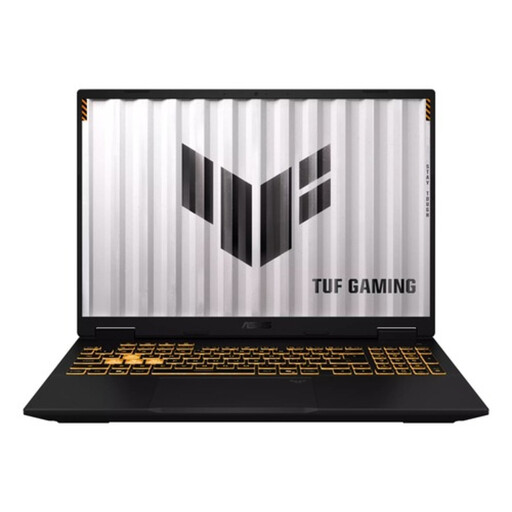
The 16-inch screen with a 16:10 aspect ratio gives you room to view instruction text and images side by side.
16-inch WUXGA screen, IPS-level and anti-glare; 16 GB RAM and 1 TB SSD. The description lists 100% sRGB. The product title lists Intel Core i7-14650HX and RTX 5060.
 No image available
The 15.3-inch screen gives you built-in workspace for text and example photos.
WQXGA OLED screen, 2560 × 1600; the description lists 100% DCI-P3 and DisplayHDR True Black 1000. The product title lists 16 GB DDR5, 512 GB SSD, AMD Ryzen 7 250 and GeForce RTX 5060.
 No image available
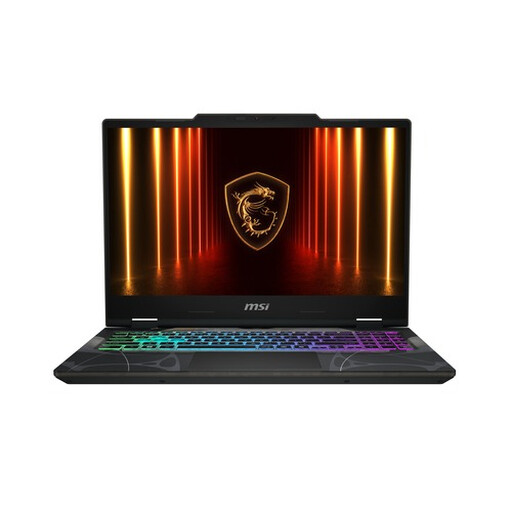
The 15.6-inch screen gives you room to view instructions and reference images on one device.
Full HD IPS-level screen, 1920 × 1080 and 144 Hz; 16 GB DDR5 and 512 GB SSD. The product title lists Intel Core i5-13420H, GeForce RTX 5050 8GB, Wi-Fi 6E and Windows 11 Home.
 No image available
The 15-inch size gives you built-in space for writing with reference images.
The product title lists 16 GB memory, 512 GB storage and a QWERTY keyboard. The product description states that the power adapter is not included.
Not just for writing and viewing reference images. If you use Photoshop 27.x, also check the GPU requirements for your operating system; requirements can vary by platform and screen use.
If you use Lightroom Classic, make separate backups of your photos and exports. According to Adobe, the catalogue backup contains only the catalogue file.
Check whether your chosen photo-editing software requires a subscription. When you buy as a consumer in the Netherlands, you’re covered by the legal guarantee; if there’s a problem, the seller must provide a solution. Online purchases generally come with a statutory 14-day cooling-off period after delivery, although exceptions may apply.
Don’t assume you can use someone else’s copyrighted photo publicly without permission: check for consent, a licence or an applicable exception. If people are identifiable in the image, the GDPR may also apply and you’ll need an appropriate legal basis. These are considerations when publishing images, not laptop specifications.