Start with the software you plan to use to build your website. For simple pages, an editor and modern browsers are the essentials, while a local test server or extra development tools make the operating system more important. If keeping fan noise to a minimum is your priority, a tested fanless MacBook Air could be a good fit. For other laptops, check the cooling performance of the exact configuration, along with software support, the screen and the ports.
Who is this choice relevant to?
Website builder who values a quiet working environment
You’re building a small site in a quiet room and want to know whether your laptop will make fan noise while you work. A test of the exact configuration and its behaviour under the kind of workload you’ll use tell you more than the processor name alone. Notebookcheck described the tested MacBook Air 13 with M5 as fanless.
Builder who uses local development tools
You may want to run a local test server or other project tools alongside an editor and browsers. MDN lists an editor, modern browsers and a local test server as components of a development environment. Check that your required software and operating system version are supported by the laptop you choose.
Coder with long working sessions
You spend a long time reading and typing, and comparing code with a browser. So look for a screen, keyboard and ports that suit your workspace, especially if you want to connect an external monitor. Apple and ASUS list ports and screen options for specific configurations.
What should you look for when choosing?
Fanless macOS laptop
A good fit if: fan noise is your main concern and the development tools you need are available on macOS.
The trade-off: the tested MacBook Air has limited ports and soldered memory and storage. Sustained heavy processor workloads can also limit performance.
Windows laptop with an x86 or x64 processor
A good fit if: you want to use your existing Windows development tools and the screen and ports suit your workspace.
The trade-off: the model name alone won’t tell you how much fan noise the laptop makes. Look for a test of the exact configuration under a suitable workload.
Chromebook
A good fit if: you mainly work in a browser, or have confirmed in advance that local development tools are available on the specific device.
The trade-off: Google says Linux is turned off by default, isn’t available on every device and may be blocked on a work or school Chromebook by its administrator.
Windows laptop with an Arm processor
A good fit if: you’ve checked that the editor, extensions and other project tools you need work on the specific Arm configuration.
The trade-off: Windows 11 on Arm can emulate x86 and x64 apps, but that doesn’t guarantee that every dependency will work. Kernel drivers must be built for Arm64.
| Concern |
What to look for |
Who does this matter to? |
| Noise and cooling |
Check whether the exact configuration is fanless and look for a test under both light and sustained workloads. |
If I work in a quiet room, I want to know whether my laptop will become audible and how it handles a longer workload. Around 36% of consumers put quiet operation and cooling at the top of their list. |
| Development environment |
Check that your editor, browser, local server and extensions are supported by the operating system you’ve chosen and, where relevant, the processor architecture. |
If you use local tools, you’ll want to know in advance whether they work on the specific laptop. Around 29% of consumers prioritise support for their development environment. |
| Screen and workspace |
Compare the screen configuration, keyboard and ports with your preferred setup and any external monitor you plan to use. |
For longer sessions, I want to view code and a browser comfortably and connect my workspace in a way that suits me. Around 21% of consumers care most about working comfort. |
| Configuration and purchase costs |
Compare fully specified configurations and check the screen, memory and what’s included. Set your budget first. |
If purchase costs are my main concern, I want to compare like-for-like configurations rather than relying on the model name alone. Around 14% of consumers prioritise cost. |
Buying pitfalls
-
Assuming an entire laptop range is quiet
Cooling and noise vary by configuration and workload. A fanless test of a MacBook Air tells you nothing about the noise levels of other models or ranges.
Check the full model name and look for a test of that exact configuration under a workload that matches how you plan to use it.
-
Assuming a model name always means the same screen
The tested Vivobook S16 S3607QA is described as having a matte screen with a resolution of 2560 × 1600 pixels. The Joybuy S3607QA-SH109W configuration is listed as having a WUXGA OLED screen, so the screen specifications aren’t the same.
Compare the full model code and panel specifications before weighing up different configurations.
-
Choosing a Chromebook or Arm laptop without checking your tools
Linux may be unavailable on a Chromebook or blocked by device management. Emulation on Windows on Arm doesn’t confirm that every programme dependency will work.
Before buying, check that your editor, extensions, local server and other essentials work on the specific device and platform.
-
Confusing the manufacturer’s warranty with your statutory rights
According to the Dutch government, the retailer remains your point of contact for a solution if a product is faulty. A manufacturer’s warranty doesn’t replace your statutory rights.
Before choosing a paid extended warranty, check what additional rights it gives you.
Brands to consider
Apple
The MacBook Air with M5 is worth considering if low fan noise matters to you and your development tools work on macOS.
- Notebookcheck confirmed fanless operation on the tested 13-inch base configuration.
- The test notes limited ports, soldered memory and storage, and reduced performance under sustained heavy processor workloads. Apple’s Dutch specifications list two Thunderbolt 4 ports.
Lenovo
The ThinkPad and IdeaPad ranges include a variety of Windows configurations, so you’ll need to check the features of each model.
- Notebookcheck ranks specific tested laptop configurations, including models from these ranges.
- Those rankings don’t prove that a configuration is fanless or quiet. Check the screen and noise levels of the exact model under a workload like yours.
ASUS
The tested ExpertBook P3 and Vivobook S16 show how screens and platforms can vary between configurations.
- ASUS specifications list replaceable memory modules and different ports for certain ExpertBook P3 configurations.
- The Joybuy Vivobook S16 S3607QA-SH109W has a WUXGA OLED screen. It isn’t the same screen configuration as the ranked S3607QA with its matte 2560 × 1600 screen.
Joybuy laptops for building websites
These Joybuy laptops are options to compare for building and testing a small website. The selection includes Windows configurations and a Windows laptop with an Arm processor.
 No image available
HP OmniBook 3 AI PC 14-ht0013nd
A compact Windows option to compare if you want to use your editor and browser on a single built-in screen.
14-inch IPS screen with a resolution of 1920 × 1200; Intel Core 3 304; 8 GB RAM; 512 GB SSD; Windows 11 Home.
The product description lists two USB-C ports, two USB-A ports and HDMI.
Joybuy
 No image available
HP OmniBook 3 16-by0058ndx
The 16-inch screen configuration could suit you if you’d like more screen space for code and your browser.
16-inch IPS screen with a resolution of 1920 × 1200 and anti-glare finish; AMD Ryzen 5 7520U; 8 GB RAM; 512 GB SSD; Windows 11 Home.
The product description lists two USB-A ports, two USB-C ports and HDMI.
Joybuy
 No image available
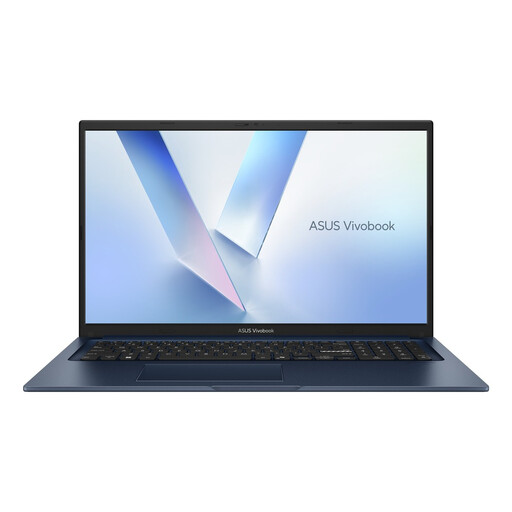
ASUS Vivobook 17 X1704MA-AU153W
A Windows laptop with a large built-in screen to consider if you want to view your code and browser side by side at your desk.
17.3-inch Full HD screen; Core 5 320; 8 GB RAM; 256 GB SSD; Windows 11 Home; QWERTY keyboard.
The product listing includes a numeric keypad.
Joybuy
 No image available
ASUS Vivobook S16 S3607QA-SH109W
This Windows on Arm configuration could suit you if the development tools you need are compatible with the device.
16-inch WUXGA OLED screen; Snapdragon X processor; 16 GB LPDDR5X memory; 512 GB SSD; Windows 11 Home.
Windows 11 on Arm can emulate x86 and x64 apps, but check separately that the dependencies you need work. Kernel drivers must be built for Arm64.
Joybuy
 No image available
Auusda T156A
A laptop to compare if you’re looking for a built-in 15.6-inch screen and a backlit keyboard.
15.6-inch Full HD IPS screen; 3050E processor; 16 GB DDR4 RAM; 512 GB SSD.
The product description lists USB-C, USB-A and HDMI ports.
Joybuy
Frequently asked questions
Do you need a powerful dedicated graphics card for a small website?
The basic workflow described by MDN doesn’t require you to start with a dedicated graphics card. An editor and modern browsers are the essentials, with a local test server if needed. Consider extra hardware only once you know your projects require it.
Can you use a local development environment on a Chromebook?
Yes, if the Chromebook supports the Linux development environment and its management settings allow it. Google says Linux is turned off by default and isn’t available on every device, so check the specific Chromebook.
How can you check whether your laptop is quiet enough?
First, check whether the exact configuration is fanless. If it isn’t, look for a test of that model under a workload that matches how you plan to use it. A test of one laptop doesn’t automatically tell you anything about other models in the same range.
How do you start testing your website?
Use an editor and modern browsers to view and test your site. MDN also describes a local test server as part of a development environment, so check that your chosen platform supports the tools you need.
Is the manufacturer’s warranty the same as the statutory warranty in the Netherlands?
No. According to the Dutch government, a manufacturer’s warranty is in addition to your statutory rights: if a product is faulty, the retailer must provide a solution. There’s no fixed statutory warranty period in the Netherlands, so check what extra rights a manufacturer’s or paid warranty gives you.


